
The rest on the flight into Egypt: a night piece — History & Facts
What if beauty was never meant to be finished? In the dim glow of evening, shadows dance around forms that whisper of sanctuary and reverence. Look to the center, where a tender moment unfolds. The holy family, illuminated by a soft, ethereal light, rests against a backdrop of deep, enveloping darkness. Notice how the light falls upon Mary’s serene face, lending her an almost divine presence, while Joseph leans protectively against the donkey, a humble guardian.
The muted palette of browns and blacks creates a sense of intimacy, drawing the viewer into the sacred hush of the night that envelops this scene. Deeper meanings emerge in the interplay of light and shadow. The contrast symbolizes not just the physical journey of the holy family, but also their emotional pilgrimage, fraught with danger yet filled with hope. The donkey’s quiet presence underscores their burden, both literal and figurative, while Mary's cradling of the child speaks to an eternal bond.
Each brushstroke encapsulates a moment that feels simultaneously fragile and profound, reminding us of the beauty in stillness amidst chaos. Rembrandt created this work around 1644, during a period marked by both personal struggle and artistic maturation. Living in Amsterdam, he grappled with financial difficulties while simultaneously achieving artistic acclaim. This painting aligns with his exploration of chiaroscuro and emotional depth, reflecting the broader Baroque movement and its fascination with light as a means of capturing the divine within everyday life.
More Artworks by Rembrandt van Rijn
Browse all →
The Night Watch Militia Company of District II under the Command of Captain Frans Banninck Cocq
Rembrandt van Rijn

The Return of the Prodigal Son
Rembrandt van Rijn

The Hundred Guilder Print: the figures leaning on the wall in the centre left
Rembrandt van Rijn

The Hundred Guilder Print: the central piece with Christ preaching, the plate arched
Rembrandt van Rijn

Isaac and Rebecca, Known as ‘The Jewish Bride’
Rembrandt van Rijn
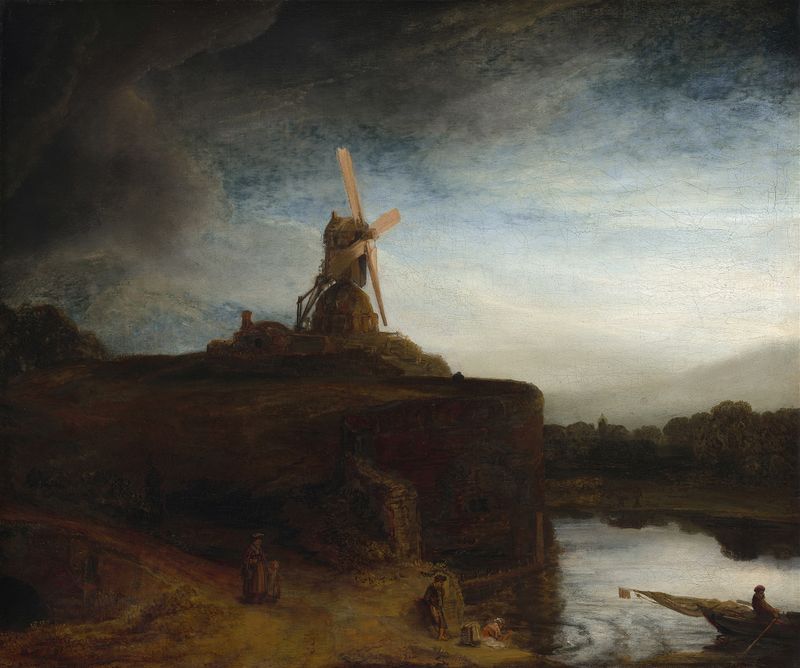
The Mill
Rembrandt van Rijn

The Sampling Officials of the Amsterdam Drapers’ Guild, Known as ‘The Syndics’
Rembrandt van Rijn

The return of the prodigal son
Rembrandt van Rijn
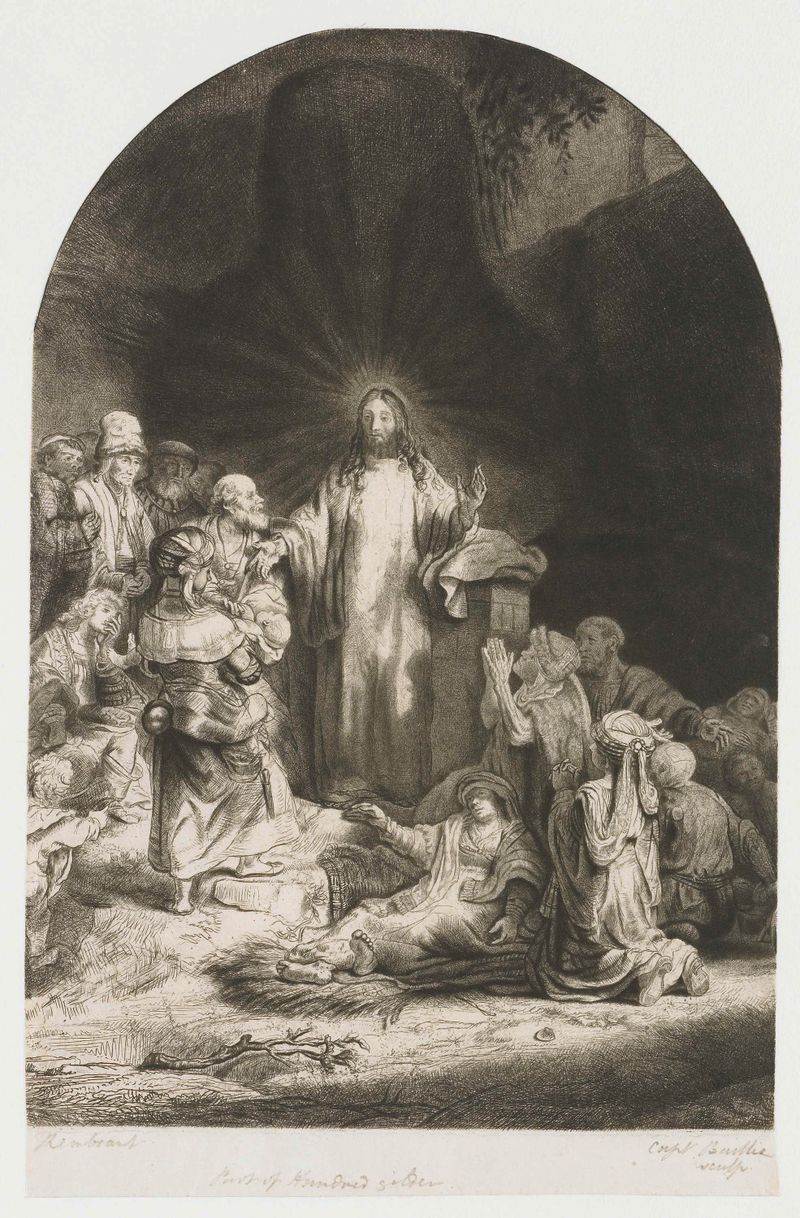
The Hundred Guilder Print: the central piece with Christ preaching, the plate arched
Rembrandt van Rijn

The Hundred Guilder Print: the man seen on the back in the lower left corner
Rembrandt van Rijn
More Religious Art
Browse all →The Return of the Prodigal Son
Rembrandt van Rijn

The Garden of Earthly Delights
El Bosco

Count Orgaz’ funeral
El Greco
The Hundred Guilder Print: the central piece with Christ preaching, the plate arched
Rembrandt van Rijn

The Descent from the Cross
Rogier van der Weyden
The return of the prodigal son
Rembrandt van Rijn