
The Rest on The Flight into Egypt — History & Facts
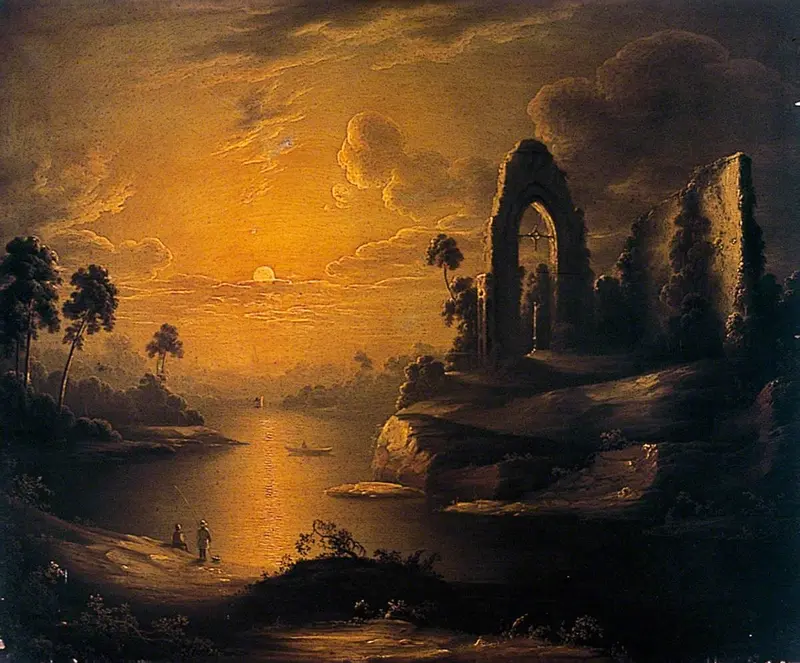
What first draws the eye in The Rest on The Flight into Egypt is not the holy travelers themselves, but the moon—full and low, commanding the sky, its pale light threading through restless clouds and glimmering on the river below. The figures of Mary, Joseph, and the infant Jesus are nearly swallowed by the darkness of the foreground, their forms emerging only as your eyes adjust to the painter’s careful orchestration of shadow. The moon’s reflection pulls you across the water, inviting you to linger in the hush of this nocturnal pause, where the world seems to hold its breath.
The landscape, vast and enveloping, transforms a moment of biblical narrative into an experience of quiet awe, where human drama is dwarfed by the immensity of nature and night. Painted before 1812 by Abraham Pether, this work belongs to a period when Romantic artists were fascinated by the interplay of light and landscape, and the possibilities of the nocturne. Pether, sometimes called “Moonlight Pether,” was renowned for his ability to conjure moonlit scenes that blend the real and the imagined, often using biblical themes as a pretext for atmospheric exploration. Such paintings were prized by collectors eager for both spiritual reflection and the thrill of technical virtuosity in capturing light.
While little is recorded about the journey of this particular canvas, its place in the early nineteenth-century tradition is clear: it is a testament to an age when the sacred and the natural world were seen as deeply entwined, and when artists sought to make the viewer pause, look again, and lose themselves in the painted night.
More Artworks by Abraham Pether

Sunset over a rural landscape
Abraham Pether
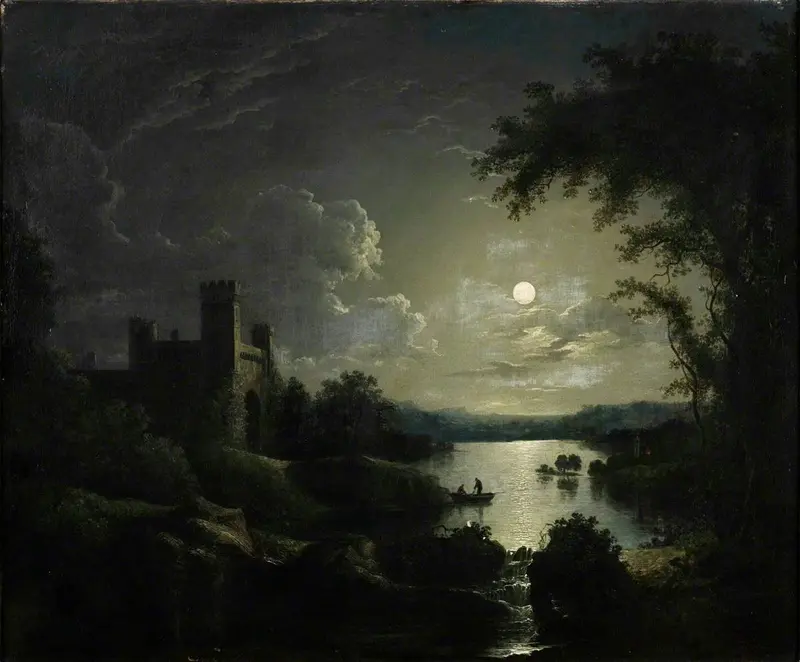
A Castle and Lake by Moonlight
Abraham Pether
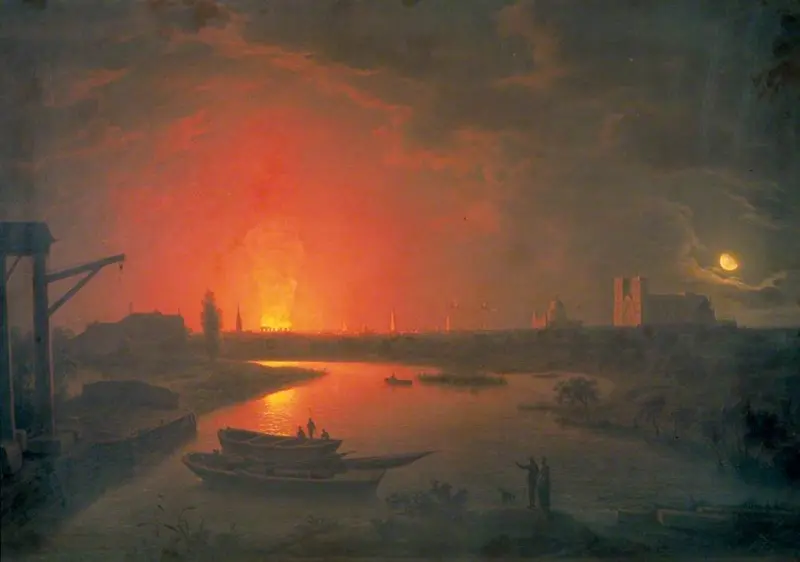
Old Drury Lane Theatre on Fire, London, 24 February
Abraham Pether
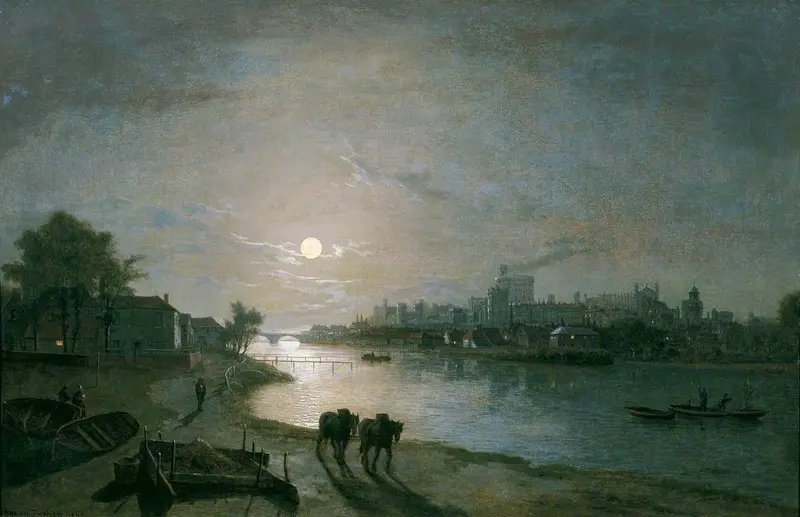
Windsor Castle by Moonlight
Abraham Pether
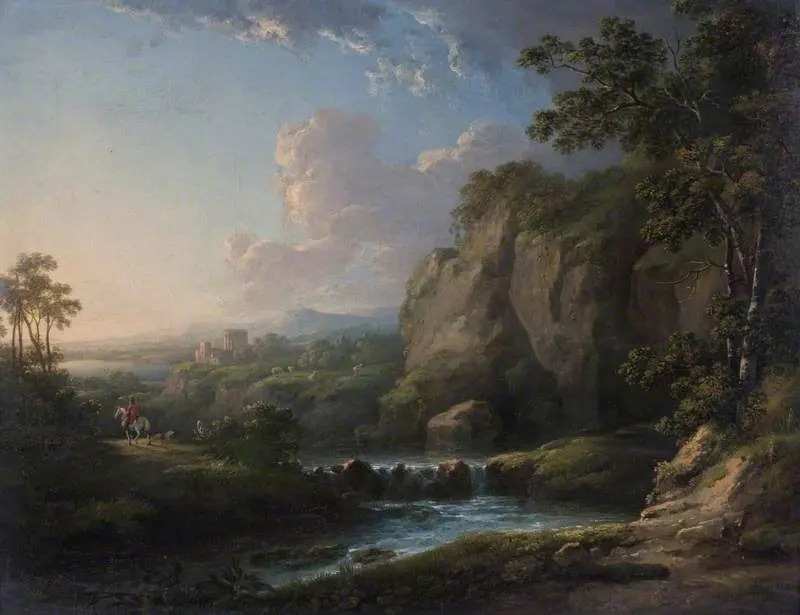
Wooded Landscape
Abraham Pether
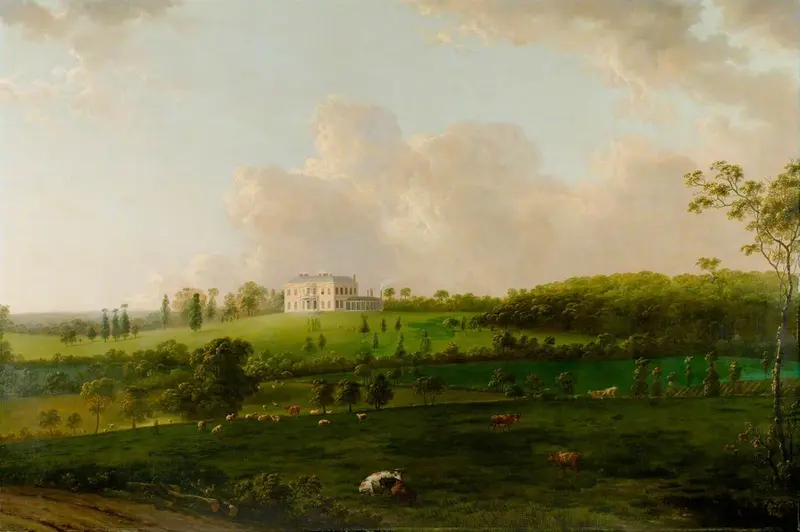
Claybury Hall, Essex
Abraham Pether
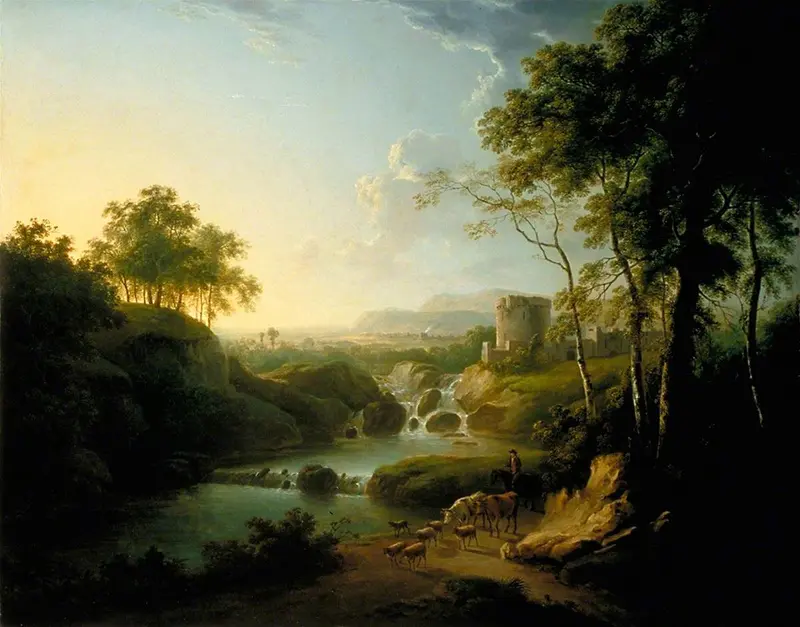
Landscape
Abraham Pether
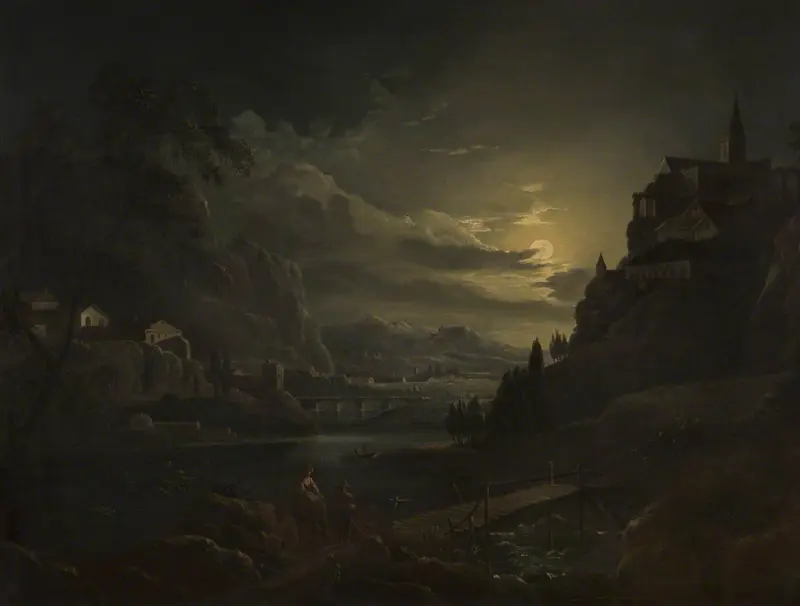
Classical Landscape by Moonlight
Abraham Pether
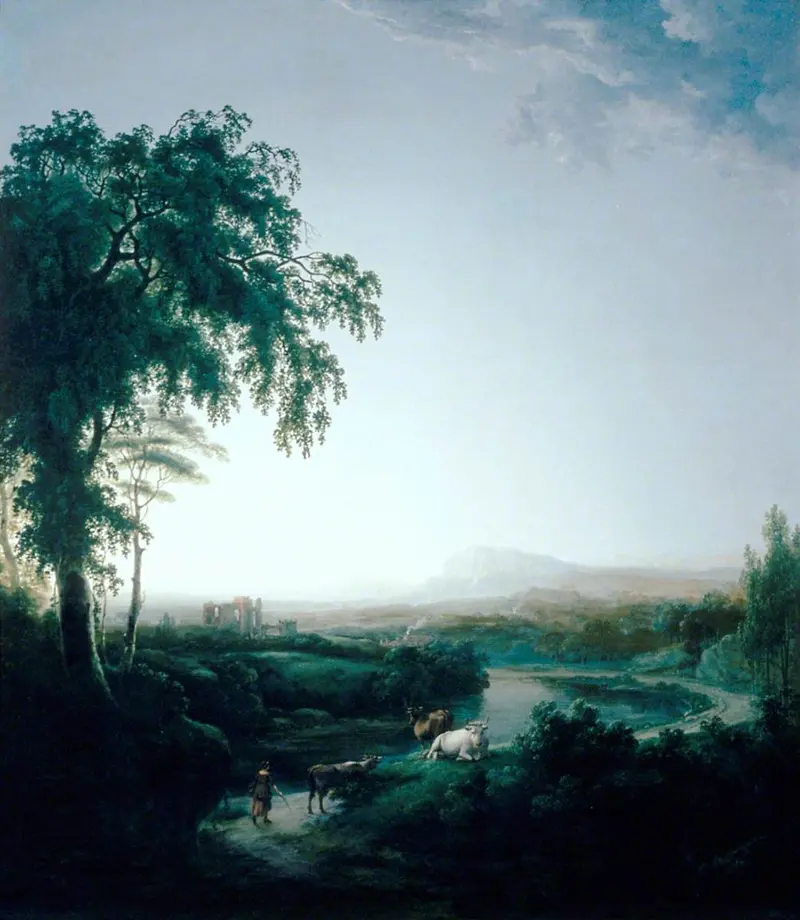
Landscape with River and Cows at Dusk
Abraham Pether
Moonlit Landscape with Lake and Ruined Abbey
Abraham Pether





