The road to the shore — History & Facts
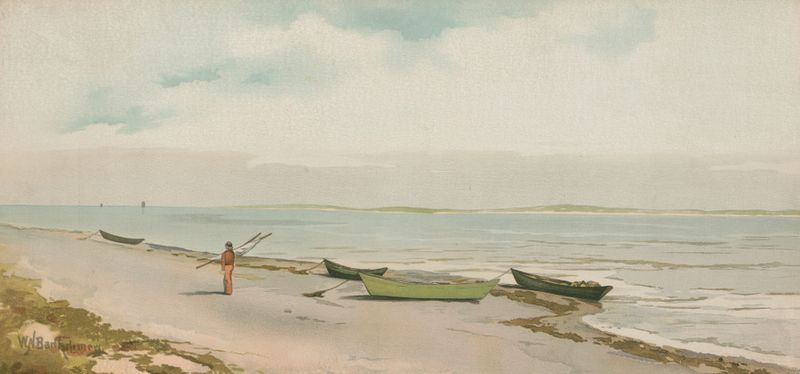
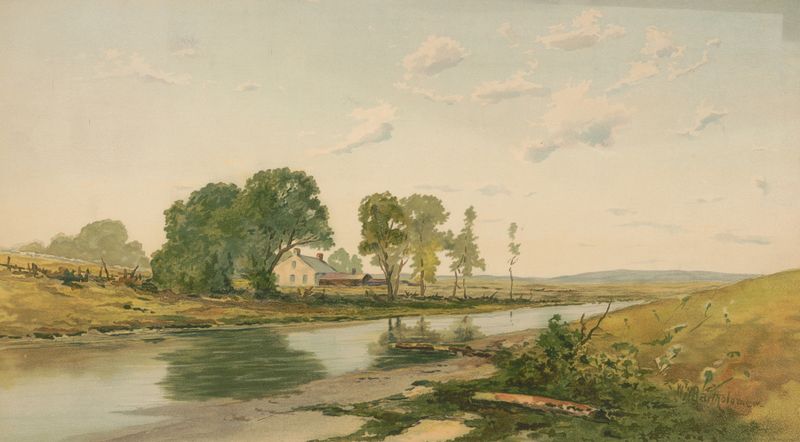
What secret hides in the quiet of the canvas? The stillness of The Road to the Shore whispers of longing, a journey towards something just beyond reach, resonating with the void that often lies within our hearts. Look to the center of the painting, where the winding path beckons the viewer forward. The rich earth tones create an inviting yet somber ambiance, while the distant horizon is kissed by a soft blue sky, hinting at an elusive destination. The brushwork is delicate, capturing the nuances of both the road and the surrounding landscape, as patches of sunlight flicker through the foliage, imbuing the scene with a transient beauty.
The path narrows as it approaches the shore, drawing our gaze deeper into the composition, creating a palpable sense of anticipation. The interplay of light and shadow on the road suggests movement, yet the absence of figures renders the journey solitary and introspective. One might sense the emotional weight of the journey, contemplating what lies ahead and what might be left behind. The viewer is invited to ponder their own experiences, where the road signifies both exploration and the tension of uncertainty, lost in the middle ground between land and sea. In 1892, William Newton Bartholomew painted this evocative piece while residing in England, during a period marked by a growing interest in Impressionism.
As the art world shifted towards capturing light and atmosphere, he embraced these techniques while imbuing his landscapes with a sense of narrative depth. This painting stands as a testament to his ability to evoke emotion through the simple yet profound act of representation.