Beach at ebb-tide, Chatham, Mass. — History & Facts
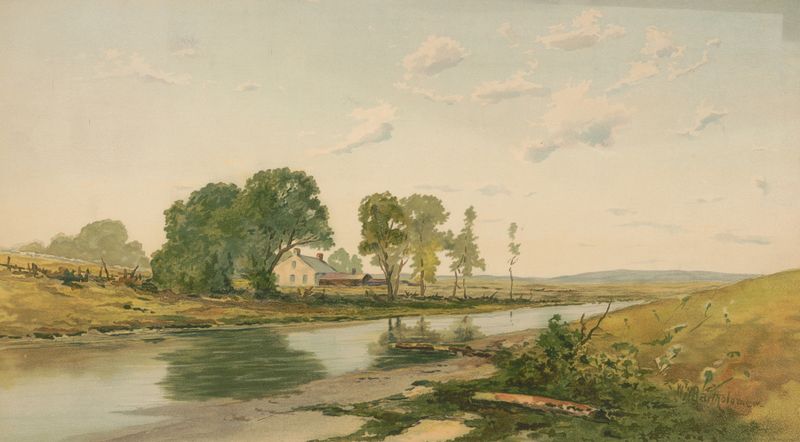
What if silence could speak through light? In Beach at ebb-tide, Chatham, Mass., a moment unfolds where tranquility reigns, inviting us to listen to the whispers of a world at rest. Look to the horizon, where soft hues of lavender and gold meld into the sky, while the gentle water laps at the sandy shore. The composition is balanced, the beach stretching languidly, inviting the eye to trace its curve. The artist employs a delicate palette, expertly capturing the fleeting nature of twilight that dances across the surface, hinting at the transitory beauty of life itself.
Notice how the light, filtered through soft clouds, creates a shimmering pathway on the water, drawing us toward the horizon where the day meets night. Beneath this serene surface lies a deeper tension—the ebb and flow of human existence mirrored in the tide's retreat. Each ripple reflects not just light, but a fleeting moment in time, suggesting the cyclical nature of loss and renewal. The quietude of the scene belies the revolutionary changes brewing in the world outside; it evokes both nostalgia and hope, as if the very air is pregnant with the possibilities that lie beyond this tranquil vista. In 1892, Bartholomew painted this scene during an era of burgeoning artistic movements in America, where Impressionism was gaining traction.
Living in Chatham, Massachusetts, he found inspiration in the local landscape, capturing the essence of a place on the brink of change. As conventions in art began to shift, he participated in this revolution, inviting viewers to appreciate the simplicity and depth of the everyday world.