The Rosiers Street In Trouville — History & Facts
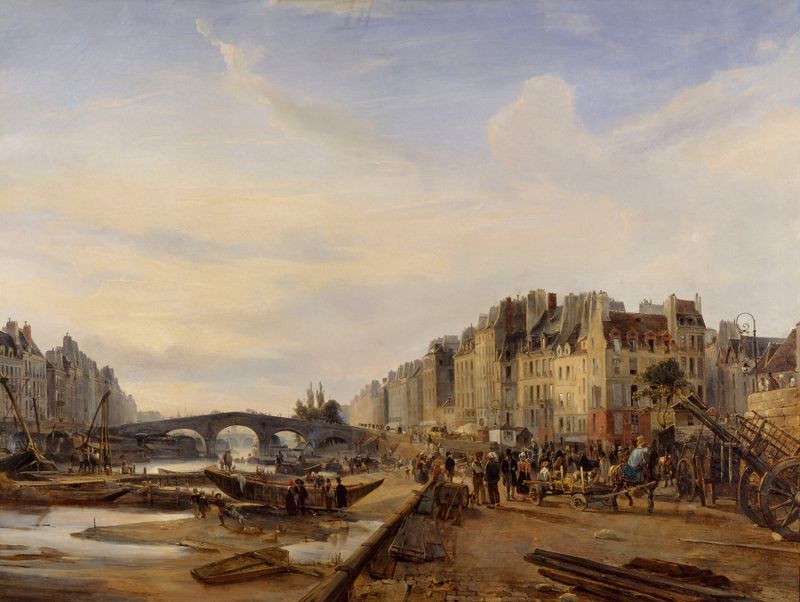
Can paint confess what words never could? In The Rosiers Street In Trouville, chaos dances on the canvas, capturing the disarray of urban life in vibrant strokes and splashes of color. Look to the left at the bustling figures caught mid-movement, their varied postures suggesting hurried lives filled with purpose. Notice how the sun bathes the scene in a warm, golden light, illuminating the cobblestone street and casting playful shadows that flicker beneath the pediments of the buildings. The bold color palette, infused with rich reds and deep blues, draws the eye toward the charming architecture, each brushstroke echoing the energy of the town and its inhabitants. The contrast between the rigid lines of the buildings and the swirling motion of the people hints at the tension between order and chaos.
The lively market atmosphere is alive with potential yet hints at the quieter sorrows of daily life. Small details, like the old man pausing to observe the scene or the child tugging at their parent’s coat, portray a microcosm of human experience, where joy intermingles with subtle melancholy. In 1848, when this work was created, the artist was immersed in the vibrant artistic community of France, a time marked by political upheaval and social change. Mozin captured not only the spirit of Trouville but also the larger currents shaping society, reflecting a world in flux.
The painting stands as a testament to both personal and collective narratives, encapsulating a moment where chaos and beauty converge.