The Serenade — History & Facts
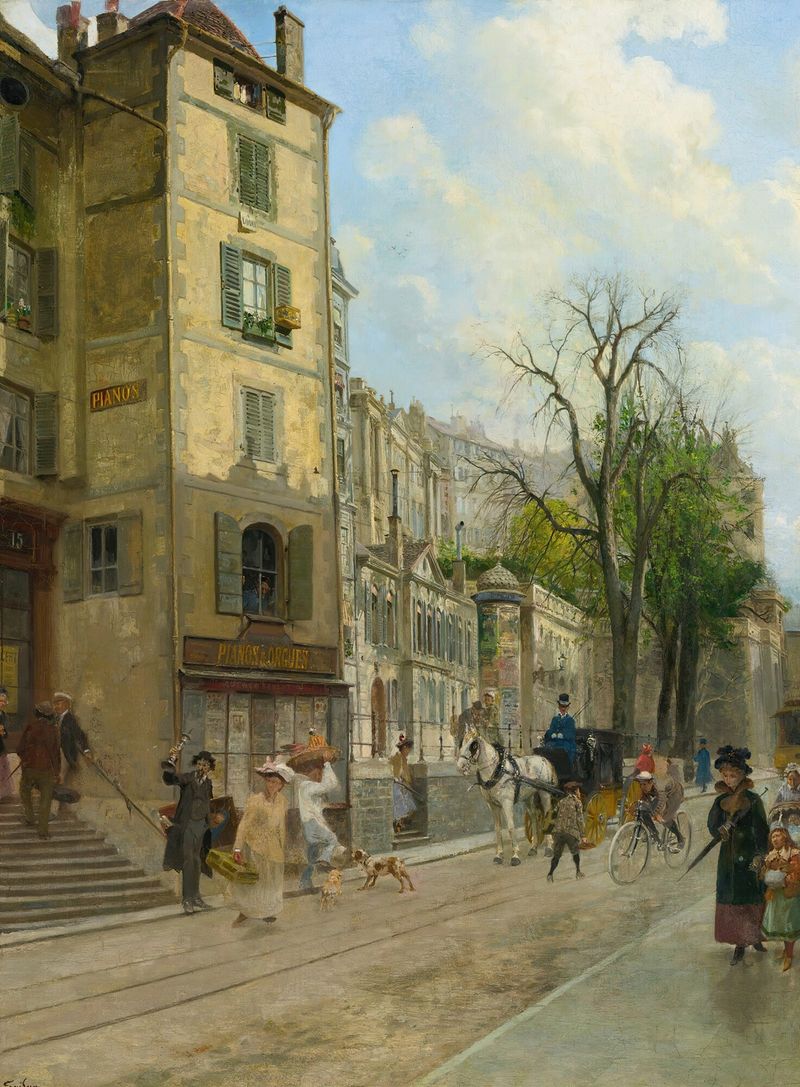
Can paint confess what words never could? In The Serenade, brushstrokes dance upon the canvas, weaving a narrative of passion and despair that echoes the madness of the human heart. Look to the left, where a spectral figure plays a haunting melody on a lute, their hands seemingly trembling with an urgency that transcends the notes. The muted palette—soft browns and deep blues—creates a dreamlike quality, while the contrasting light illuminates the musician's intense gaze, drawing us into their world. Notice how the shadows cradle the edges, offering a stark reminder of the solitude accompanying their art, evoking an emotional resonance that lingers long after your eyes leave the canvas. Amidst the beauty of the serenade, a tension brews; the delicate balance between ecstasy and anguish is palpable.
The musician’s expression captures a duality of joy and isolation, suggesting that in their quest for artistic expression, they teeter on the brink of madness. Hidden in the folds of their garments lies a sense of vulnerability, underscoring the sacrifices made for the sake of creativity—each note a heartbeat lost yet cherished. Created during a period when France grappled with Romantic ideals and the complexities of emotions, Grison's work reflects the struggles of artists striving for authenticity. Amid the societal shifts of the mid-19th century, the artist explored the interplay between beauty and sorrow, capturing the very essence of human experience in a moment suspended in time.