The Shipyard ‘D’Hollandsche Tuin’ on Bickers Eiland, Amsterdam — History & Facts
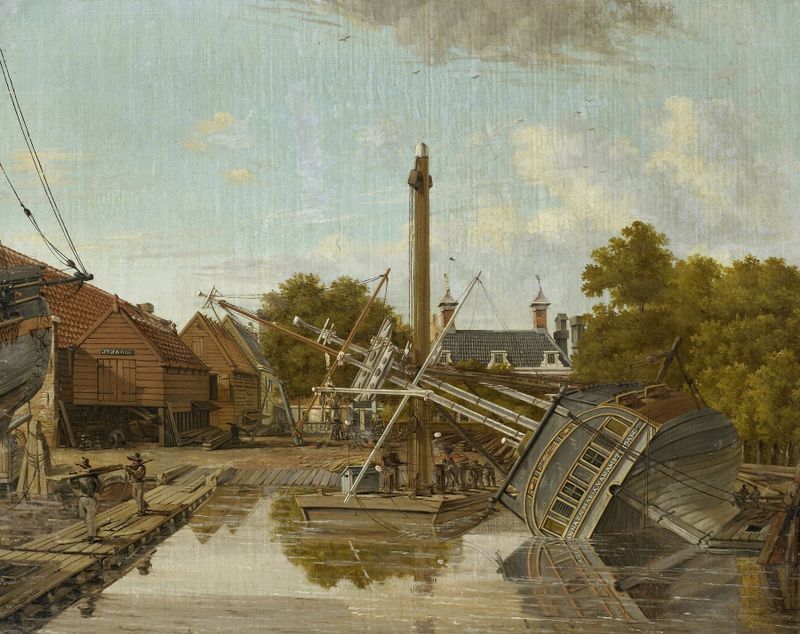
When did color learn to lie? In the stillness of a shipyard, the hues of rust and water dance in tandem, whispering secrets of the past and future alike. Here, in this moment captured by a keen observer, every brushstroke serves as a silent witness to labor, ambition, and the inevitable passage of time. Look to the left, where workers, clad in muted earth tones, are engrossed in their tasks, their figures grounded against the backdrop of softly rippling water. Notice how the light falls upon the weathered wooden beams, illuminating their texture and imbuing them with life.
The cool blues and warm ochres intertwine, creating a dynamic tension that invites the viewer to explore the intricate details of the scene, from the delicate waves lapping at the hulls of the vessels to the careful arrangement of tools scattered about the yard. Beneath the surface of this industrious tableau lies a poignant contrast between creation and decay. The sturdy ships, emblematic of human ingenuity, stand in stark juxtaposition to the dilapidated structures that harbor them, hinting at fleeting aspirations and the relentless march of time. The reflection in the water not only mirrors the physical elements but also acts as a metaphor for the way history echoes through the present, suggesting that while progress is celebrated, it often carries the weight of what has been left behind. Painted in 1823, this piece emerged during a period of significant industrial transformation in Europe.
Bertichen, residing in Amsterdam, navigated the intricate balance between artistic realism and burgeoning romanticism. As the world around him changed with the rhythms of modernization, he captured this shipyard scene not only as an illustration of labor but as a testament to the resilience of human spirit against the backdrop of inevitable change.