The Shipyard ‘St Jago’on Bickers Eiland, Amsterdam — History & Facts
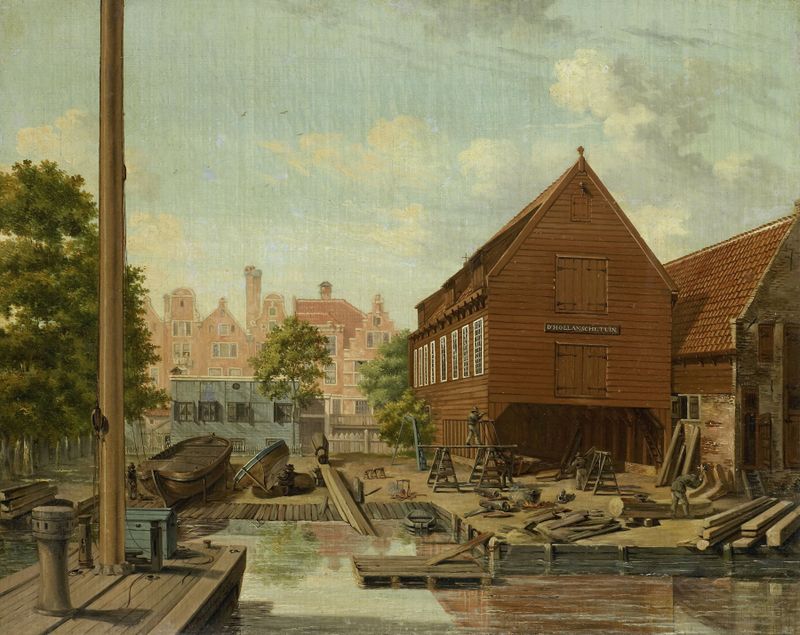
In the quiet expanse of a shipyard, awe lingers in the air, waiting to be unveiled by the gaze of the observer. Look to the left at the vibrant hues of the docked vessels, their sails billowing gently in the breeze, captured in a tender moment of preparation. Notice how the warm sunlight spills over the wooden beams, illuminating the textures of the architecture and casting delicate shadows that stretch across the cobblestones. The artist’s choice of a muted palette juxtaposed with the striking blues and whites of the ships creates a harmonious balance, inviting contemplation of both industry and tranquility. Delve deeper into the composition, where figures work diligently yet harmoniously, embodying the duality of labor and serenity.
The juxtaposition of the sturdy ships against the simplicity of the workers’ attire subtly signifies the interconnectedness of human endeavor and nature’s bounty. Each stroke of the brush reveals an emotional tension, a silent conversation between the industriousness of the shipyard and the fleeting beauty of the moment, encapsulating a profound sense of respect for both craft and creation. In 1823, the artist captured this scene amidst a rapidly industrializing Europe, where maritime trade blossomed in Amsterdam. Living through a transformative period, he observed the dynamic shifts in society and the arts, drawing inspiration from the burgeoning Romantic movement.
This work reflects not only a personal journey in artistry but also an era ripe with change and innovation, marking a pivotal moment in his career.