
The Siege of Courtrai in — History & Facts
The sweep of the landscape pulls you in first: a city bristling with towers and walls, its defenses mirrored in the calm river below, while a swirl of mounted figures in the foreground signals urgency and command. The lead rider, unmistakably a figure of authority in his feathered hat and rich attire, turns his white horse with practiced ease, his gaze fixed not on the city but on the viewer, as if inviting us to witness the unfolding drama. The sky is restless, with clouds gathering weight over the distant rooftops, yet a shaft of light breaks through, catching the city’s spires and the crisp folds of the riders’ cloaks.
Every detail—the glint of armor, the flutter of plumes, the horses’ restless energy—serves to heighten the sense of a moment suspended between planning and action. The artist’s palette, cool blues and earthy browns, balances tension with order, guiding the eye from the animated foreground to the serene, almost idealized cityscape beyond. Painted between 1640 and 1678 by Adam Frans van der Meulen, this work belongs to a tradition that flourished in the age of absolutism, when rulers sought to immortalize their triumphs and campaigns through grand historical paintings. Such scenes were often commissioned to celebrate military prowess or to decorate palaces with reminders of power and control.
Van der Meulen, famed for his ability to blend topographical accuracy with theatrical staging, was a favorite of courts across Europe, though the specifics of this painting’s commission remain undocumented. Today, its journey brings it to the attention of collectors and historians alike through the records of Christie’s. The city of Courtrai, seen here through the lens of 17th-century ambition, still waits behind its walls, inviting us to imagine what the riders see—and what history will remember.
More Artworks by Adam Frans van der Meulen
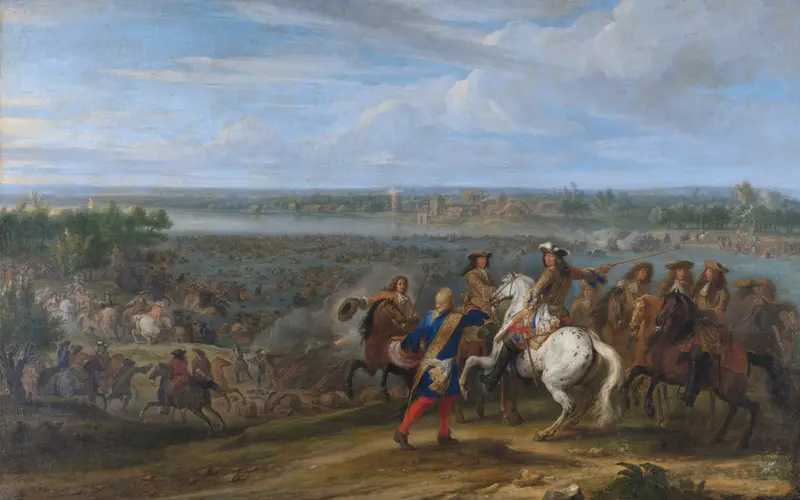
Louis XIV Crossing into the Netherlands at Lobith
Adam Frans van der Meulen
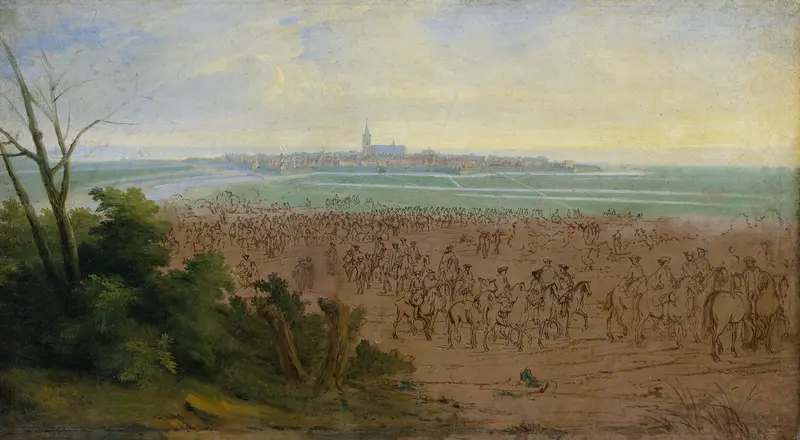
The Troops of Louis XIV before Naarden, 20 July 1672
Adam Frans van der Meulen
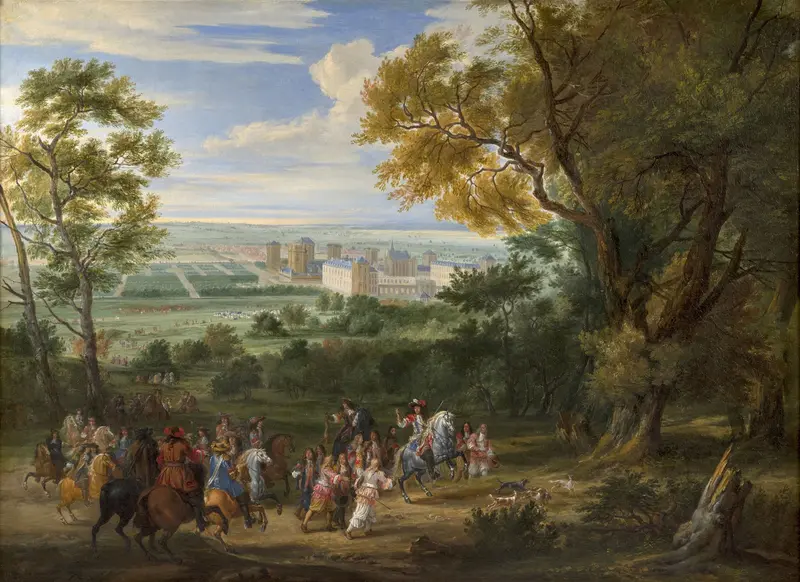
View of the château de Vincennes or The Departure of Louis XIV for the hunt
Adam Frans van der Meulen

A battle scene
Adam Frans van der Meulen
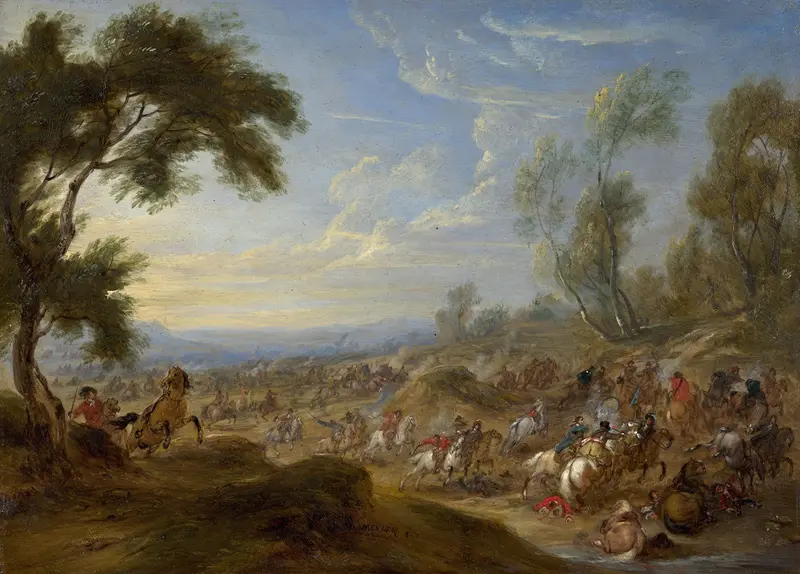
A cavalry charge
Adam Frans van der Meulen
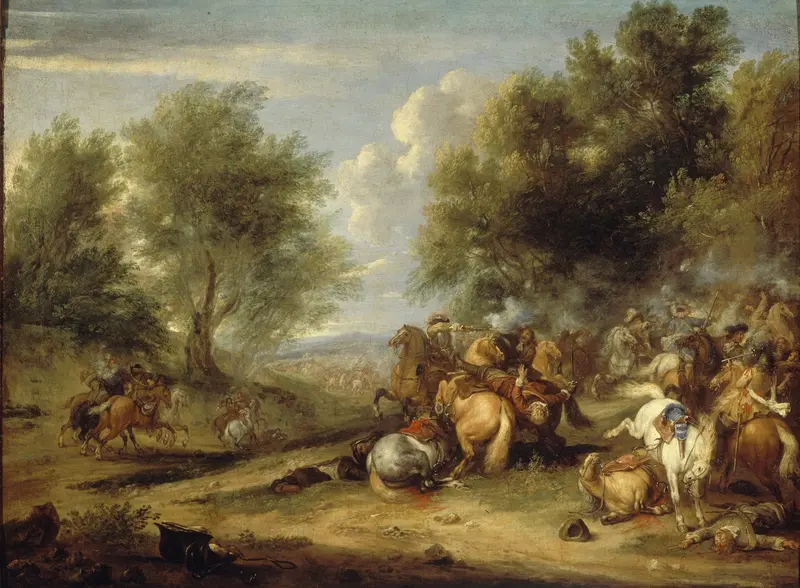
Choc de cavalerie ou Combat de cavalerie
Adam Frans van der Meulen
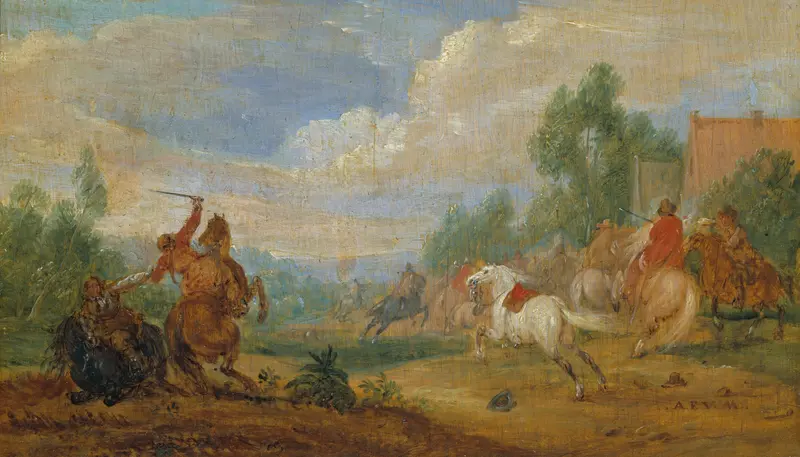
Cavalry Skirmish
Adam Frans van der Meulen
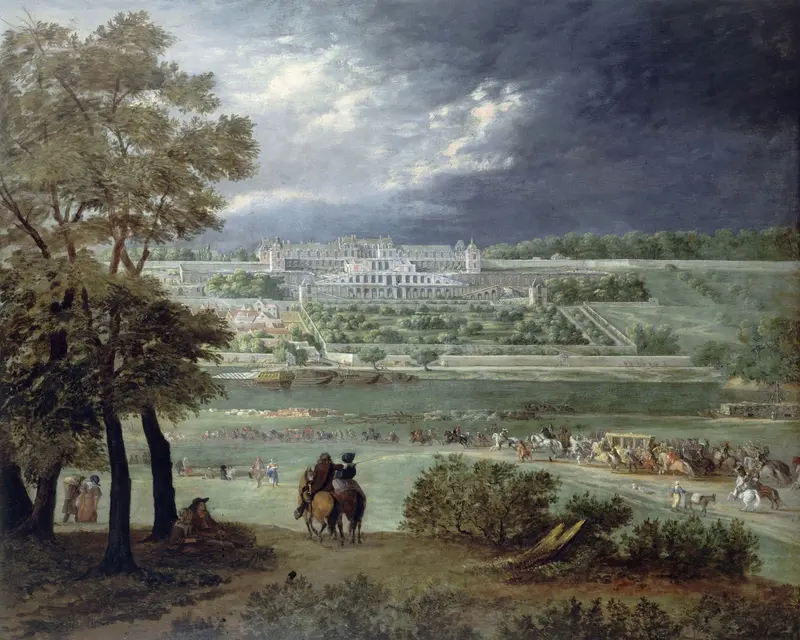
Le Château Neuf de Saint-Germain-en-Laye et les jardins, vus de la rive droite de la Seine
Adam Frans van der Meulen
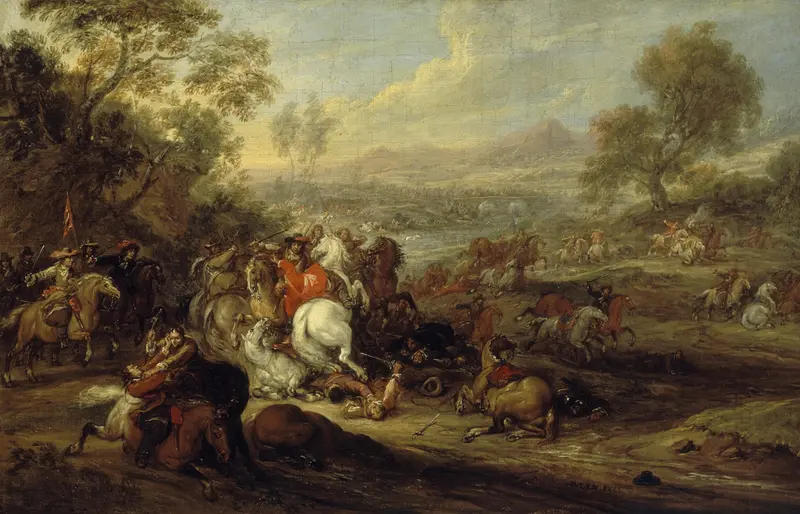
Choc de cavalerie ou Combat de cavalerie
Adam Frans van der Meulen
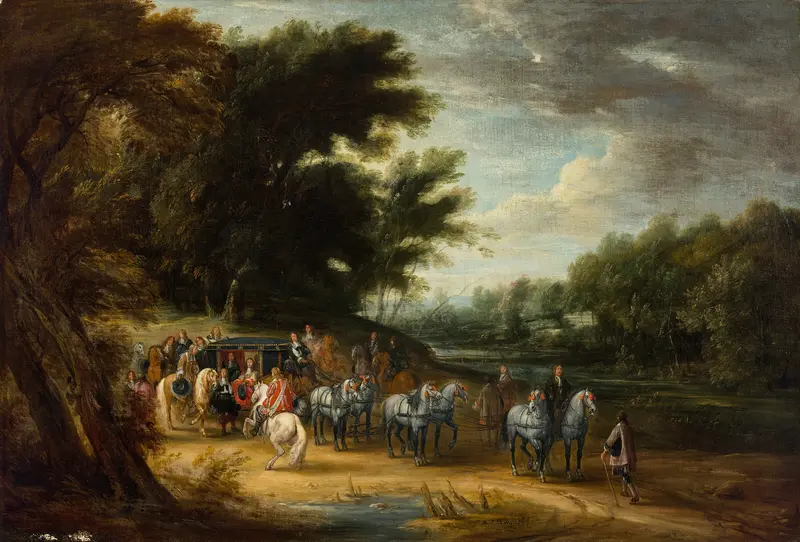
A nobleman in a state coach at rest escorted by his men and horses, with a gentleman on a white horse approaching and landscape beyond
Adam Frans van der Meulen





