
The Siege of Mons — History & Facts
This bittersweet sentiment echoes through the somber strokes of history, inviting us to reflect on moments lost and the weight they bear. Look closely at the desolate landscape in front of you. Notice how the muted palette of greys and browns envelops the scene, casting an air of melancholy over the beleaguered fortress. The crumbling walls are illuminated by a fragile light, as if the sun hesitates to shine upon the ruin.
In the distance, a faint plume of smoke rises, hinting at life lost and struggles endured. Each brushstroke whispers of the past, capturing both the fragility of human endeavor and the inevitability of time's passage. Amidst the chaos, small details abound — the figures cloaked in shadow, their faces etched with despair, conveying a poignant sense of abandonment. The contrast between the solid, fortress-like structures and the ephemeral wisps of smoke heightens the tension between endurance and decay.
This duality reveals not only the physical siege of a place but also the psychological siege of memory and loss that lingers beyond the canvas. The painting emerged from the brush of Jean Baptiste Martin in a time when European art was grappling with the dualities of romanticism and realism. Active during the late 18th century, Martin found himself navigating a changing artistic landscape, marked by tumultuous political events and a burgeoning fascination with historical narrative. Through The Siege of Mons, he captured not only an event but an emotional resonance that still reverberates today.
More Artworks by Jean Baptiste Martin
Browse all →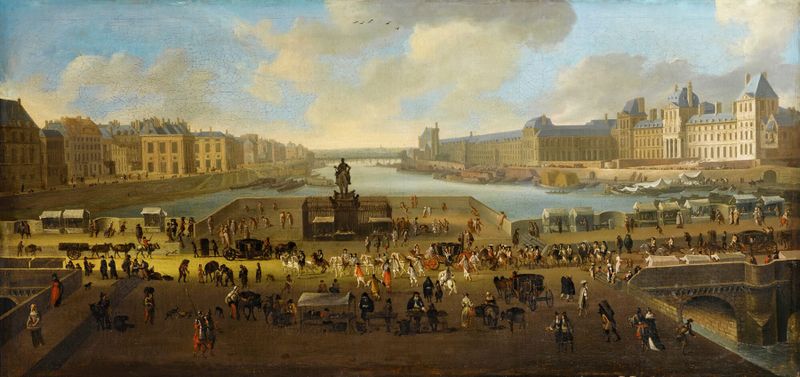
More Historical Art
Browse all →
The Night Watch Militia Company of District II under the Command of Captain Frans Banninck Cocq
Rembrandt van Rijn

Lincoln Memorial
Henry Bacon

The Third of May 1808
Francisco de Goya

Isaac and Rebecca, Known as ‘The Jewish Bride’
Rembrandt van Rijn

The Charge of the Mamelukes (1814)
Francisco de Goya

De vier ruiters van de apocalyps
Albrecht Dürer