
The Siege of Valenciennes in — History & Facts
What first seizes the eye in The Siege of Valenciennes by Adam Frans van der Meulen is the sheer orchestration of movement and spectacle, all unfolding beneath a sky thick with the haze of cannon fire. The artist draws us into the heart of a military drama: officers on horseback confer in the foreground, their gestures sharp and urgent, while ranks of soldiers stretch across the middle ground, forming a living tapestry of war. The city of Valenciennes itself rises in the distance, its spires and ramparts etched with a clarity that contrasts with the chaos below.
Every figure, from the mounted commanders to the distant infantry, plays a role in this grand narrative, their placement guiding the viewer’s gaze from the immediate tension of the command group outward to the wider theatre of siege. Works like this, crafted in the late seventeenth century, were more than chronicles—they were instruments of power and persuasion. Artists such as van der Meulen were often commissioned to immortalize the victories of kings and generals, their images intended for courts and collectors eager to celebrate military triumphs. The meticulous detail and sweeping scale reflect the Baroque appetite for grandeur and control, as well as the period’s fascination with the machinery of war.
This particular print, preserved today in the Gallica Digital Library under the digital ID btv1b6945422g, stands as a testament to both the ambitions of its era and the artist’s skill in transforming conflict into spectacle. The longer you look, the more the pageantry and calculation of power reveal themselves.
More Artworks by Adam Frans van der Meulen
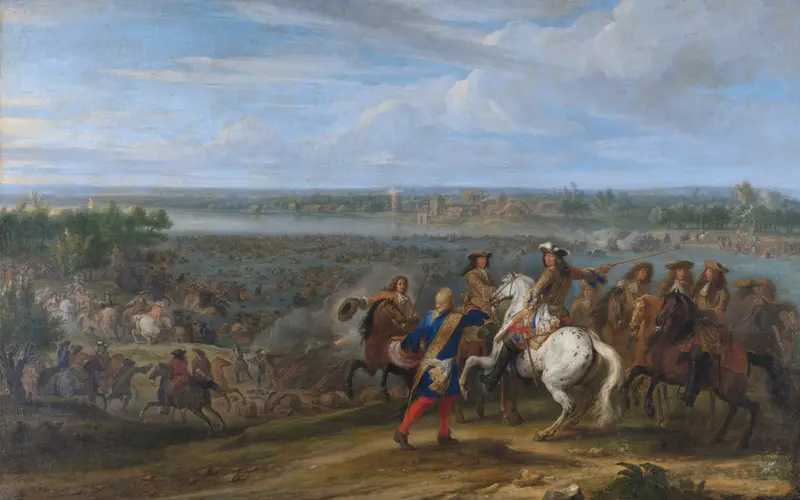
Louis XIV Crossing into the Netherlands at Lobith
Adam Frans van der Meulen
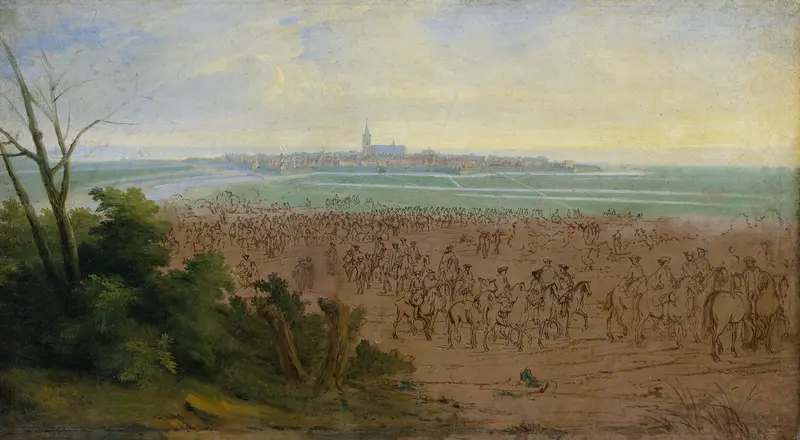
The Troops of Louis XIV before Naarden, 20 July 1672
Adam Frans van der Meulen
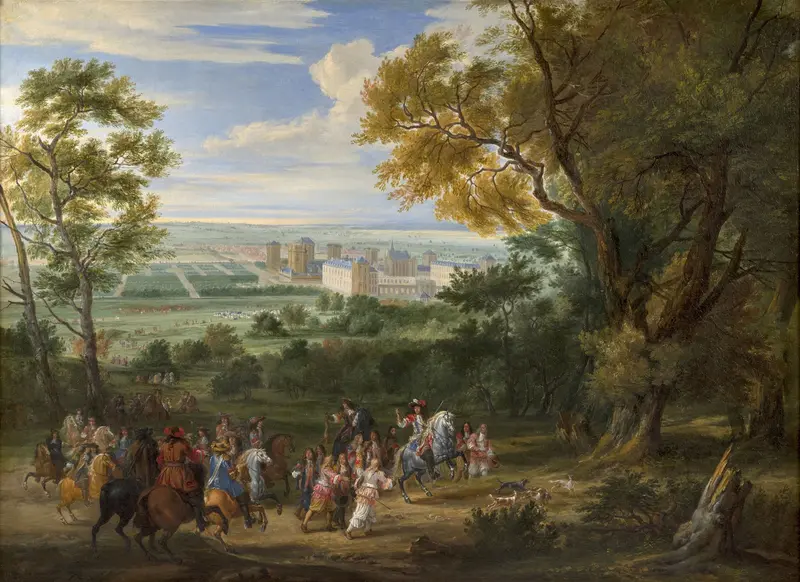
View of the château de Vincennes or The Departure of Louis XIV for the hunt
Adam Frans van der Meulen

A battle scene
Adam Frans van der Meulen
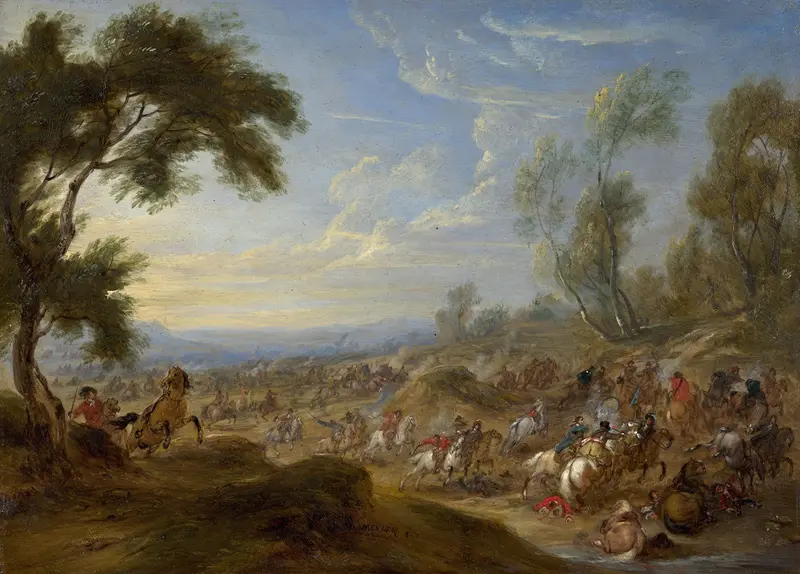
A cavalry charge
Adam Frans van der Meulen
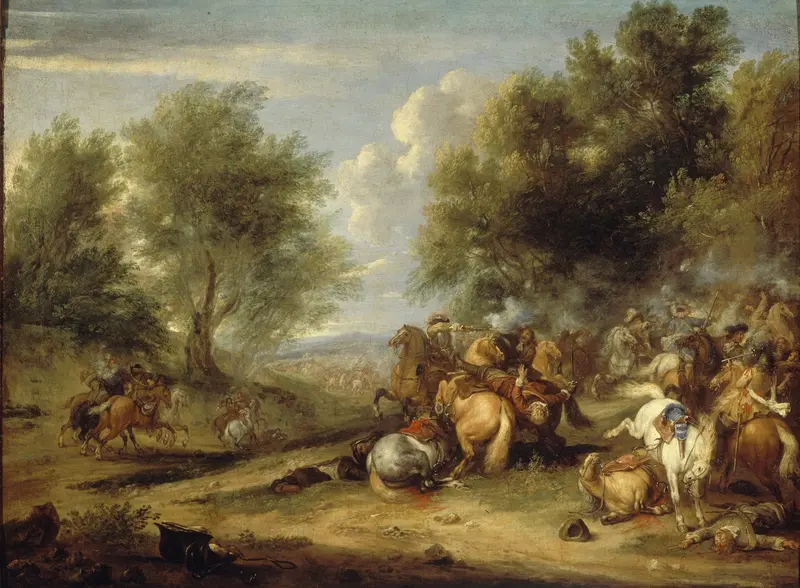
Choc de cavalerie ou Combat de cavalerie
Adam Frans van der Meulen
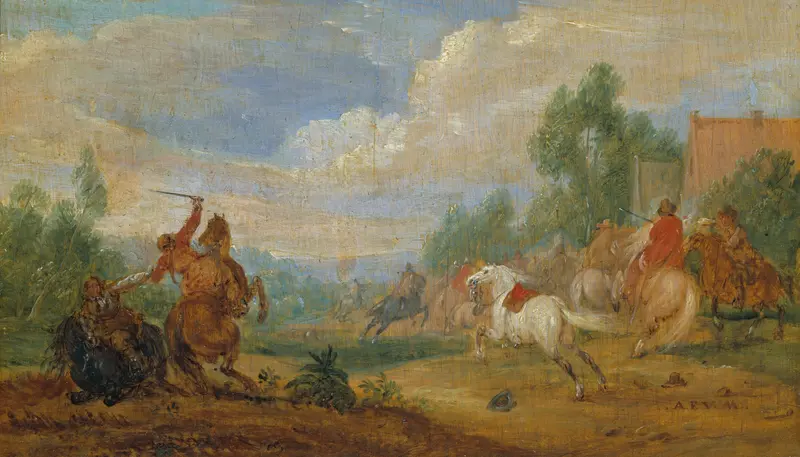
Cavalry Skirmish
Adam Frans van der Meulen
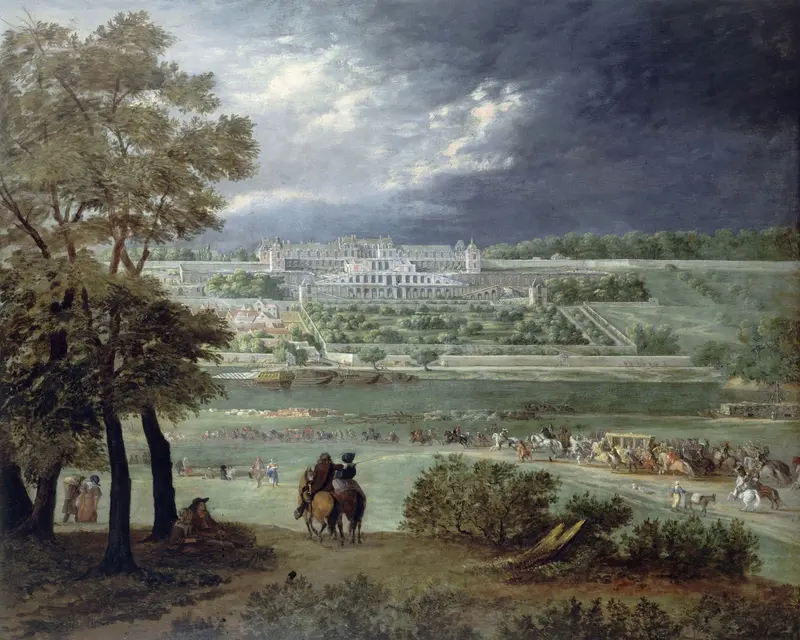
Le Château Neuf de Saint-Germain-en-Laye et les jardins, vus de la rive droite de la Seine
Adam Frans van der Meulen
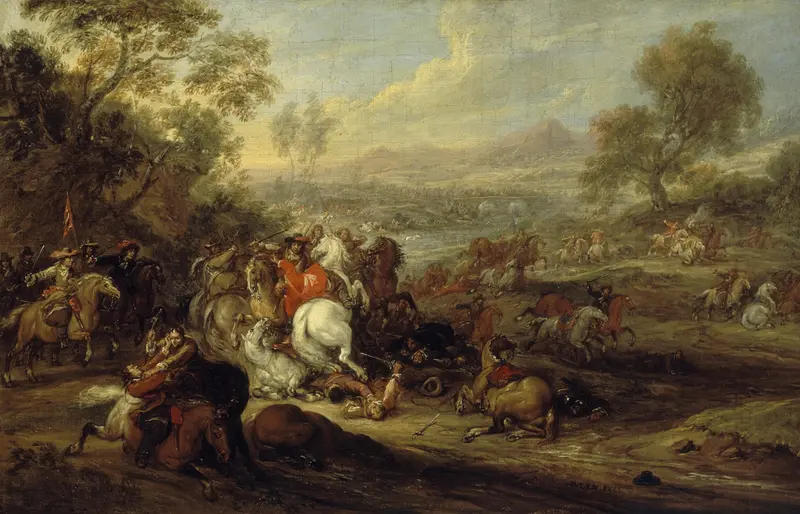
Choc de cavalerie ou Combat de cavalerie
Adam Frans van der Meulen
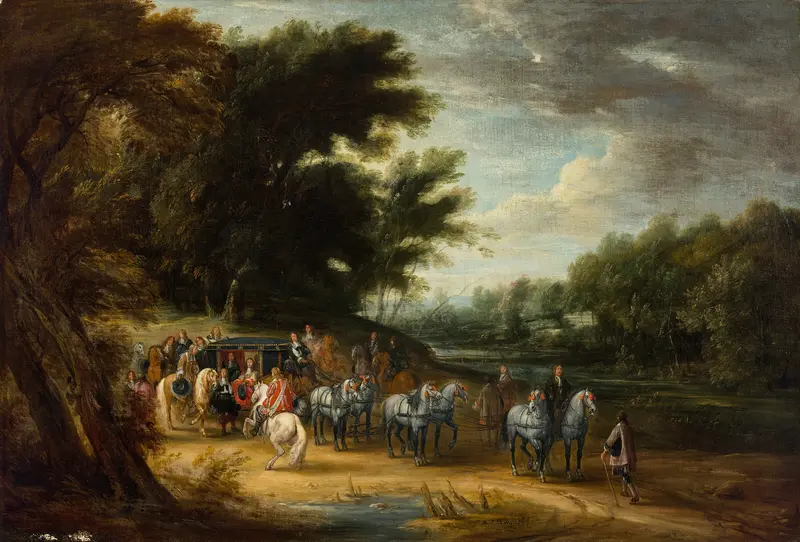
A nobleman in a state coach at rest escorted by his men and horses, with a gentleman on a white horse approaching and landscape beyond
Adam Frans van der Meulen





