
The Silver Goblet — History & Facts
In The Silver Goblet, Jean Siméon Chardin presents a still life featuring a gleaming silver goblet at the center. Surrounding the goblet are an assortment of fruits, including grapes, apples, and peaches, all rendered in rich, vibrant colors. The background is softly blurred, drawing attention to the detailed textures of the goblet and the fruits.
The overall composition conveys a sense of harmony and balance. The painting is executed in oil on canvas, a common medium for Chardin's still lifes. The use of light and shadow creates a three-dimensional effect, enhancing the realism of the objects depicted. Chardin's meticulous attention to detail is evident in the reflections on the silver goblet and the subtle gradations of color in the fruits.
This technique showcases his skill in capturing both texture and form. Jean Siméon Chardin was a prominent French painter known for his still lifes and genre scenes during the 18th century. The Silver Goblet reflects his mastery of light and texture, hallmarks of the Rococo style. Interestingly, Chardin often preferred simple subjects, focusing on everyday objects to convey beauty and elegance.
This painting exemplifies his ability to elevate the mundane into art.
More Artworks by Jean Siméon Chardin

The Ray
Jean Siméon Chardin
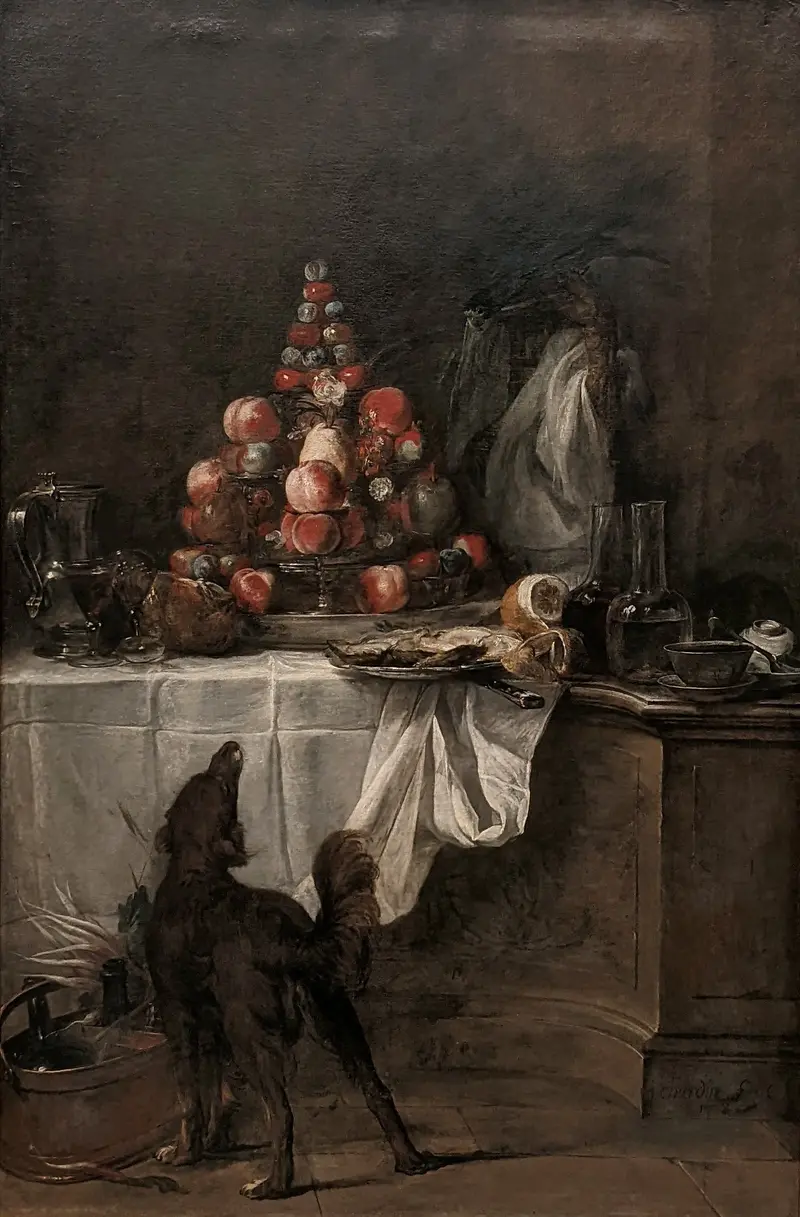
The Buffet
Jean Siméon Chardin

The White Tablecloth
Jean Siméon Chardin
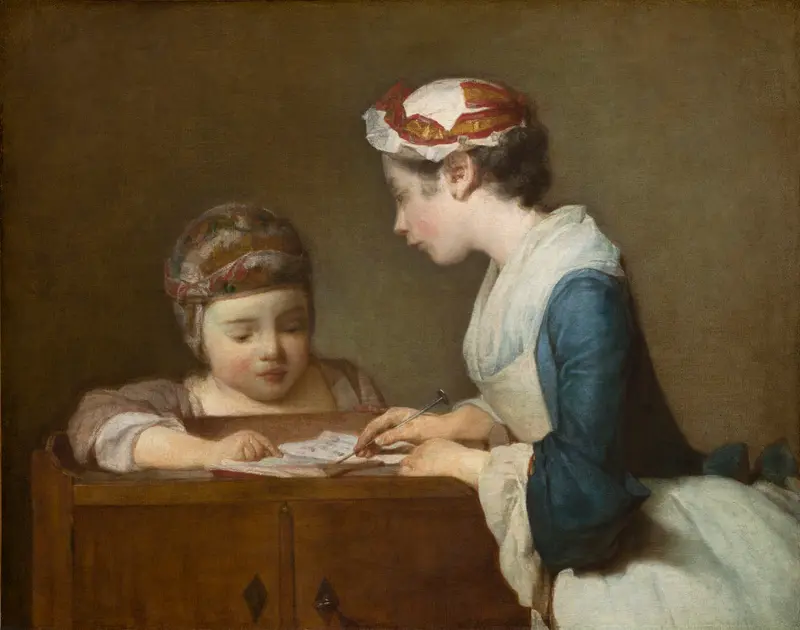
The Little Schoolmistress
Jean Siméon Chardin
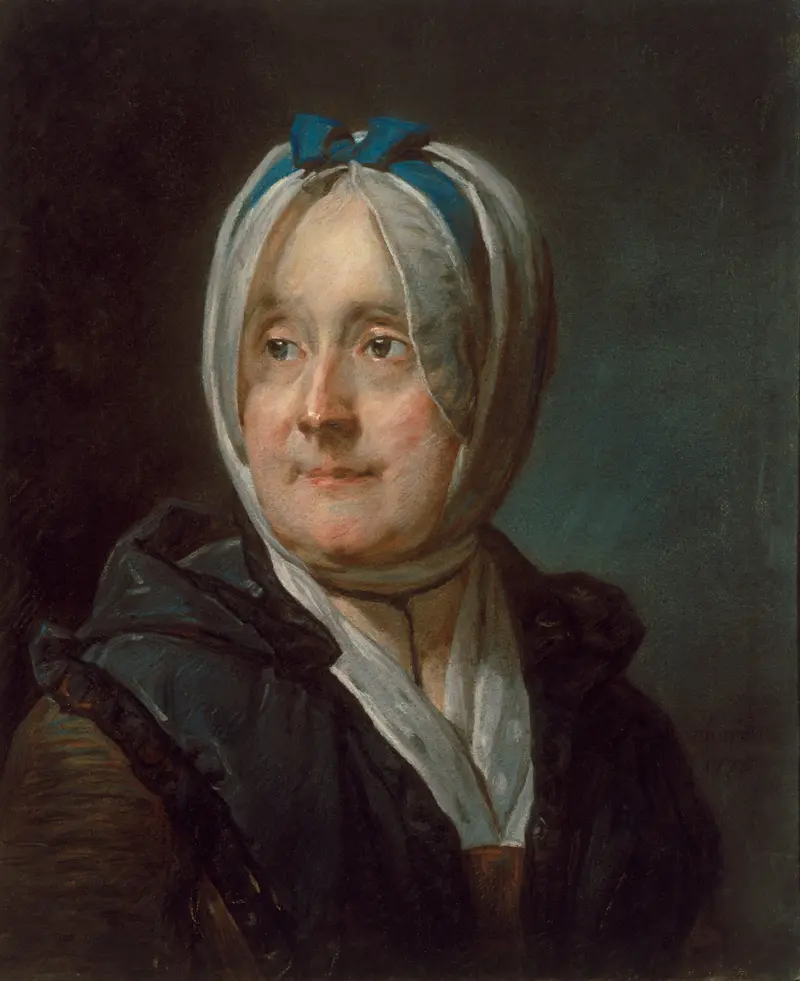
Portrait of Madame Chardin
Jean Siméon Chardin
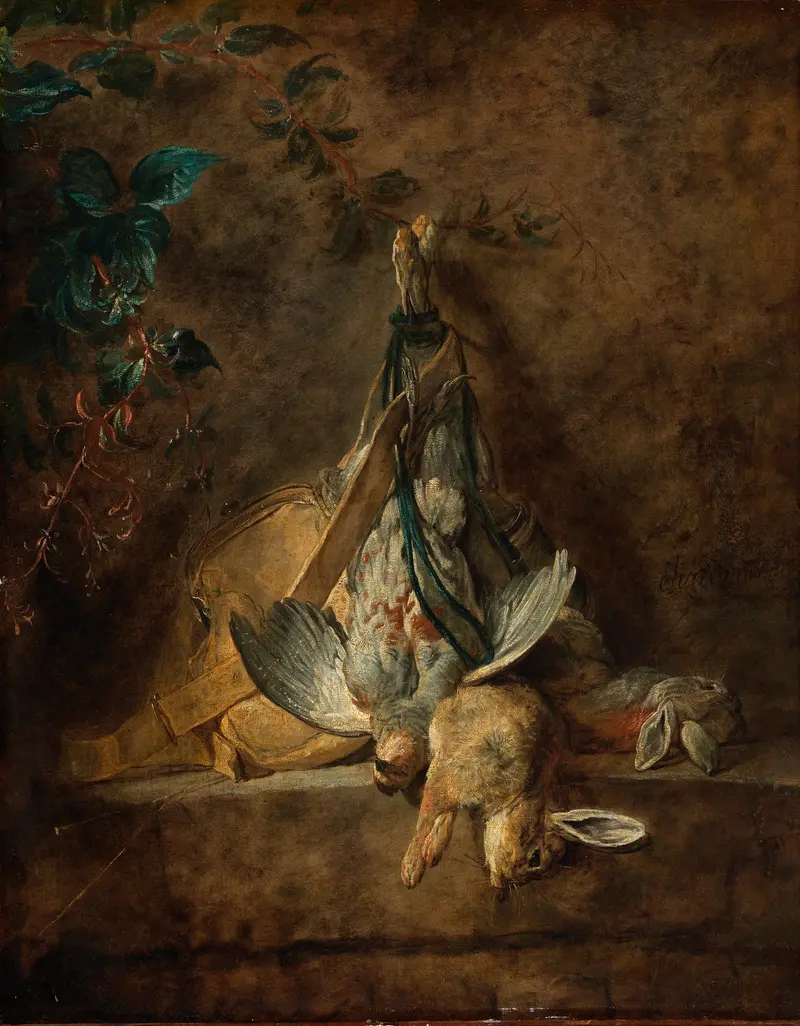
A Still Life; Two Rabbits, a Grey Partridge, Game Bag and a Powder Flask
Jean Siméon Chardin
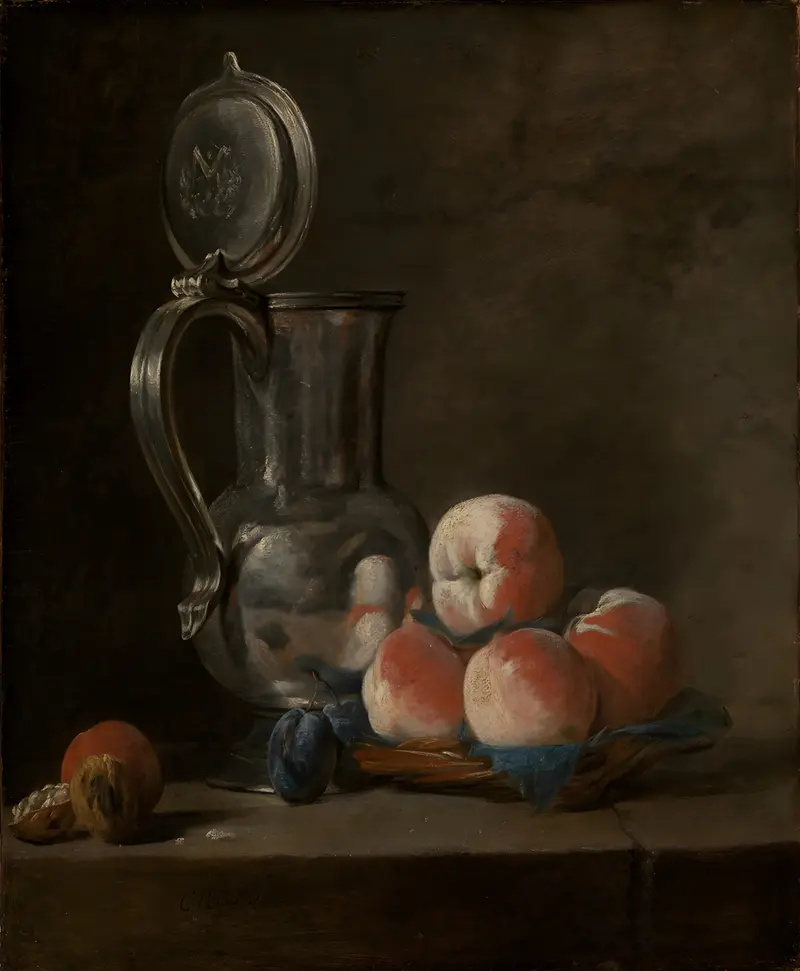
Still life with pewter jug and peaches
Jean Siméon Chardin
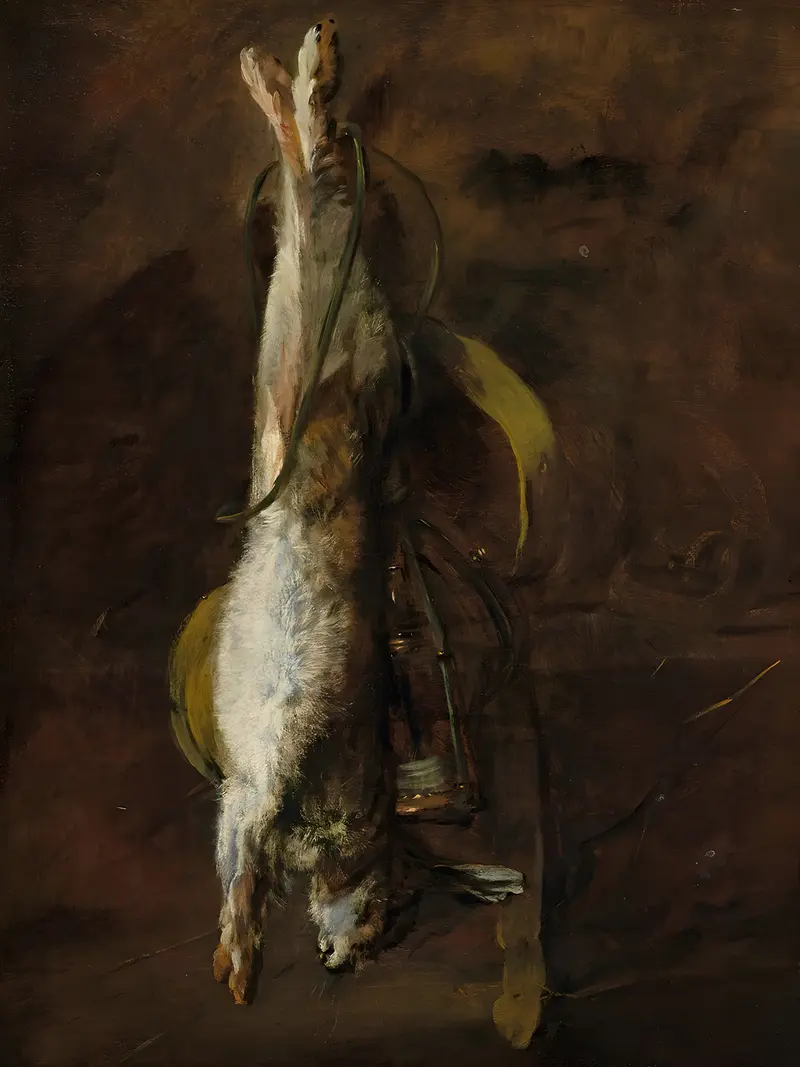
A dead rabbit and a satchel
Jean Siméon Chardin
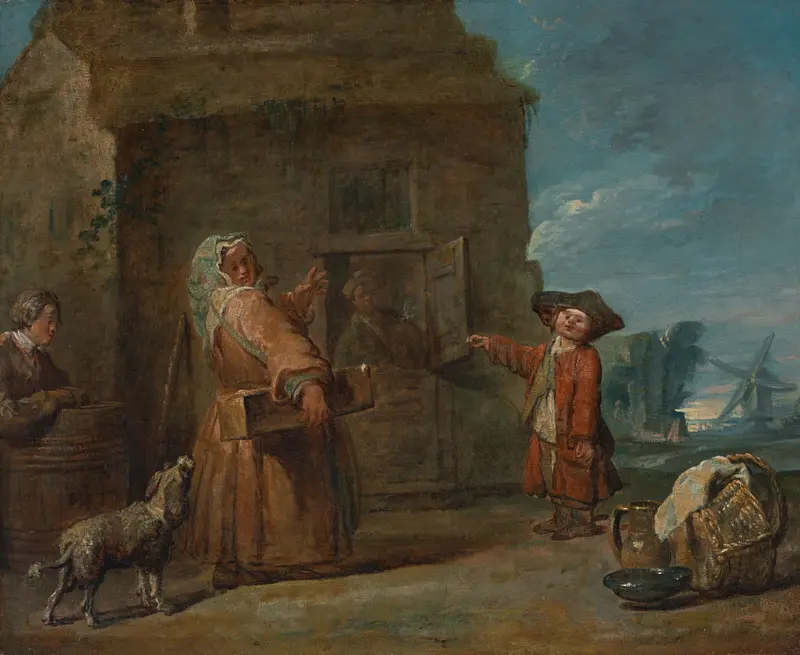
A genre scene, possibly La boïte du prestidigitateur (‘The Conjurer’s Box’)
Jean Siméon Chardin
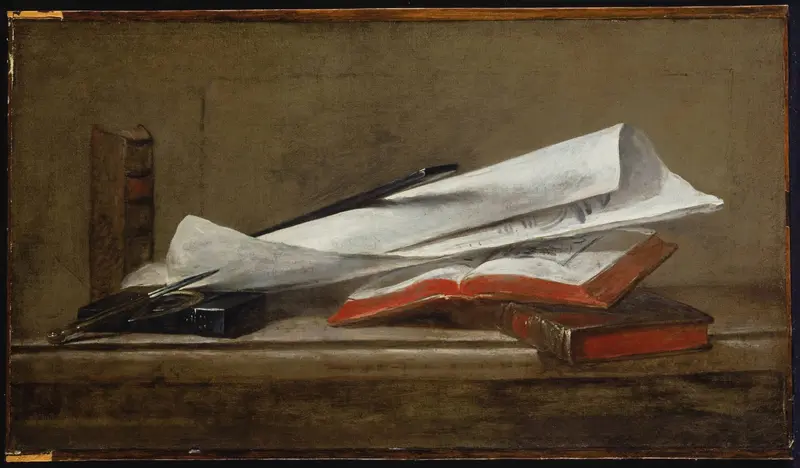
Attributes of the Architect
Jean Siméon Chardin





