
The Sin — History & Facts
The Sin is an oil painting completed by Franz von Stuck in 1893. Created during a formative period in the artist’s career, this work is recognized as a key example of late 19th-century Symbolism in German art. The painting is notable for its exploration of themes of temptation and moral transgression, which would become central motifs in Stuck’s oeuvre. The composition features a half-nude female figure emerging from a dark, shadowy background.
Her upper body is illuminated, while her face and the surrounding space are shrouded in deep shadow. A large serpent coils around her shoulders, its head resting near her chest, and her gaze is directed outward, partially obscured by darkness. The palette is dominated by somber browns and blacks, with subtle highlights on the figure’s skin, creating a stark contrast that emphasizes the subject’s form and the symbolic presence of the serpent. The Sin was first exhibited in 1893 and quickly became one of Stuck’s most celebrated works, establishing his reputation in the Munich art world.
The painting has been widely reproduced and discussed in art historical literature as an emblem of Symbolist fascination with the femme fatale. The 1893 painting is in the Neue Pinakothek in Munich; Stuck returned to the subject in several later versions.
More Artworks by Franz von Stuck

A portrait of Marianne Mechler
Franz von Stuck
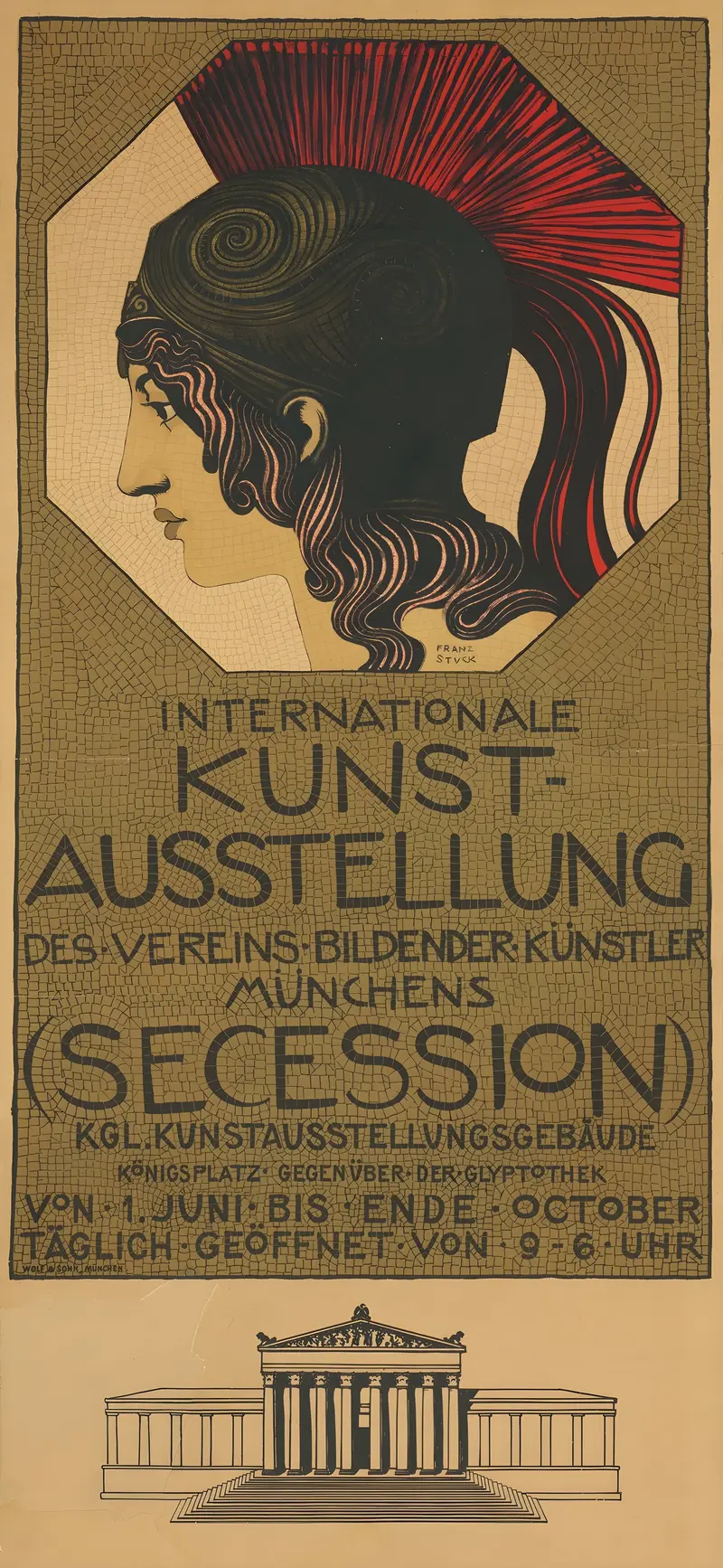
Internationale Kunstausstellung des Vereins Bildender Künstler München Secession
Franz von Stuck
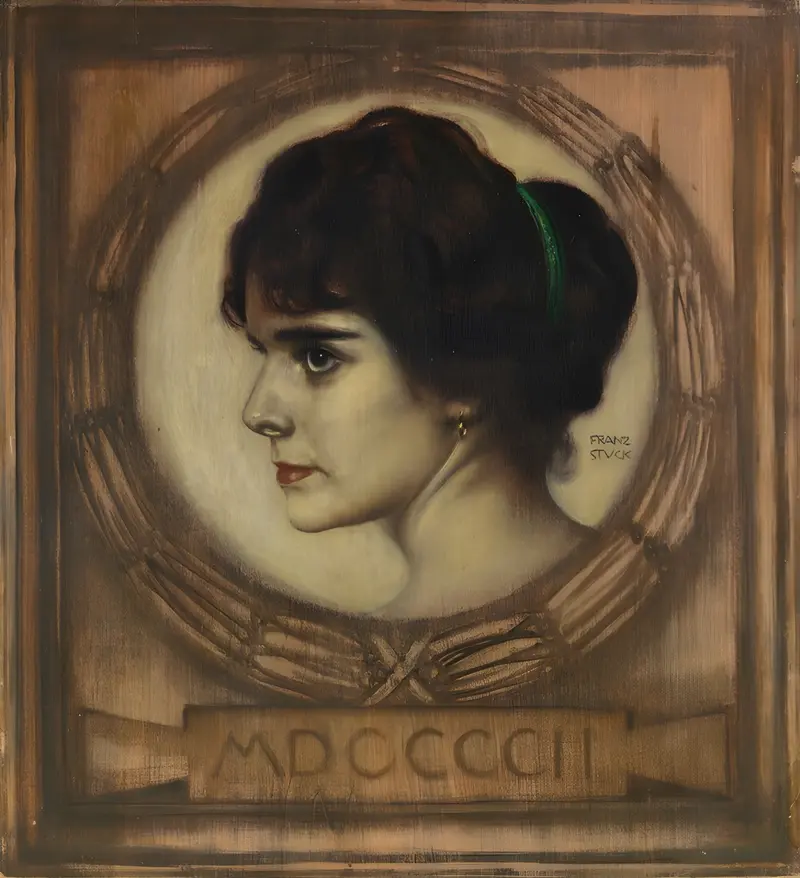
Porträt Gemma Bierbaum
Franz von Stuck
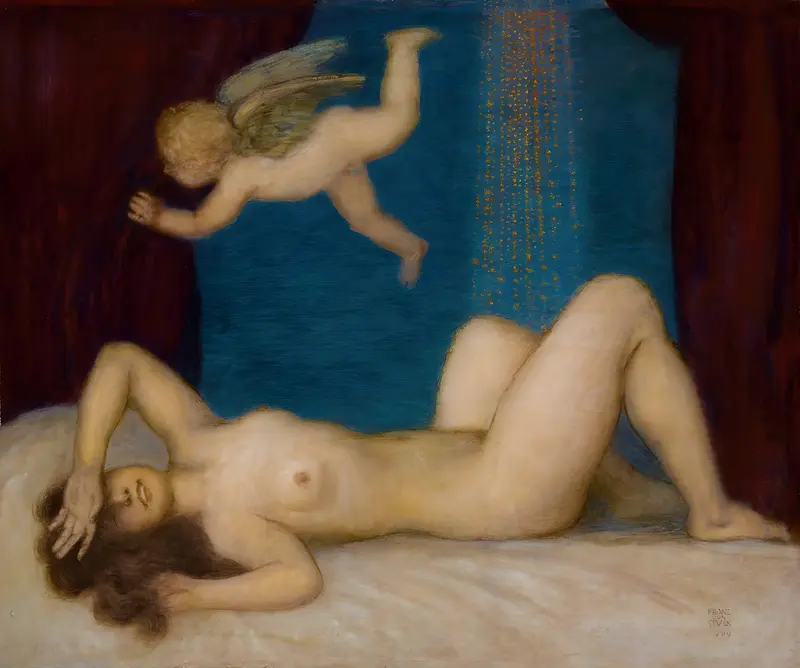
Danae and the Golden Shower
Franz von Stuck
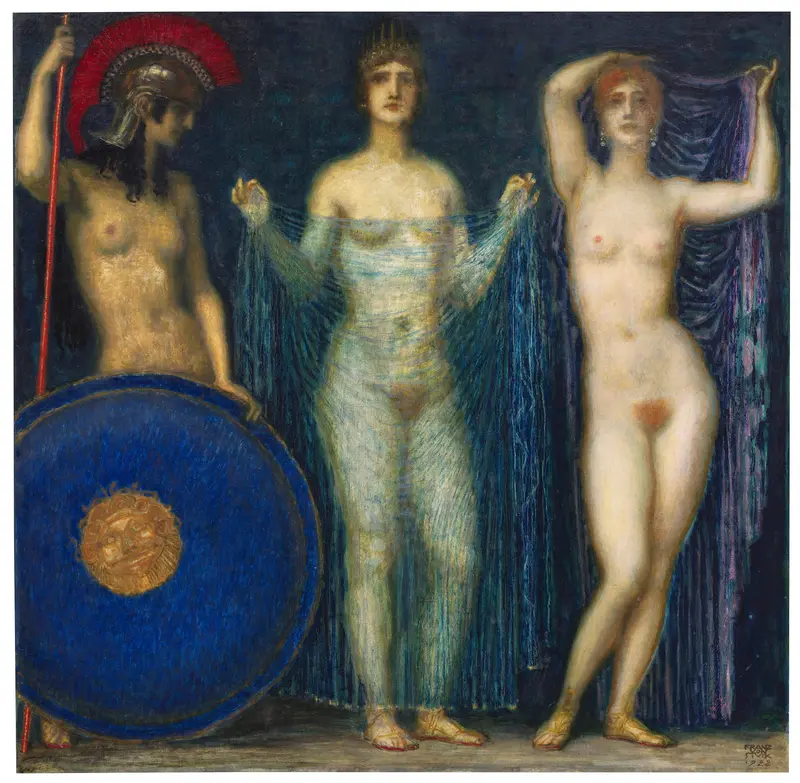
Urteil des Paris
Franz von Stuck
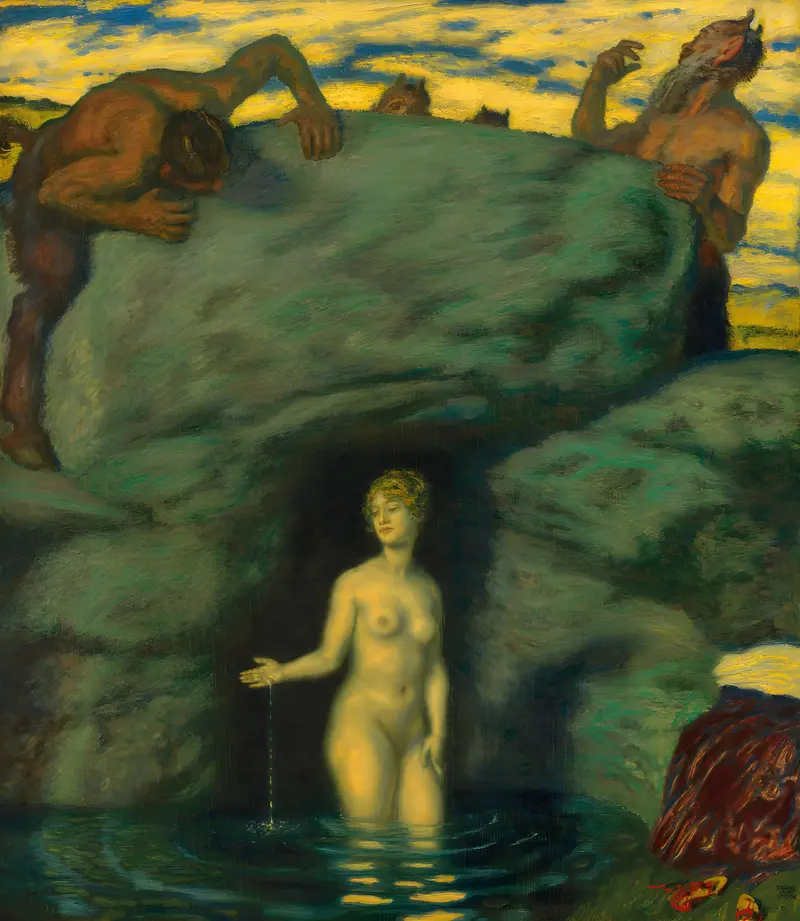
Quellnymphe von Faunen belauscht
Franz von Stuck
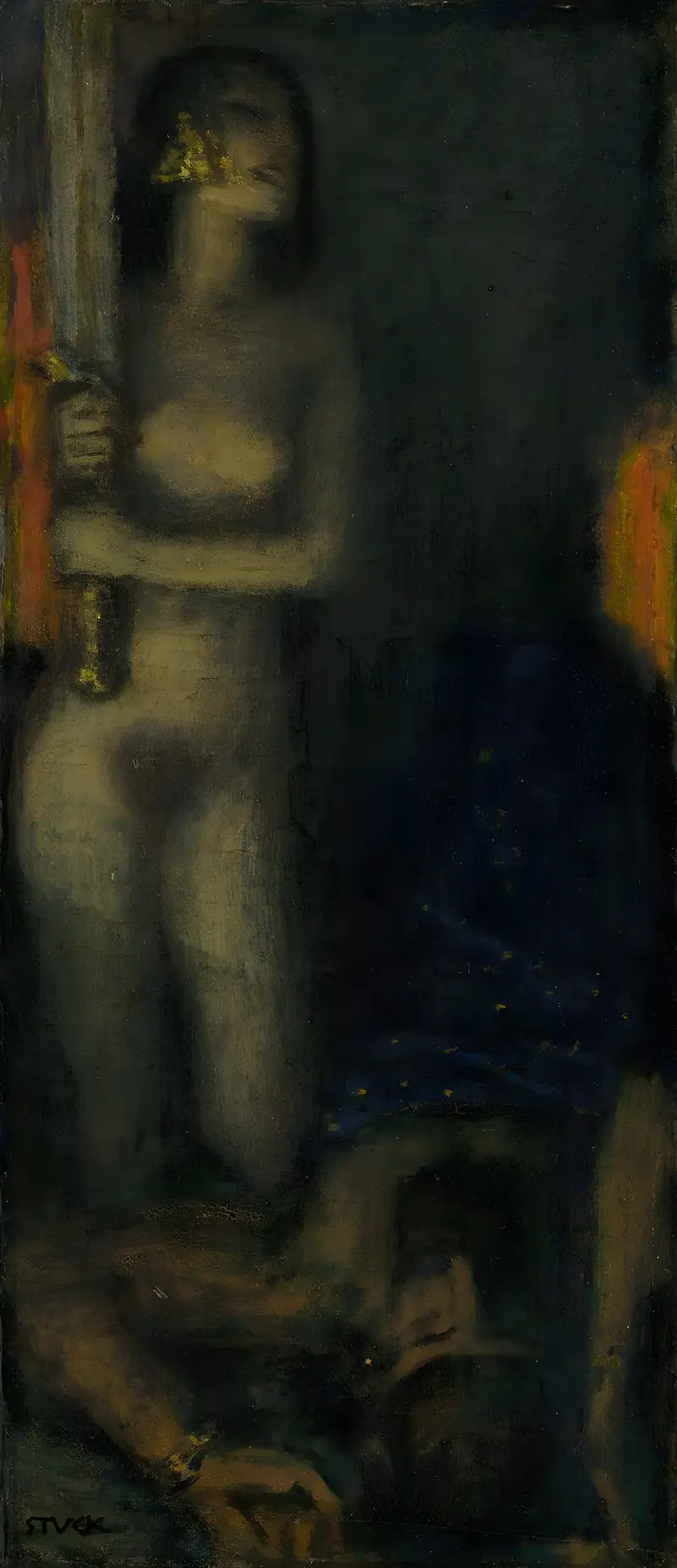
Judith and Holofernes (study)
Franz von Stuck
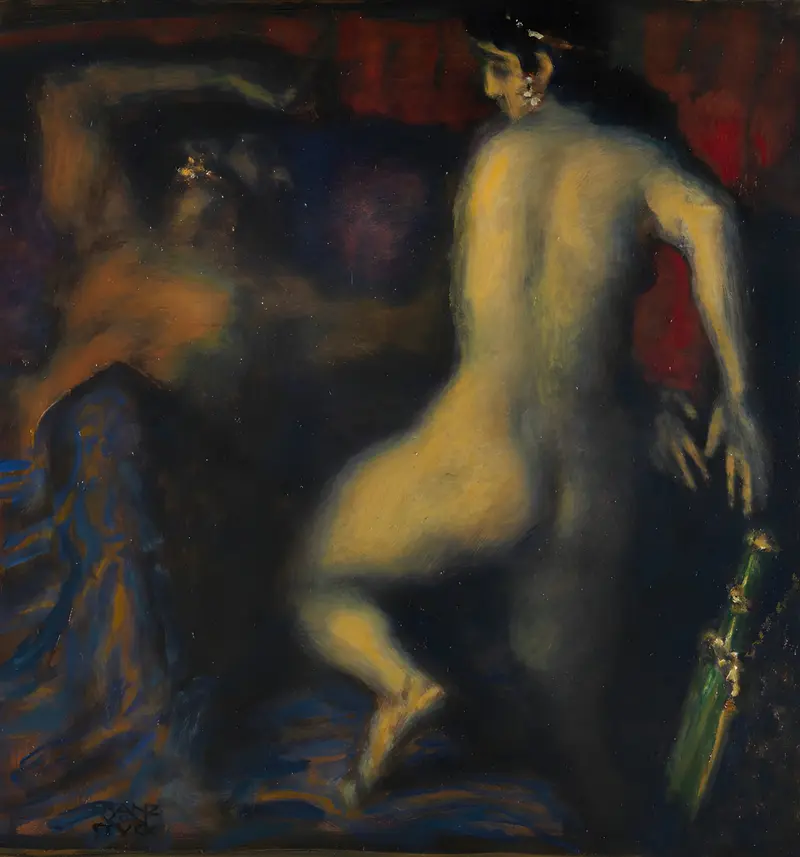
Judith und Holofernes
Franz von Stuck
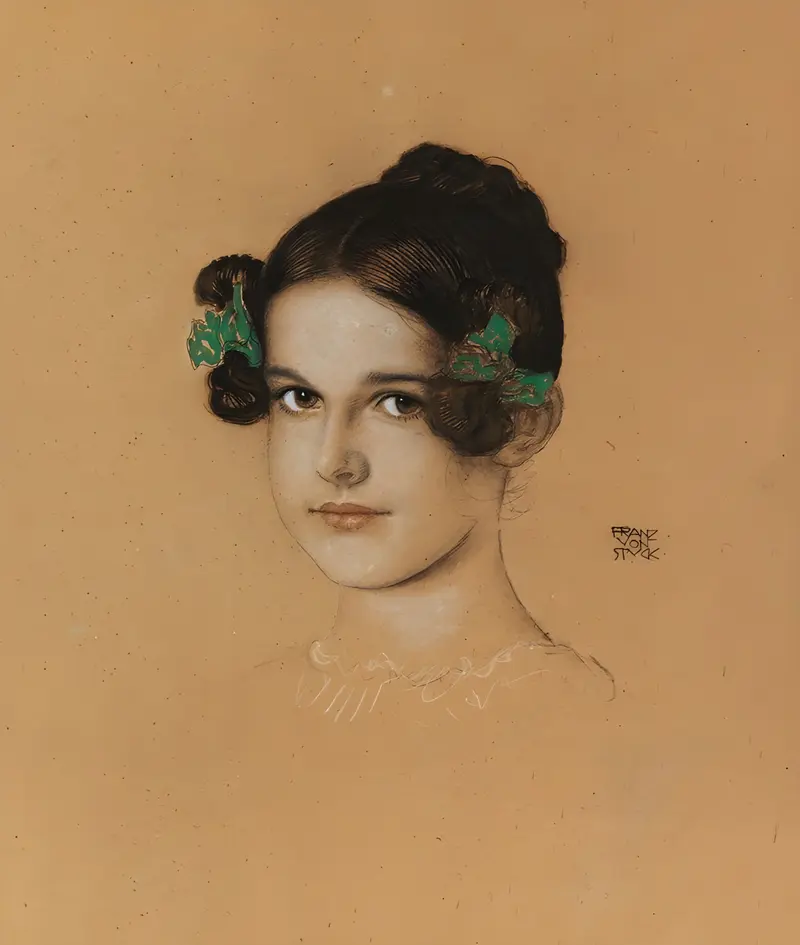
Bildnis der Tochter Mary mit grünen Schleifen
Franz von Stuck
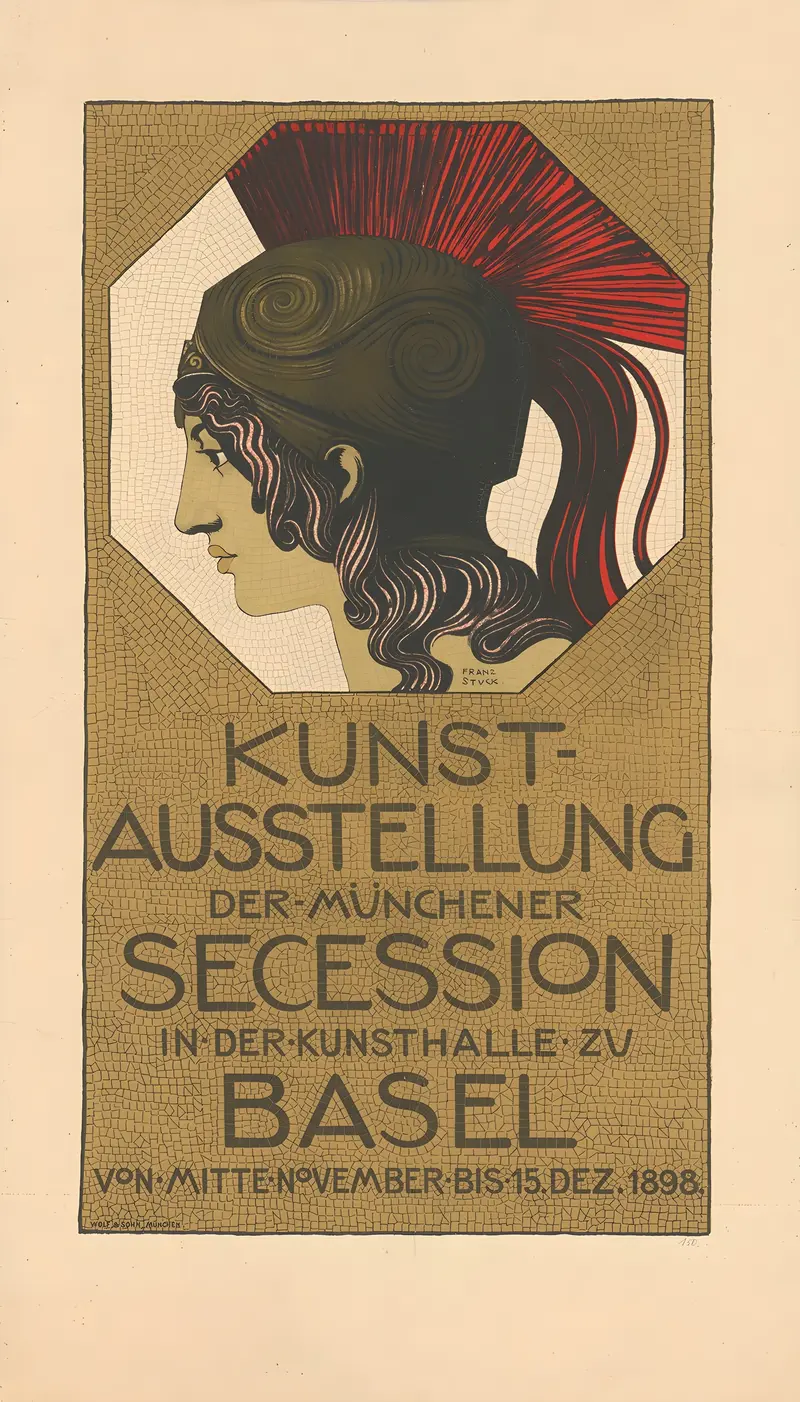
Kunstausstellung der Münchener Secession Basel
Franz von Stuck





