The Sledge Ride — History & Facts
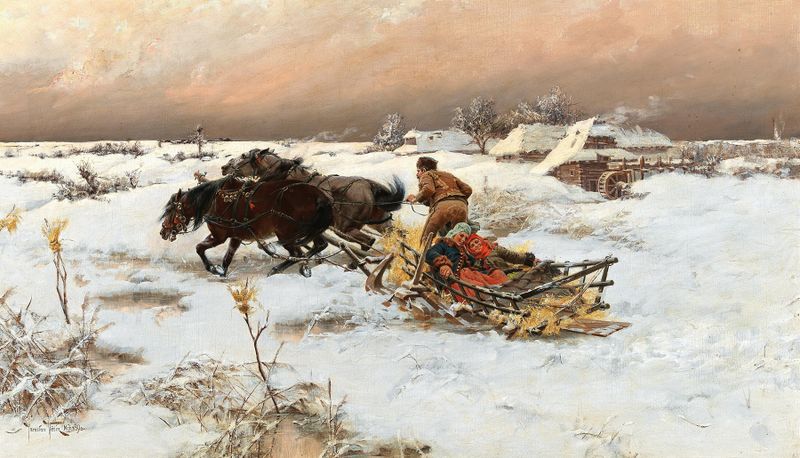
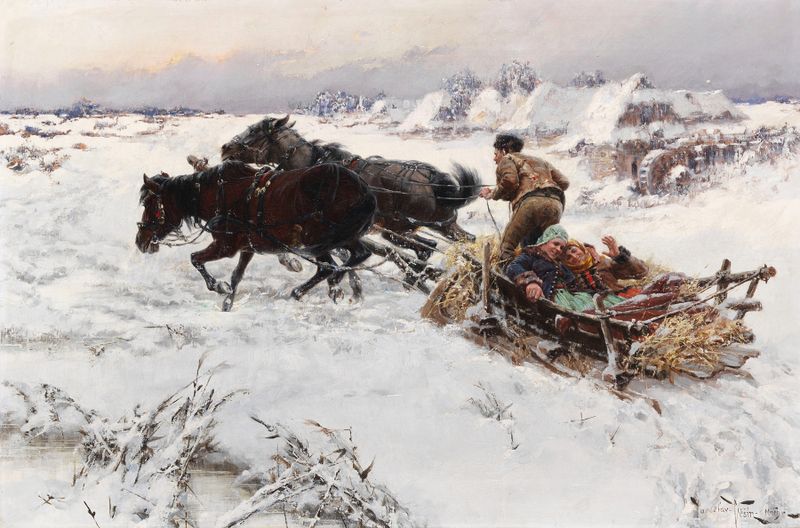
What if beauty was never meant to be finished? In The Sledge Ride, Jaroslav Věšín captures a moment suspended in time, where joy and obsession intertwine under the crisp, white expanse of a winter landscape. Look to the center, where a sledge glides effortlessly across the snow, its deep crimson color a stark contrast against the pristine backdrop. The figures bundled beneath a cascade of furs and blankets exude warmth, their expressions alive with exhilaration, framed perfectly by the tall, dark silhouettes of frosted trees. Notice how the light dances upon the snow, casting playful shadows that ripple like whispers of laughter, while the muted sky hints at the mystique of a fleeting moment. Yet, beneath the surface of this jubilant ride lies a tension that pulls the viewer deeper, suggesting an almost obsessive relationship with this pristine world.
The swift motion of the sledge juxtaposes the stillness of the surrounding landscape, portraying a delightful escape from the ordinary, yet hinting at a yearning for something more enduring amid the fleeting joy of winter. The meticulous detail in the figures’ expressions invites contemplation on the nature of happiness and the bittersweet chase for beauty in life. In 1890, Věšín painted this artwork during a time marked by the burgeoning influence of Impressionism in Europe, as artists sought to capture transient moments of life. Living and working in Prague, he was inspired by his surroundings, embracing the emotional resonance between nature and human experience.
This period was pivotal for artists, as they began to challenge traditional forms and seek greater expressiveness, a pursuit vividly evident in his work.