Lustige Schlittenfahrt — History & Facts
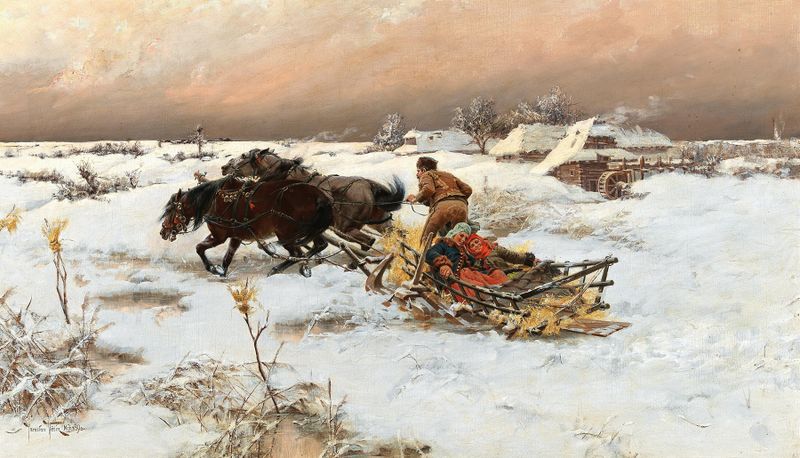
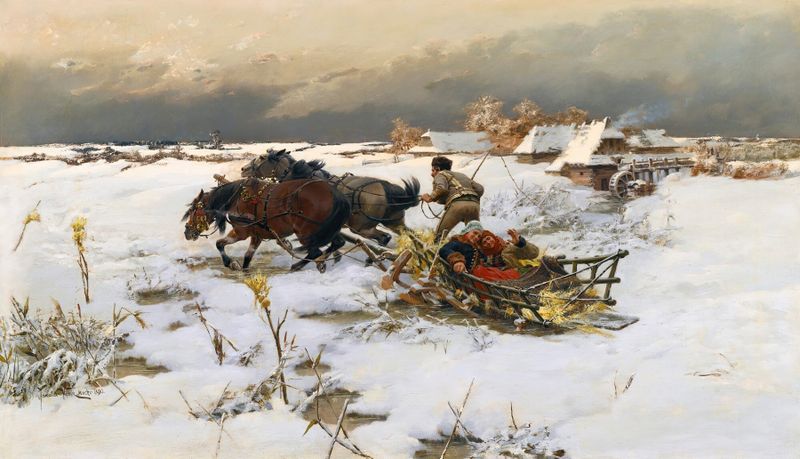
In the realm of art, shadows often speak louder than light, communicating emotions and secrets that mere colors cannot convey. Look closely at the vibrant palette of Lustige Schlittenfahrt. The playful reds and blues dance across the canvas, but it’s the subtle shadows cast by the figures that draw the eye first. Notice how the light clings to the snow, creating a bright contrast that enhances the depth of the scene.
The sledge, adorned with joyful passengers, is depicted in motion, its contours animated by the interplay of light and shadow. Each character is uniquely expressive, their silhouettes suggesting both laughter and an underlying tension that hints at stories untold. As you explore further, subtle contrasts emerge within the jubilant composition. The cheerful expressions of the sledders are juxtaposed with the somber shadows in the surrounding trees, suggesting that joy can exist alongside uncertainty.
There’s a delicate balance between exuberance and melancholy; the scene is a reminder that even the most lively moments are often tinged with the weight of what lies beneath. The shadows do not merely exist as a backdrop; they envelop the figures, suggesting that their laughter hides deeper complexities. Jaroslav Věšín created Lustige Schlittenfahrt in 1890, during a time when he was immersed in the vibrant artistic currents of Bohemia. The integration of folk themes into his work reflected a broader movement in Central European art, where local customs and narratives began to gain prominence.
At this juncture, Věšín was not just painting a lively winter scene; he was contributing to a cultural dialogue that celebrated identity and the rich tapestry of everyday life.