The Slijpsteenmarkt (Whetstone Market), Amsterdam — History & Facts
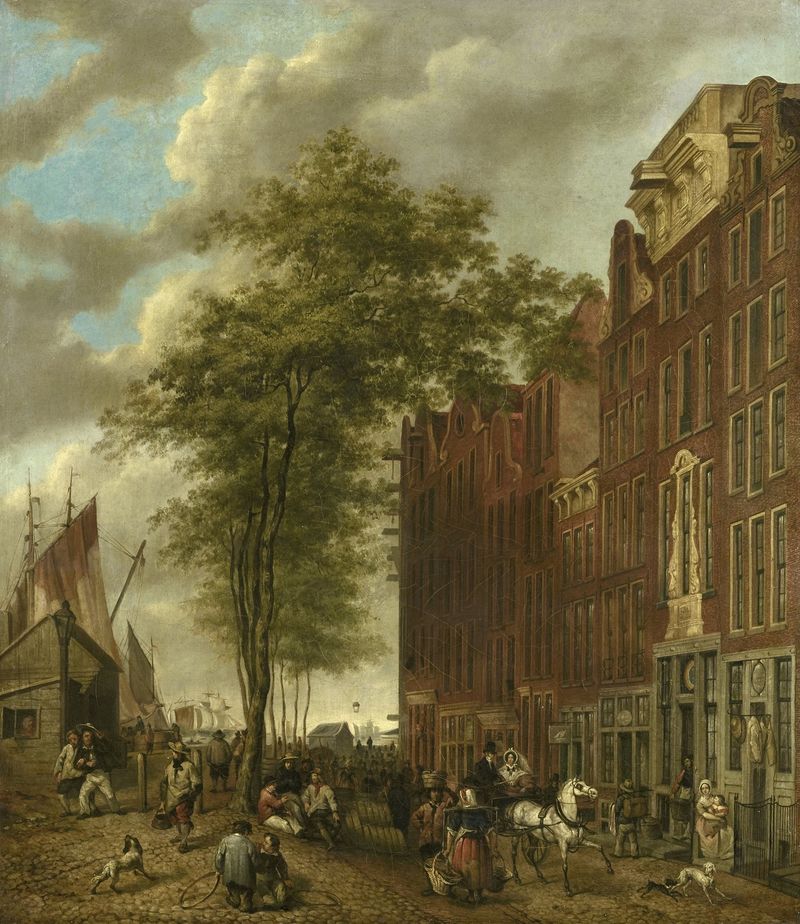
What secret hides in the quiet of the canvas? In the heart of a bustling market, an air of decay lingers, challenging the vibrancy of life around it. Look to the left at the cluster of figures gathered over a whetstone, their hands poised with purpose. The artist employs muted earth tones, with dappled light filtering through the overhanging canopies, casting shadows that dance on the cobblestones below. The composition is balanced yet dynamic, emphasizing the tension between the lively exchange of commerce and the stillness of the whetstone, a tool both ancient and essential. Notice the contrast between the lively figures and the weary, worn stones in the foreground, hinting at a world of labor and repetition.
Each face tells a story, but the subtle decay of the scene speaks louder; it alludes to the passage of time and the inevitable fading of both energy and material. The juxtaposition of bustling activity and the decay of everyday life invites reflection on the transitory nature of existence and the hidden stories of those who labor in the shadows. Willem Pieter Hoevenaar painted this market scene in 1835, during a time when Amsterdam was evolving yet retaining its historical charm. The artist sought to capture the essence of daily life amidst societal changes, reflecting the struggles and triumphs of the working class.
This moment reveals a world at once vibrant and melancholic, as industrialization began to reshape the landscape, bringing forth new challenges and opportunities for its inhabitants.