The Smokers — History & Facts
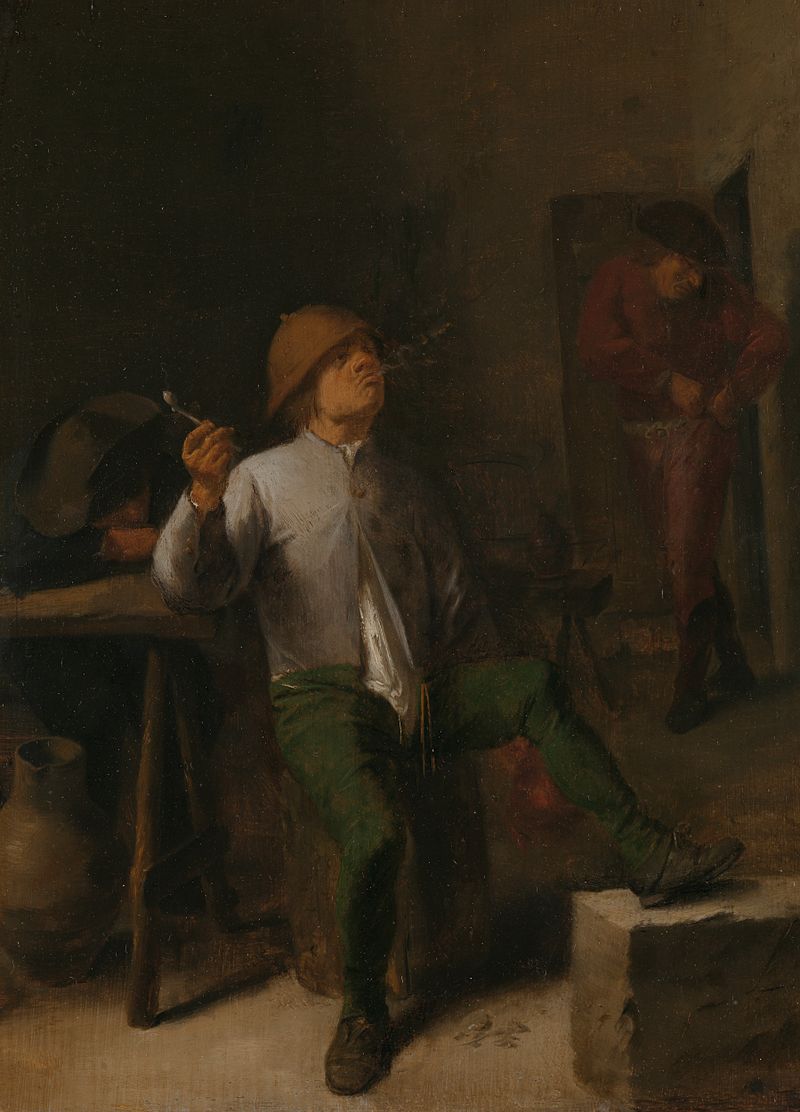
This intimate gathering invites us to peel back the layers of camaraderie and solitude, revealing the quiet revelations hidden within a moment. Look to the left at the figure absorbed in thought, his brow furrowed, smoke curling lazily from the pipe resting between his fingers. Notice how the warm, earthy tones envelop the room, casting shadows that dance across the walls, mimicking the flicker of flame from the nearby hearth. The light spills gently onto the faces of the figures, illuminating the complex expressions that narrate a shared experience, each gesture a testament to their unspoken bond. Yet it’s the small details that resonate most profoundly.
The stark contrast between the jovial laughter of one figure and the contemplative demeanor of another hints at the duality of human experience—connection and isolation intertwined. The rich textures of their clothing suggest a narrative of class, while the haze of smoke symbolizes both the passage of time and the fleeting nature of life. In this seemingly simple scene, Brouwer captures the essence of revelation, where shared moments can unveil deeper truths about existence. In 1636, Brouwer painted this piece during a time of artistic flourishing in the Dutch Golden Age, when genre painting thrived.
He was known for his focus on the lives of common people, capturing their reality with a sense of authenticity and depth. As the world around him evolved, his work reflected the complexities of human emotion and experience, solidifying his place as a significant figure in the art of his time.