
The South Front of the Senate House, and West End of St Mary’s Church in the University of Cambridge — History & Facts
Could beauty survive in a century of chaos? In the serene yet somber depiction of a Cambridge landscape, the answer unfolds through the delicate brushstrokes of a forgotten artist. Look closely at the center where the Senate House stands resolutely, its neoclassical architecture contrasting sharply with the softness of the surrounding greenery. Notice how the gentle hues of green and beige intertwine, giving life to the structure while simultaneously emphasizing a sense of isolation. The sky, painted in muted blues, casts a tranquil light over the scene, engendering a moment of stillness that invites reflection. Amid the grandeur, one senses an underlying loneliness woven into the fabric of the composition.
The empty space around the buildings echoes a deeper narrative of solitude within the academic realm, as if the very walls of knowledge have become barriers to connection. The juxtaposition of the intricate details of architecture against the vast, unpopulated landscape evokes a tension between ambition and isolation, mirroring the human experience of seeking greatness in solitude. Created in 1799, the artist was navigating a transitional period in British art, where the Enlightenment's ideals clashed with the burgeoning Romantic movement. Thomas Malton the Younger, primarily known for his architectural illustrations, captured this blending of styles during a time when industrialization loomed, influencing both the physical and emotional landscapes of society.
Such works reflect not only his skill but also the evolving discourse on beauty and loneliness in an increasingly chaotic world.
More Artworks by Thomas Malton the Younger
Browse all →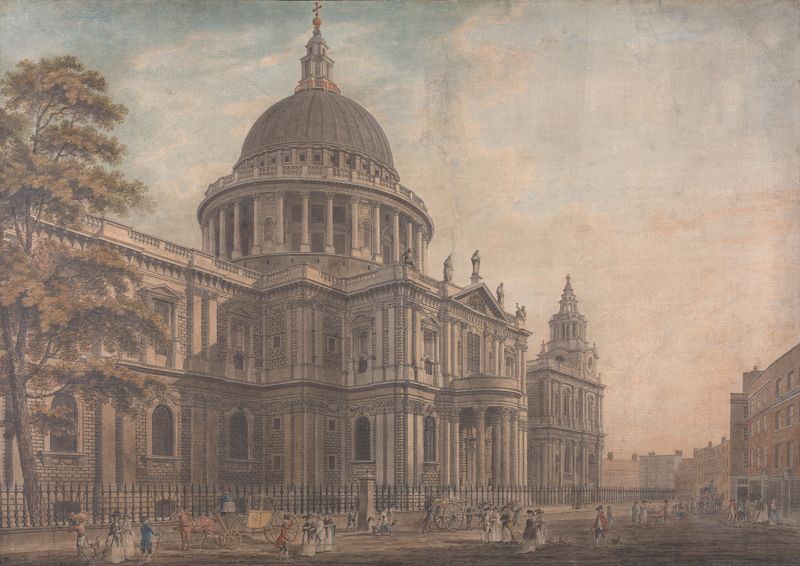
The North Front of St. Paul’s
Thomas Malton the Younger
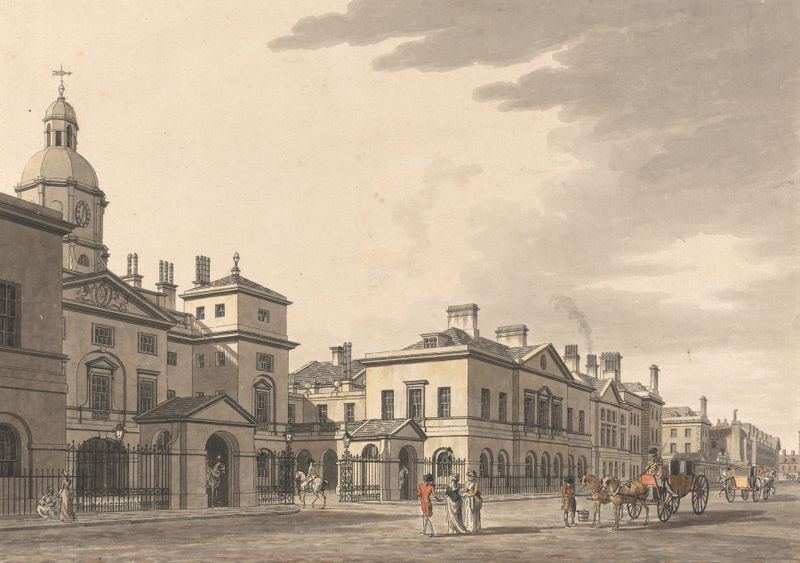
Horse Guards, Whitehall
Thomas Malton the Younger

Interior of St. Paul’s Cathedral
Thomas Malton the Younger
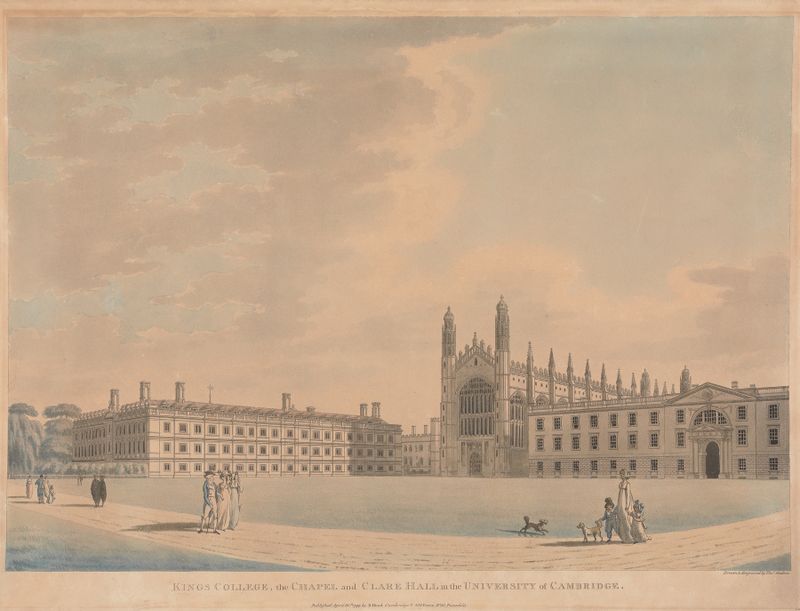
Kings College, the Chapel and Clare Hall in the University of Cambridge
Thomas Malton the Younger

Cambridge University; Jesus College
Thomas Malton the Younger
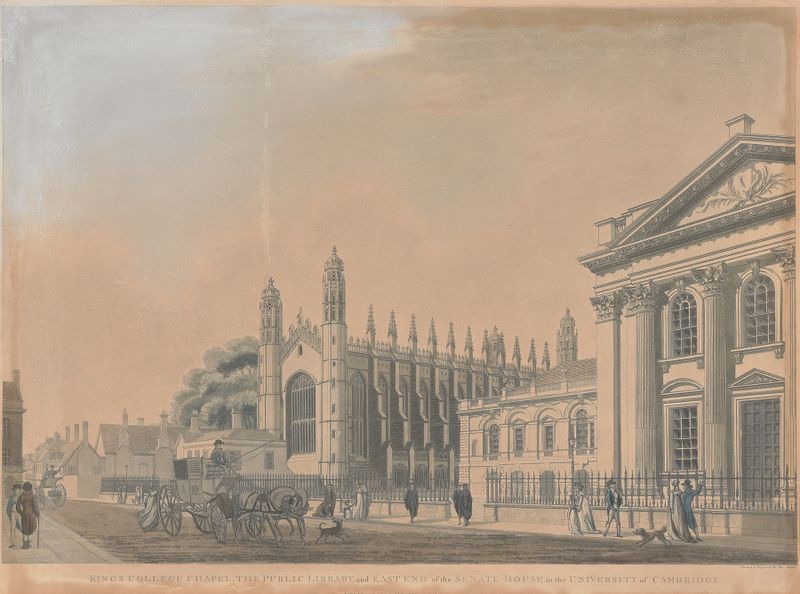
Cambridge University; Kings College Chapel
Thomas Malton the Younger
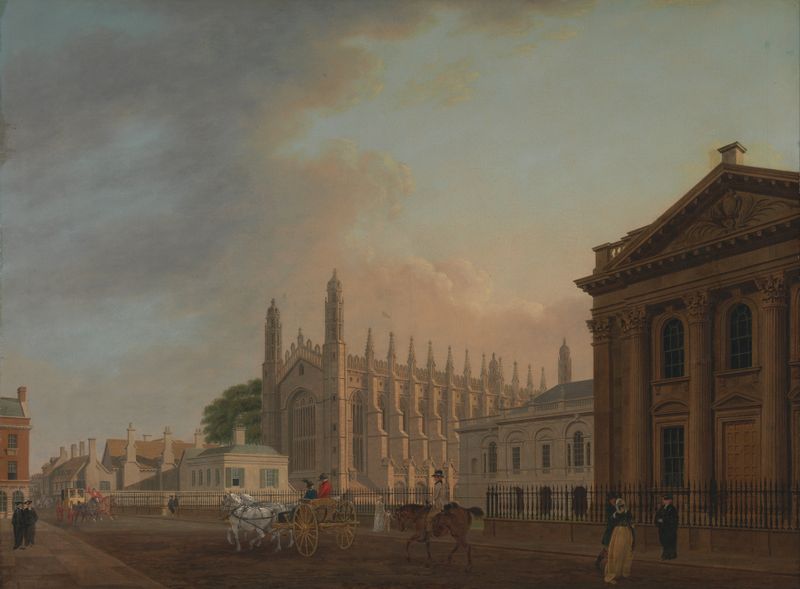
King’s Parade, Cambridge
Thomas Malton the Younger

Cambridge University; Queens College
Thomas Malton the Younger
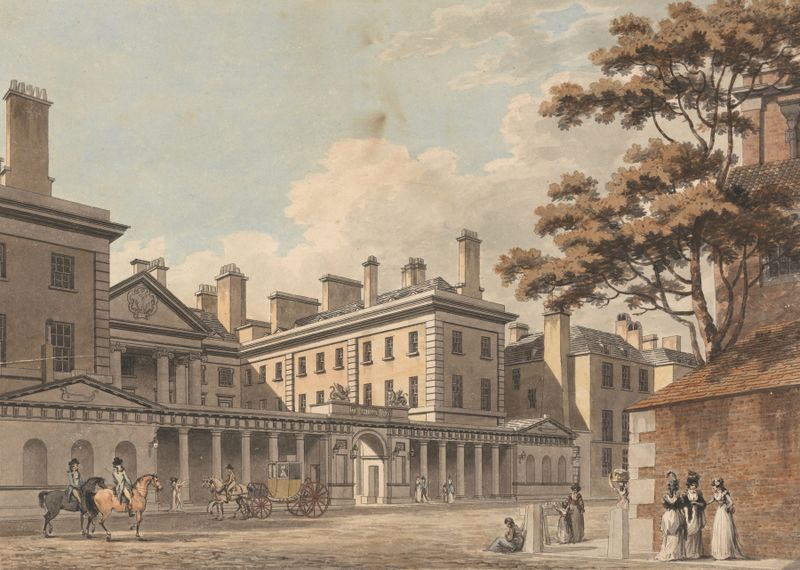
The Admiralty
Thomas Malton the Younger

Banqueting House, Whitehall
Thomas Malton the Younger
More Architecture Art
Browse all →
The statue of Liberty
Frédéric Auguste Bartholdi

View of Houses in Delft, Known as ‘The Little Street’
Johannes Vermeer

View of Houses in Delft, Known as ‘The Little Street’
Johannes Vermeer

The Cathedral in Rouen. The portal, Grey Weather
Claude Monet

The yellow house
Vincent van Gogh

The Church in Auvers-sur-Oise, View from the Chevet
Vincent van Gogh