
The Temple of Minerva Medica — History & Facts
Could beauty survive in a century of chaos? In the haunting stillness of the Temple of Minerva Medica, remnants of grandeur speak volumes of a time long past, evoking both nostalgia and melancholy. Look to the left at the crumbling columns, their once majestic forms now ravaged by time. Notice how the gentle light filters through the partially intact arches, casting delicate shadows that dance across the floor. The muted palette of earthy tones—ochres, greys, and faded greens—intensifies the atmosphere of decay and forgotten splendor.
These elements combine to envelop the viewer in the poignant silence of history, as if inviting them to step into a moment frozen in time. Yet, buried beneath the surface lies an emotional tension—hope intertwined with despair. The graceful lines of the architecture contrast sharply with the omnipresent decay, symbolizing the fragility of beauty in the face of inevitable decline. Each broken stone and vine-covered wall whispers tales of resilience and loss, evoking reflections on the transience of life and civilization itself. The painting emerged from an era where artists sought to capture the essence of classical ruins, reflecting a broader fascination with antiquity during the 18th and 19th centuries.
The French School, active during a time marked by upheaval and transformation in Europe, explored themes of nostalgia and decay, mirroring the tensions of their contemporary world. This work, though undated, serves as a testament to a moment when the past collided with the uncertainties of the future, forever etched in the memory of art history.
More Artworks by French School
Browse all →
Architectural Landscape with Belisarius Receiving Alms
French School
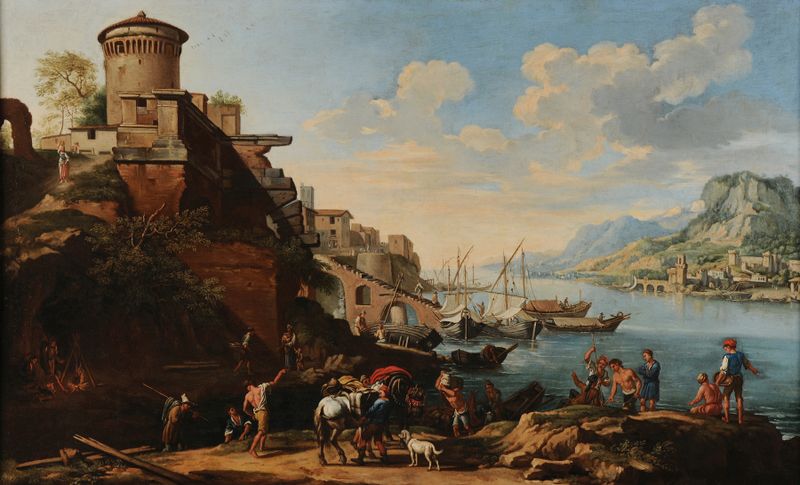
Paysage
French School

The Ponte Salario with Laundresses
French School

Still Life with Eggs and a Leg of Mutton
French School

The Carousal (Scene from Faust?)
French School

The Cave Of Neptune At Tivoli
French School

Portrait of a Lady
French School

A river landscape with figures by ruins
French School
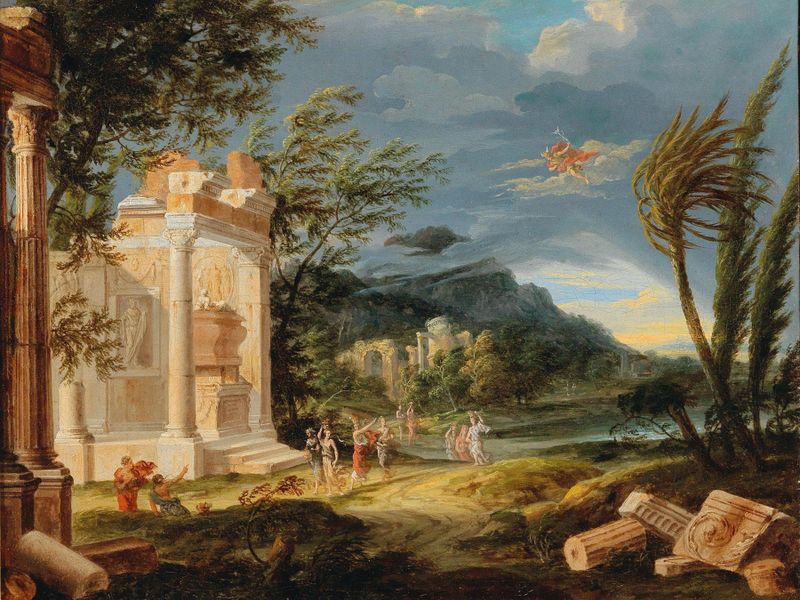
Stormy Landscape with figures and Hermes
French School

Portrait of an Artist
French School
More Architecture Art
Browse all →
The statue of Liberty
Frédéric Auguste Bartholdi

View of Houses in Delft, Known as ‘The Little Street’
Johannes Vermeer

View of Houses in Delft, Known as ‘The Little Street’
Johannes Vermeer

The Cathedral in Rouen. The portal, Grey Weather
Claude Monet

The yellow house
Vincent van Gogh

The Church in Auvers-sur-Oise, View from the Chevet
Vincent van Gogh