
The Temples At Paestum In The Rain — History & Facts
In the quiet spaces of painted history, we find awakenings that whisper truths long forgotten. The stillness of the moment invites contemplation, urging viewers to look deeper into the shimmering layers of oil and light. Focus on the majestic temples rising before you, their stoic beauty ensconced in a gentle rain. The cool blues and grays of the sky blend seamlessly into the somber earth tones of the structures, creating a harmonious yet melancholic atmosphere.
Notice how the artist employs soft brushstrokes to depict the rainfall, allowing it to shimmer against ancient stone, enhancing the timelessness of the scene. Each droplet becomes a moment captured, a testament to nature’s ceaseless passage and the resilience of these monumental relics. Beyond the surface, the painting explores themes of transience and permanence. The rain acts as a cleansing force, highlighting the temples' weathered surfaces while suggesting the power of nature over human achievement.
There is a tension between the enduring beauty of the architecture and the fleeting nature of existence, echoing the notion that even the mightiest can be softened by time's gentle hand. The light breaking through the clouds hints at hope, suggesting that even amidst decay, there exists the possibility of renewal. Frey created this piece between 1839 and 1842, during a time of personal exploration and artistic development in his career. Residing in Switzerland, he was influenced by romantic ideals and the response to classical antiquity.
The increasing interest in landscapes and ruins across Europe found a voice in his work, as he captured the delicate balance between human structures and the natural world, a reflection of a broader artistic movement embracing the sublime and the transient.
More Artworks by Johann Jakob Frey
Browse all →
From The Surroundings Of Rome
Johann Jakob Frey
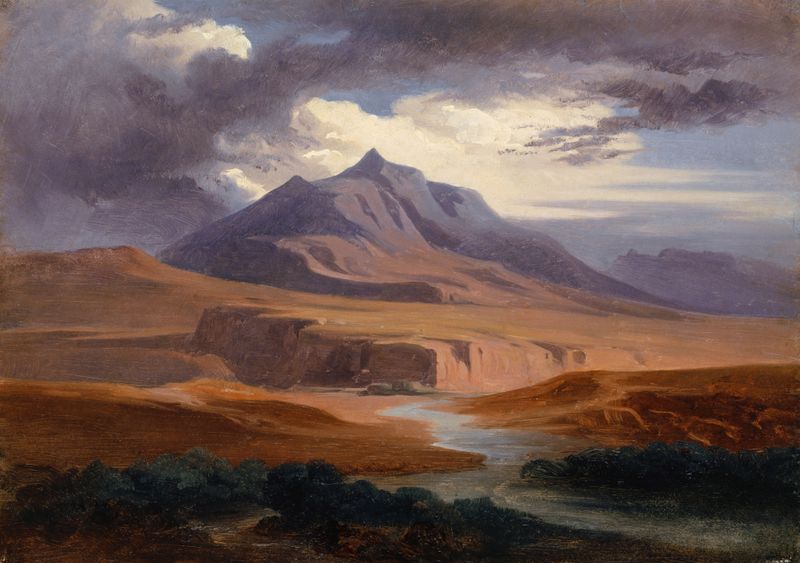
Mountains In The Roman Campagna
Johann Jakob Frey
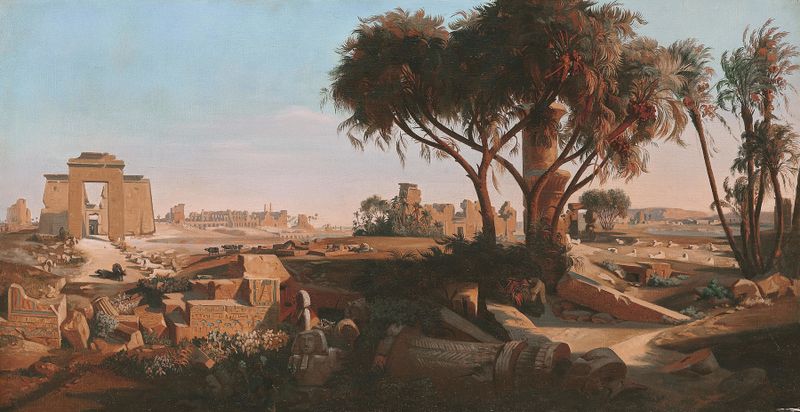
Karnak
Johann Jakob Frey
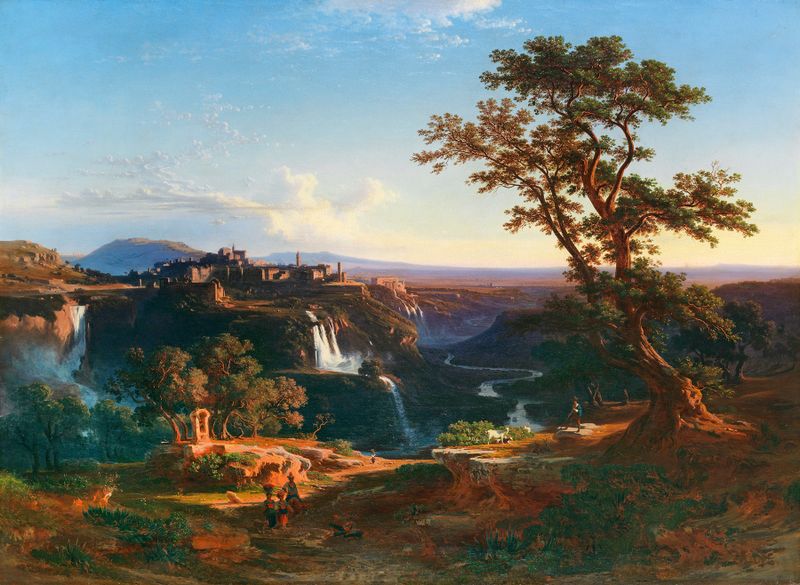
Die Kaskaden von Tivoli in der Abendsonne
Johann Jakob Frey

Forest Landscape in the Roman Mountains
Johann Jakob Frey

Landscape Near Granada
Johann Jakob Frey
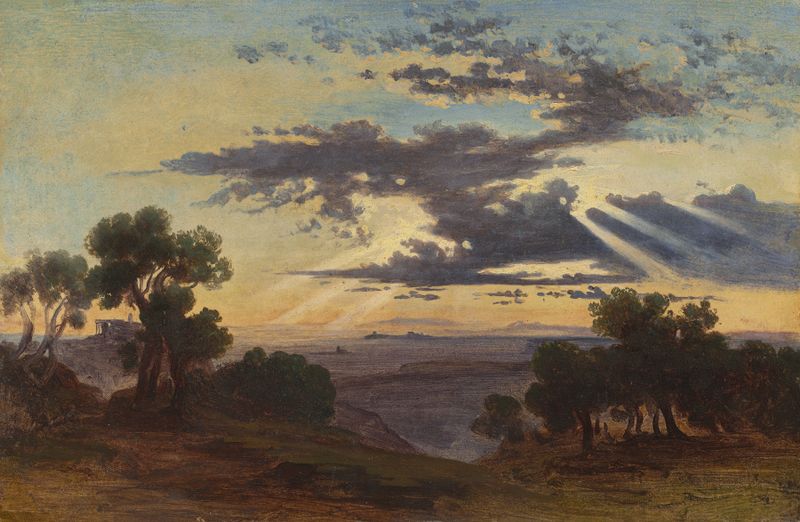
Sun Breaking through Clouds above the Roman Campagna
Johann Jakob Frey
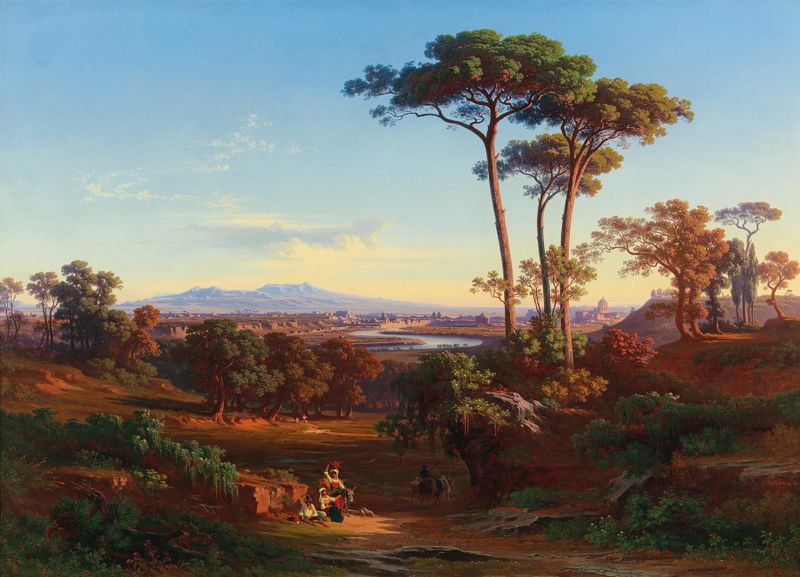
Ansicht von Rom vom Monte Mario
Johann Jakob Frey

A Caravan Surprised By The Samoom In Front Of The Sphinx
Johann Jakob Frey

Bay in Terracina
Johann Jakob Frey
More Architecture Art
Browse all →
The statue of Liberty
Frédéric Auguste Bartholdi

View of Houses in Delft, Known as ‘The Little Street’
Johannes Vermeer

View of Houses in Delft, Known as ‘The Little Street’
Johannes Vermeer

The Cathedral in Rouen. The portal, Grey Weather
Claude Monet

The yellow house
Vincent van Gogh

The Church in Auvers-sur-Oise, View from the Chevet
Vincent van Gogh