
The three oaks — History & Facts
Who listens when art speaks of silence? In The Three Oaks, the stillness becomes palpable, inviting contemplation on grief and the passage of time. Focus first on the trio of trees, their gnarled branches stretching skyward, as if yearning for the clouds above. The muted earth tones blend seamlessly into the background, with a gentle gradient of greens and browns, drawing your eye to the textured bark that tells tales of endurance. Notice how the light filters through the leaves, casting delicate shadows that dance across the ground, underscoring the interplay of life and decay in this intimate landscape. As you observe the solitary oak on the left, it stands resilient yet somber, evoking a sense of loss amid the tranquility.
The juxtaposition of the robust center tree with its more fragile companions suggests a narrative of survival against adversity, resonating with the emotional weight of grief. Each oak, a sentinel of memory, encapsulates stories of those who have come before, hinting at the enduring human experience of mourning and remembrance. Painted in 1839, during a period of personal and societal upheaval, The Three Oaks reflects the artist's exploration of nature as a witness to human emotion. Blery, working in France amidst the rise of Romanticism, conveyed a profound sensitivity to landscapes, using them to mirror inner states.
This work not only encapsulates his artistic vision but also resonates with a broader cultural context, where the struggle with loss and longing found expression in the lush, yet haunting beauty of the natural world.
More Artworks by Eugene-Stanislas-Alexandre Blery
Browse all →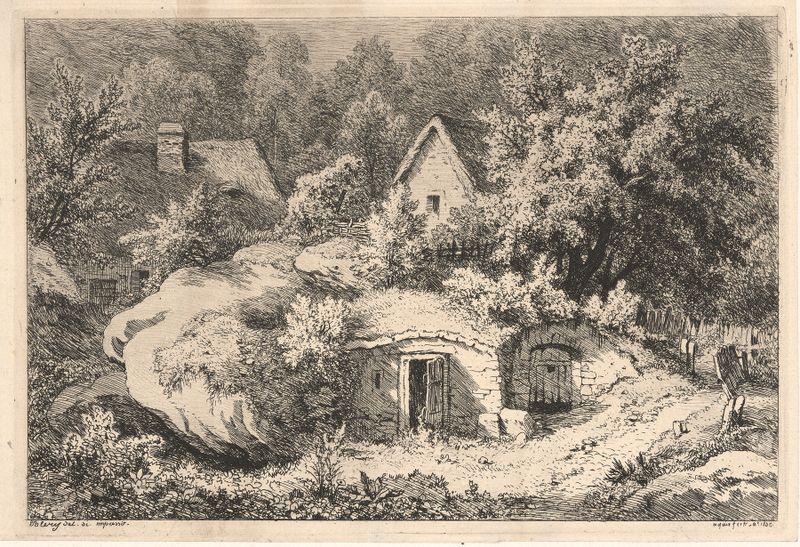
Les caves (The cellars)
Eugene-Stanislas-Alexandre Blery
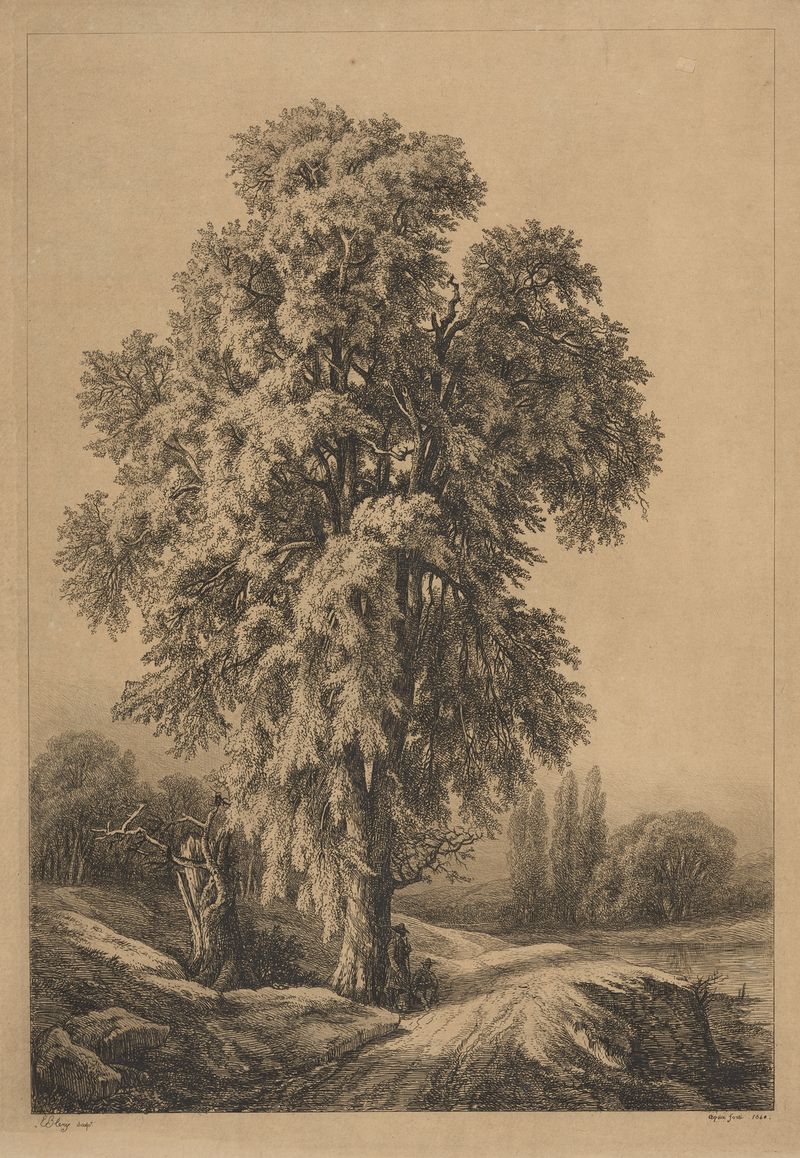
Landscape with two travelers beneath tree along path
Eugene-Stanislas-Alexandre Blery

Le pont aux roches a Senlisse (The rock-bridge at Senlisse)
Eugene-Stanislas-Alexandre Blery
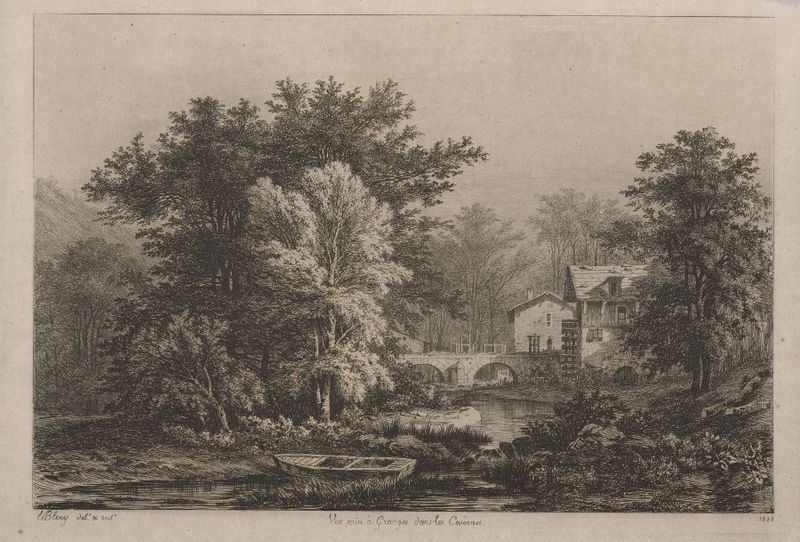
Vue prise a granges dans les Cevennes (View taken of a mill in the Cevennes)
Eugene-Stanislas-Alexandre Blery
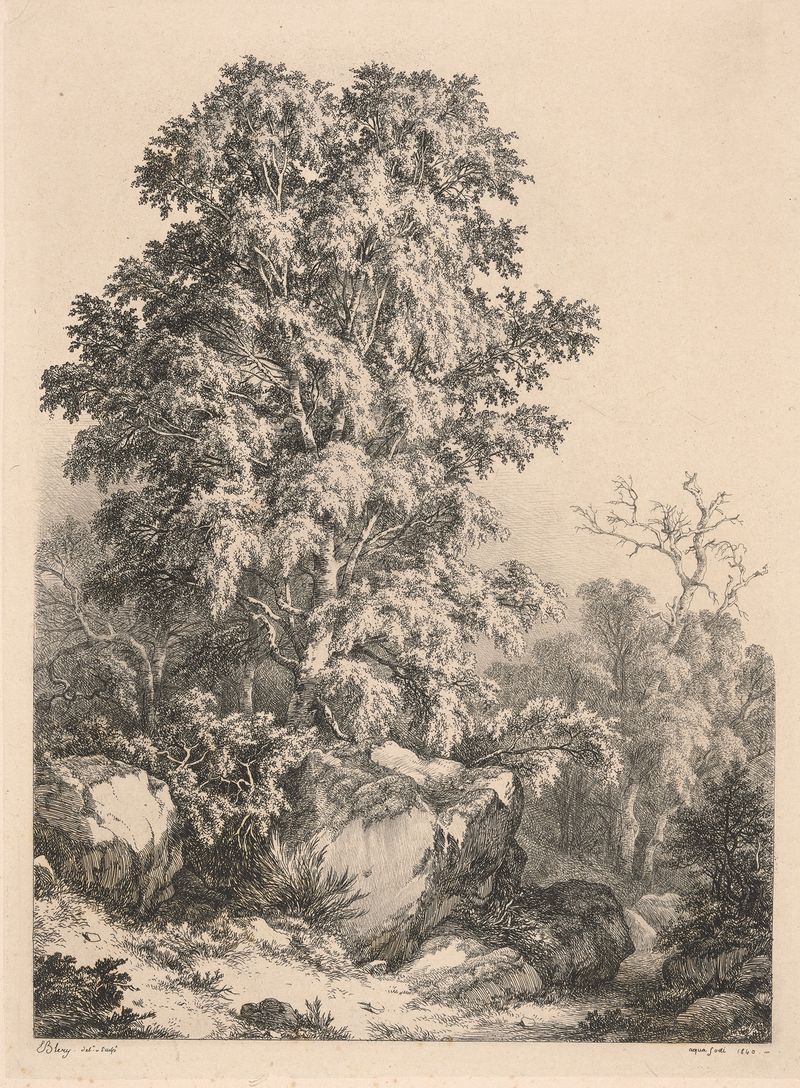
Le bonheur (Happiness)
Eugene-Stanislas-Alexandre Blery





