Les caves (The cellars) — History & Facts
Did the painter know this moment would outlive them? In the dim recesses of the cellars, the world breathes an air of promise, a silent awakening captured within the canvas’ embrace. Focus on the shadows dancing along the walls, as the soft light spills from unseen sources, illuminating the rich textures of the aged stone. Notice how the deep hues of burgundy and ochre enhance the warmth of the scene, contrasting against the cool, damp shadows that linger in the corners. The meticulous brushwork invites you to explore every crevice, making the viewer a participant in this intimate space. Within this artwork lies a dialogue between light and shadow, a tension reflecting the duality of confinement and the potential for growth.
The interplay of colors evokes a sense of nostalgia, hinting at forgotten histories and the stories that lay buried beneath layers of time. Small details, like the dampness clinging to the walls, symbolize both decay and renewal, mirroring the cycle of life that continues, even in hidden spaces. In 1850, while creating Les caves, the artist was immersed in the art movements of his time, as Romanticism flourished in France. During this period, he sought to convey emotion through landscape and still life, navigating a world on the brink of change.
The spirit of exploration and appreciation for the natural world deeply influenced his work, as he captured the essence of moments that resonate through time.
More Artworks by Eugene-Stanislas-Alexandre Blery
Browse all →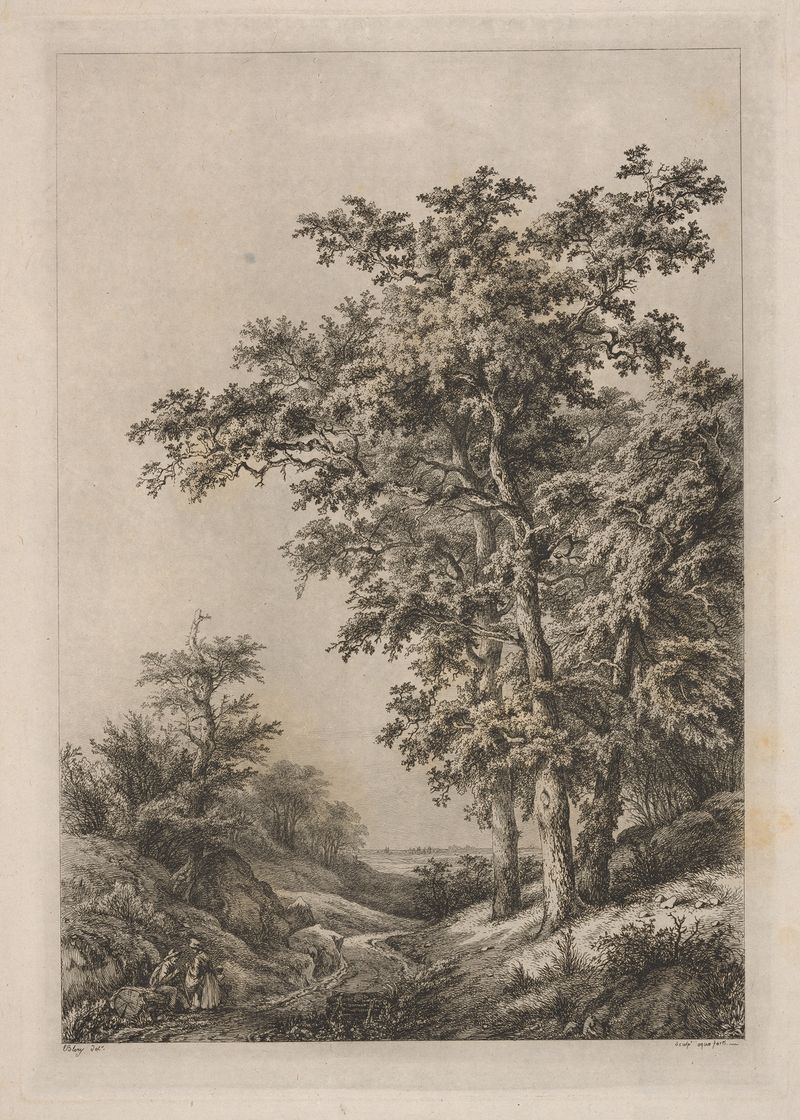
The three oaks
Eugene-Stanislas-Alexandre Blery
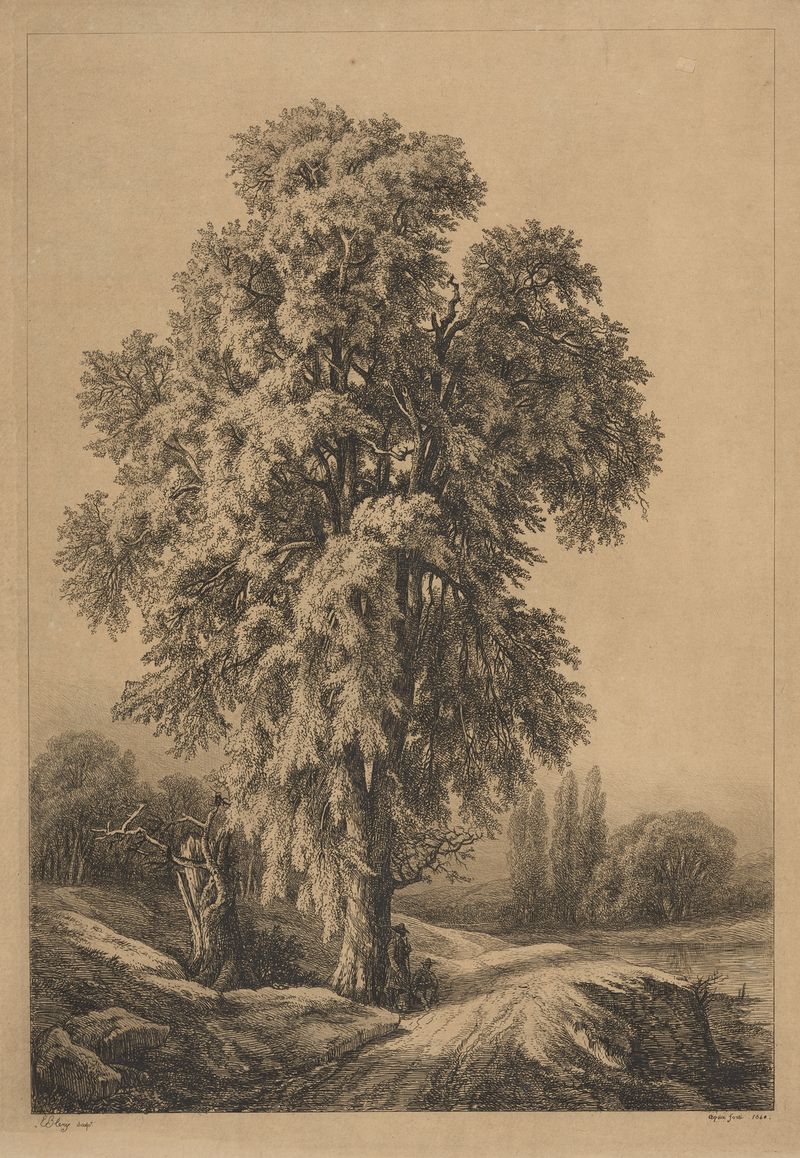
Landscape with two travelers beneath tree along path
Eugene-Stanislas-Alexandre Blery

Le pont aux roches a Senlisse (The rock-bridge at Senlisse)
Eugene-Stanislas-Alexandre Blery
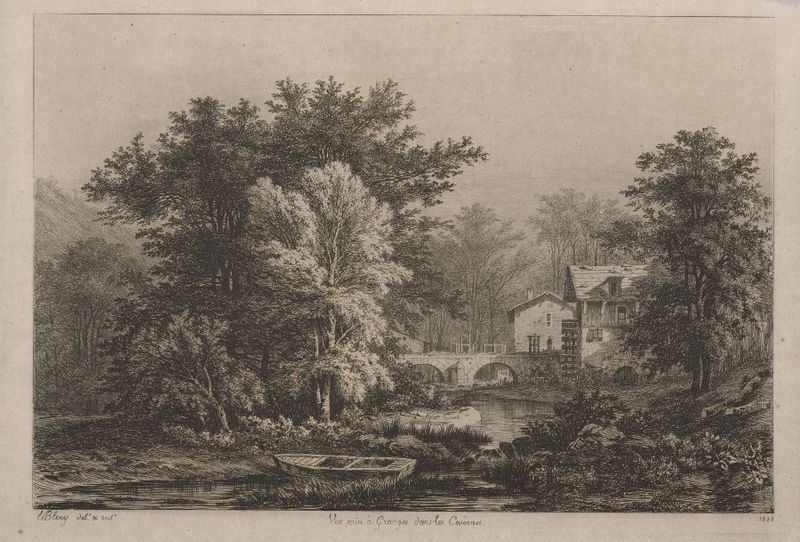
Vue prise a granges dans les Cevennes (View taken of a mill in the Cevennes)
Eugene-Stanislas-Alexandre Blery
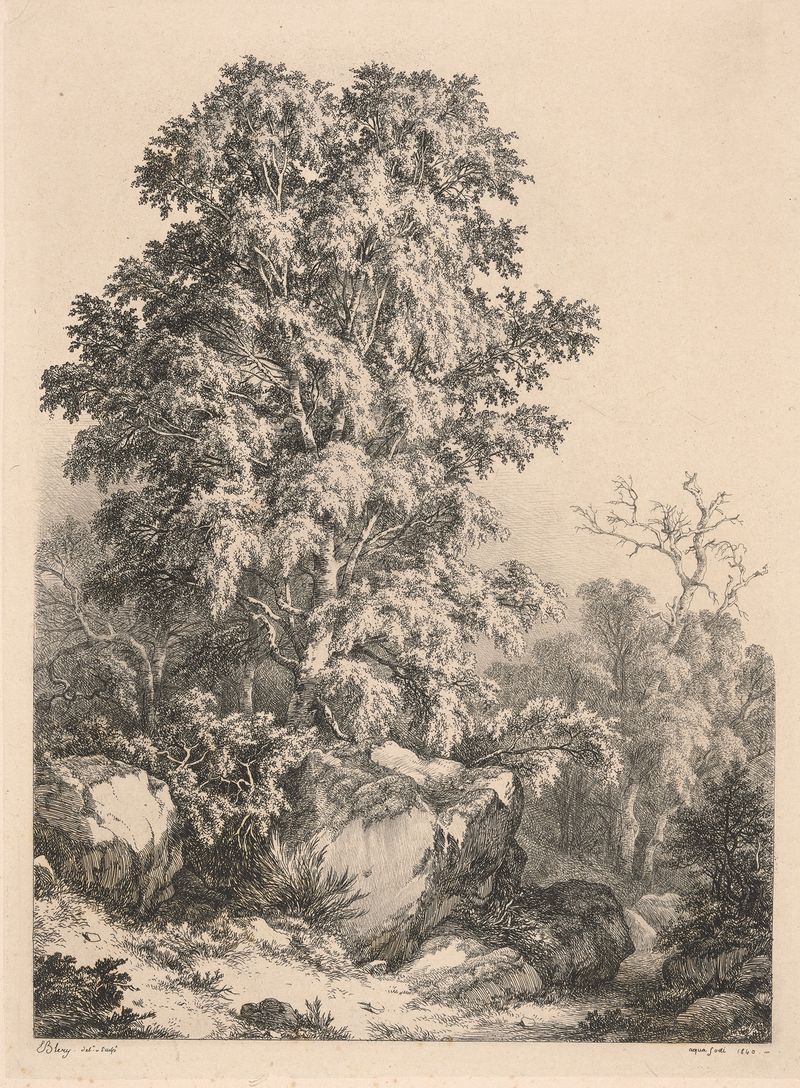
Le bonheur (Happiness)
Eugene-Stanislas-Alexandre Blery