
The Translation of the Ashes of Napoleon — History & Facts
What secret hides in the quiet of the canvas? In The Translation of the Ashes of Napoleon, the stillness speaks volumes, inviting contemplation on themes of legacy, loss, and the passage of time. Focus on the gentle interplay of light and shadow that bathes the mournful scene. The soft illumination highlights the somber expressions of the figures gathered around, emphasizing their reverence. Notice how the rich, dark tones contrast with the radiant glow on the urn, drawing your gaze toward the center, where the ashes of a once-mighty emperor await their final resting place.
Lami’s meticulous brushwork creates a palpable tension, capturing the weight of history within the serene composition. As you explore the details, consider the symbolic significance of the urn itself, representing both mortality and memory. The figures, clad in subtly varied hues, reflect a spectrum of emotions—grief, hope, and contemplation—intertwined in their shared moment. This collective focus on the urn underscores a poignant truth: that even in death, the legacy of a great leader continues to resonate, bridging the gap between past and present. Eugène Lami painted this work in 1840, during a period when Europe was grappling with the echoes of Napoleonic rule.
Living in Paris, Lami was influenced by the romanticism of his time, which sought to capture intense emotions and significant historical narratives. This painting not only reflects his artistic vision but also serves as a poignant commentary on the enduring impact of historical figures in the collective memory of a nation.
More Artworks by Eugène Lami
Browse all →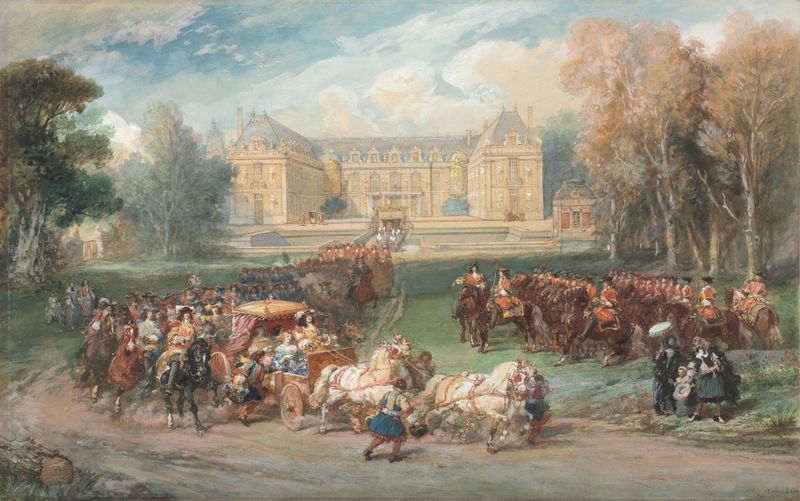
More Historical Art
Browse all →
The Night Watch Militia Company of District II under the Command of Captain Frans Banninck Cocq
Rembrandt van Rijn

Lincoln Memorial
Henry Bacon

The Third of May 1808
Francisco de Goya

Isaac and Rebecca, Known as ‘The Jewish Bride’
Rembrandt van Rijn

The Charge of the Mamelukes (1814)
Francisco de Goya

De vier ruiters van de apocalyps
Albrecht Dürer