The village well — History & Facts
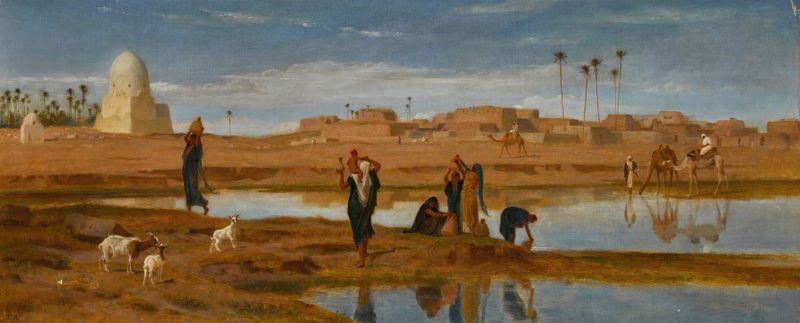
What if silence could speak through light? In The Village Well, Frederick Goodall captures a moment suspended in time, whispering secrets of yearning and community within its gentle hues. Look to the center where a well stands, its sturdy stones radiating a sense of endurance. Surrounding it, figures engage in quiet interaction, their garments colored in earthy tones that harmonize with the rustic landscape. Notice how the sunlight bathes the scene, casting long shadows that stretch across the ground—a visual reminder of the time spent waiting, longing, and connecting.
The delicate brushwork breathes life into each character, revealing their subtle gestures and expressions, inviting viewers to become part of this intimate gathering. At first glance, one might see only a tranquil village scene, but deeper scrutiny unveils layers of emotional tension. The well, a symbol of sustenance and community, also embodies unfulfilled desires—a place where hope and necessity converge. Each figure exudes a silent longing; the woman with the water jug seems to pause, her gaze distant as if pondering her future.
The interplay of light and shadow suggests the passage of time, evoking feelings of nostalgia for what has been lost or what could be. Goodall painted this piece in 1897, a period marked by a growing fascination with rural life and the natural world in art. Residing in England, he was influenced by the Pre-Raphaelite movement, which emphasized detail and vivid colors. This work reflects a blend of his artistic ideals and the societal shifts of his time, as industrialization began to overshadow the pastoral beauty that he so lovingly depicted.