The Virgin adoring the Child — History & Facts
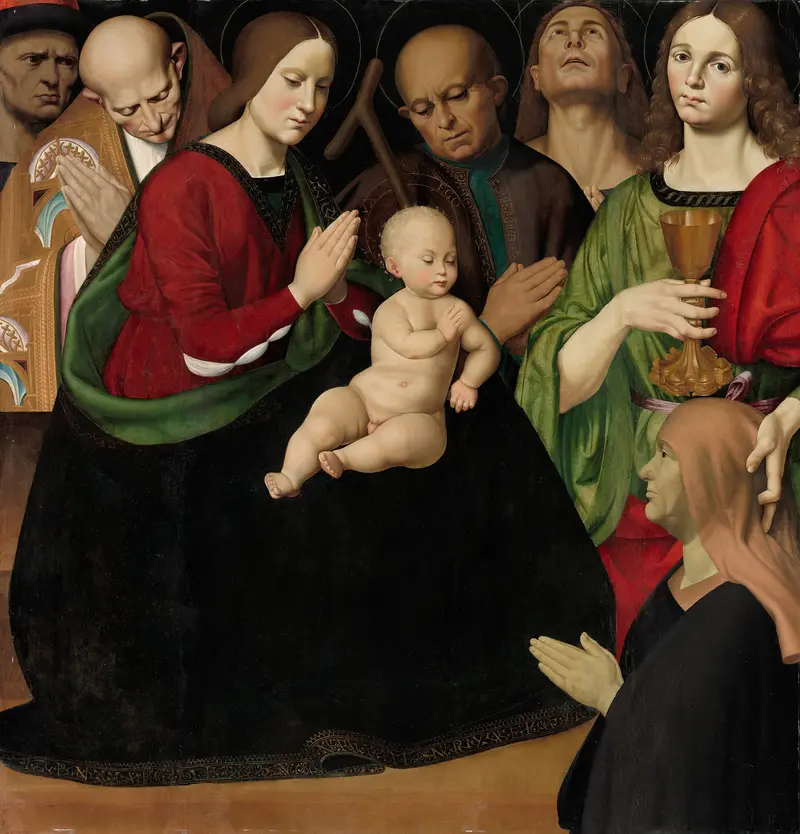
The first thing to catch the eye in The Virgin adoring the Child is the hush that seems to settle over the figures, as if the world itself has paused to witness this moment. The Virgin’s hands cross gently over her chest, her eyes closed in inward prayer, while the infant Christ lies at her knees, his body relaxed but his gaze alert and outward. Two angels flank the Virgin, their expressions a study in contrasts—one meets the viewer’s gaze directly, drawing us into the sacred scene, while the other bows his head, lost in private reverence.
The deep folds of the Virgin’s green mantle and the careful modeling of the flesh heighten the sense of quiet gravity, while the subtle halos etched in gold catch the light, marking out the holy from the everyday. Every gesture here is deliberate: the Virgin’s closed eyes invite us to contemplate with her, not simply to observe. Works like this, attributed to Antonio Rimpatta and dated to the 16th century, were shaped by the devotional needs of their time. Such images of the Madonna and Child, often destined for private chapels or small altars, were meant to foster a personal, meditative encounter with the divine.
The composition’s intimacy and the tender, almost sculptural treatment of the figures reflect the Renaissance’s growing interest in human emotion and naturalistic form. While little is recorded about this specific painting’s journey—its medium even remains uncertain—it now resides in a modern collection, a quiet survivor from an age when art was both an object of veneration and a tool for spiritual reflection. The longer you look, the more the silence in the Virgin’s gesture seems to ask: what does it mean to adore, and to be adored?