Title Page for a Bible — History & Facts
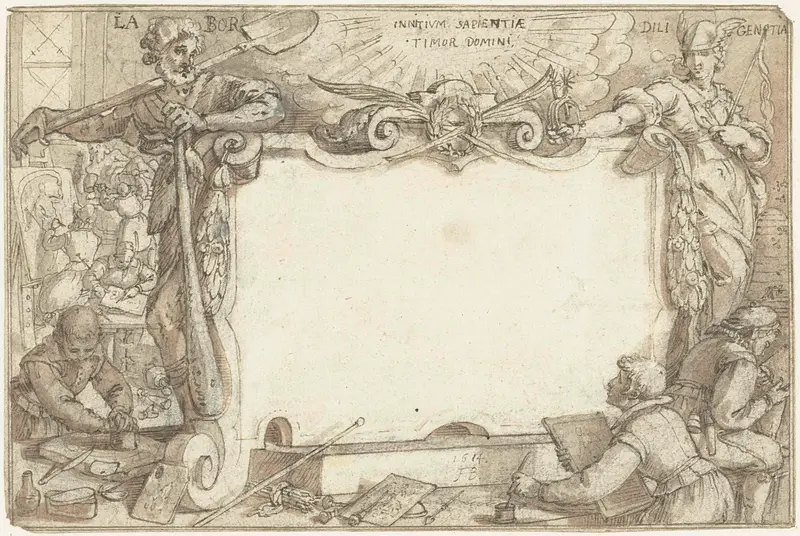
What first seizes the eye in Title Page for a Bible by Augustin Braun is its theatrical arrangement of sacred history, staged as if on a grand architectural proscenium. The artist invites the viewer into a layered world: at the summit, angels and celestial beings swirl around a globe, while below, three monumental figures preside over an empty scroll—waiting, perhaps, for the text of revelation. The symmetry is deliberate, drawing the gaze from heavenly vision to earthly authority, and finally to the learned debate and ritual below.
Every gesture and prop—keys, tablets, croziers—signals a lineage of spiritual authority, each detail reinforcing the solemnity of the narrative. Works like this, intended as title pages for Bibles, flourished in the early modern period, when the printed book became a new vessel for old truths. Such images were not mere ornament: they announced the gravity and lineage of the text within, linking the new technology of print to the ancient traditions of Church and Scripture. The presence of both Christian and Hebrew figures, the mingling of papal and rabbinical scholars, hints at a world negotiating the boundaries between old and new, law and grace.
Though little is recorded about Augustin Braun or this particular drawing, its preservation in the National Gallery of Art’s collection—shared now through open access—reminds us how even anonymous or little-known works can illuminate the ambitions and anxieties of their age. The scroll remains blank, as if inviting each viewer to imagine themselves in the unfolding story.