
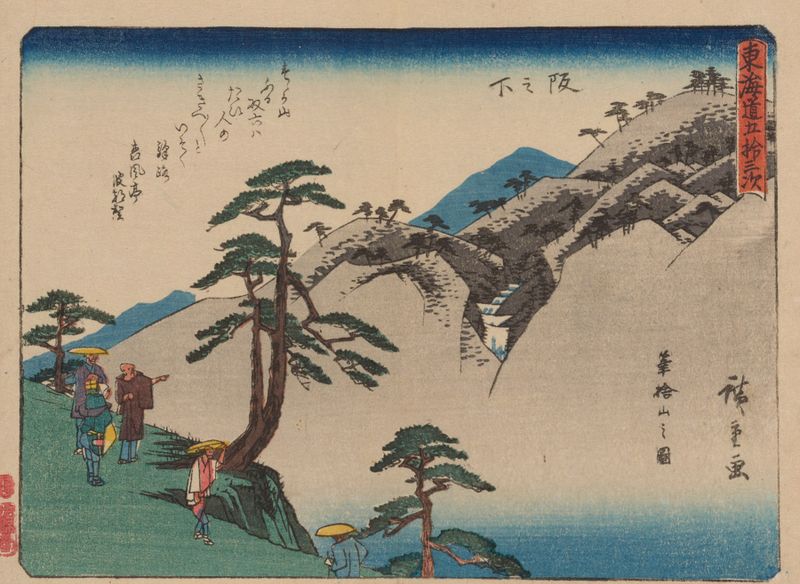
Tokaido gojusantsugi, Pl.10 — History & Facts
When did color learn to lie? In a world of vibrant hues and delicate brushstrokes, the ecstasy of nature dances at the edge of recognition, teasing the senses and evoking longing. Focus on the gentle curves of the landscape that sweep gracefully across the canvas. Notice how the rich greens of the hills blend seamlessly with the soft blues of the sky, drawing the eye toward the horizon. The use of color is striking; vivid yet harmonious, it invites exploration, suggesting a fleeting beauty that is both inviting and elusive.
The intricate details of the foreground—a lone figure traveling along the path—add a poignant sense of scale, emphasizing the vastness of the scenery that envelops them. Within this serene landscape, contrasts emerge—a small human presence against the grandeur of nature speaks to our place in the world. The layers of color create a visual rhythm, evoking the cyclical nature of life, while the stillness suggests a moment suspended in time, filled with potential and yearning. This tension between vastness and intimacy resonates deeply, inviting viewers to reflect on their own journeys amidst the beauty around them. Created during a period of change in Japan, this work was painted between 1868 and 1912, a time when traditional art forms were meeting the influence of Western techniques.
Utagawa Hiroshige, a master of ukiyo-e woodblock printing, sought to capture the transient beauty of landscapes, often reflecting the complexities of modern life while celebrating the natural world. As his contemporaries navigated these shifts, Hiroshige's artistry offered a poignant reminder of the ecstasy found in nature's embrace.
More Artworks by Utagawa Hiroshige
Browse all →
Sudden Shower over Shin Ohashi Bridge and Atake (Ohashi Atake no yudachi), from the series "One Hundred Famous Views of Edo (Meisho Edo hyakkei)"
Utagawa Hiroshige
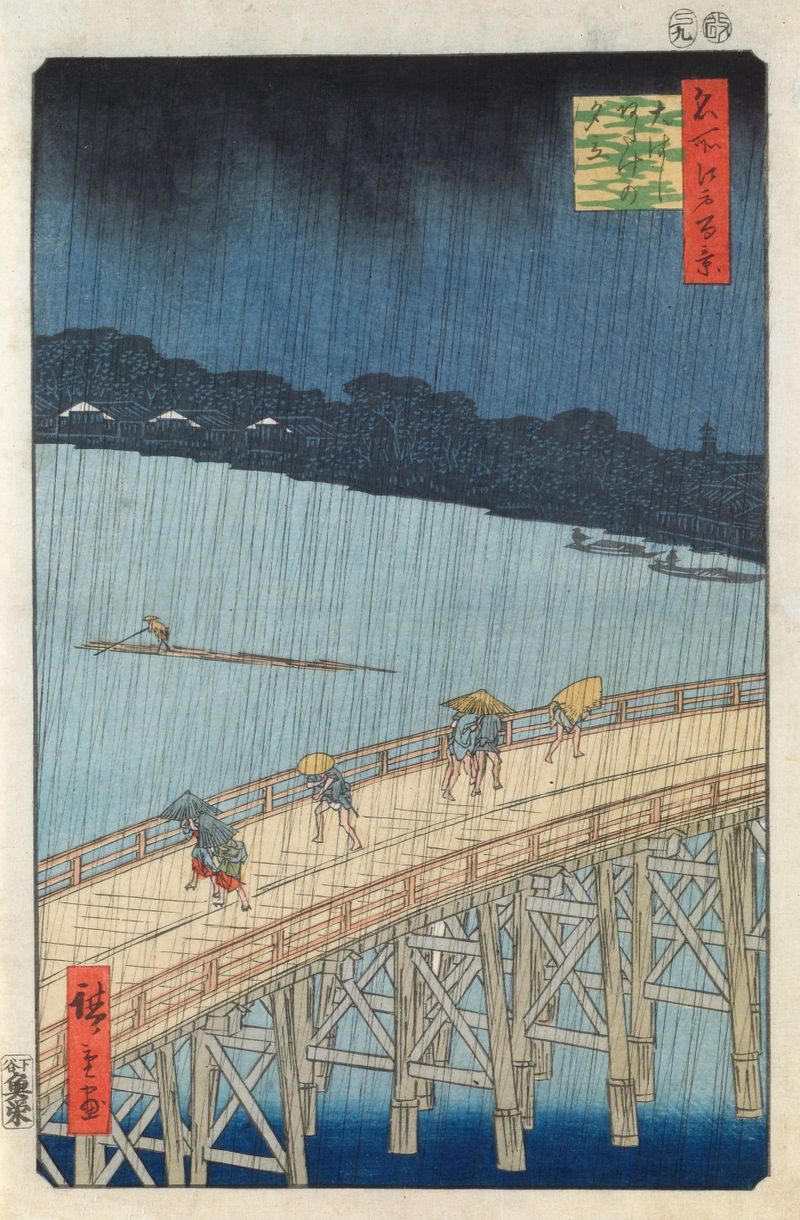
Sudden Shower Over Ohashi Bridge and Atake
Utagawa Hiroshige
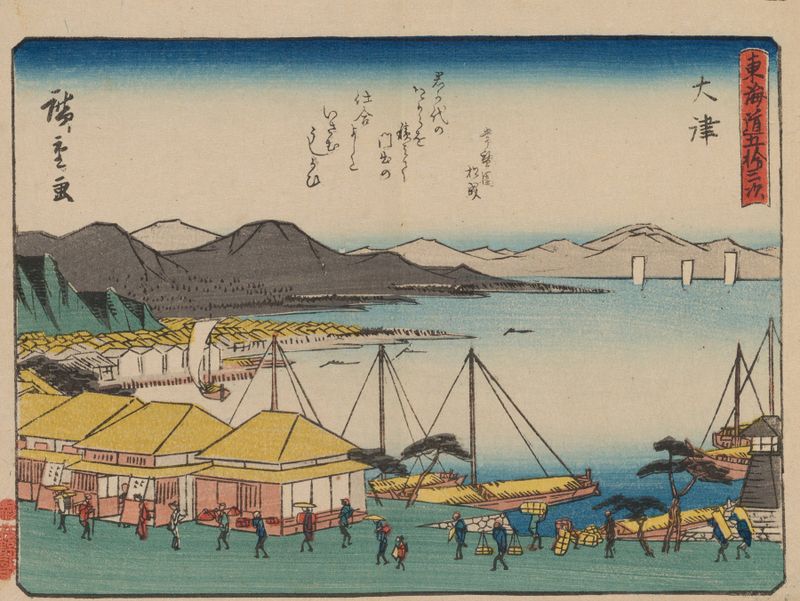
Tokaido gojusantsugi, Pl.54
Utagawa Hiroshige
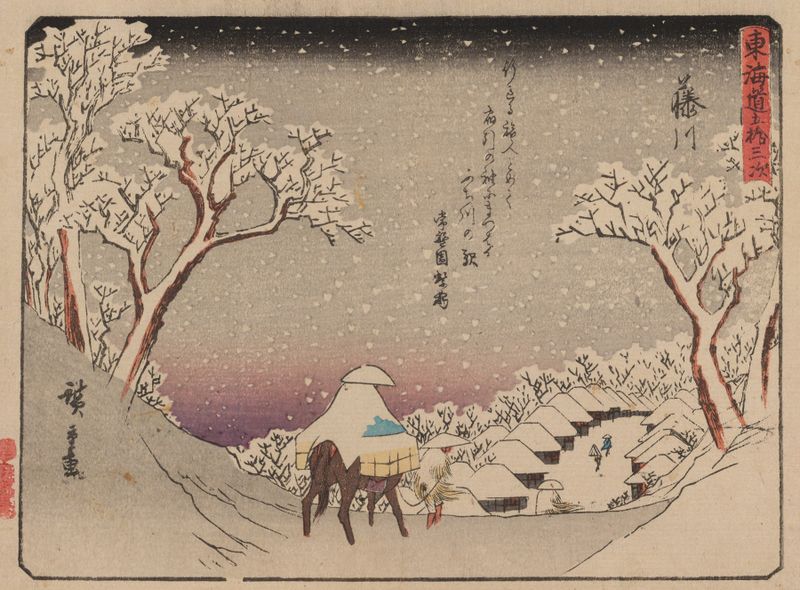
Tokaido gojusantsugi, Pl.38
Utagawa Hiroshige
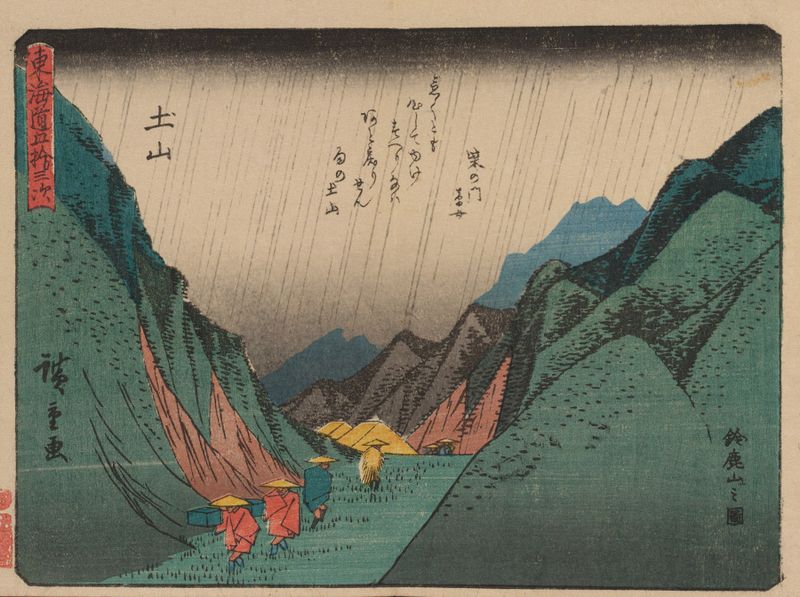
Tokaido gojusantsugi, Pl.50
Utagawa Hiroshige
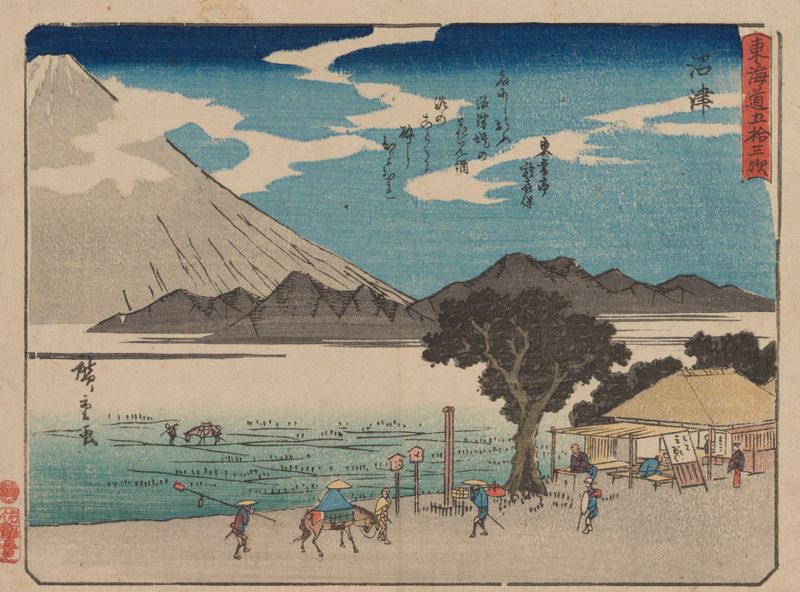
Tokaido gojusantsugi, Pl.13
Utagawa Hiroshige
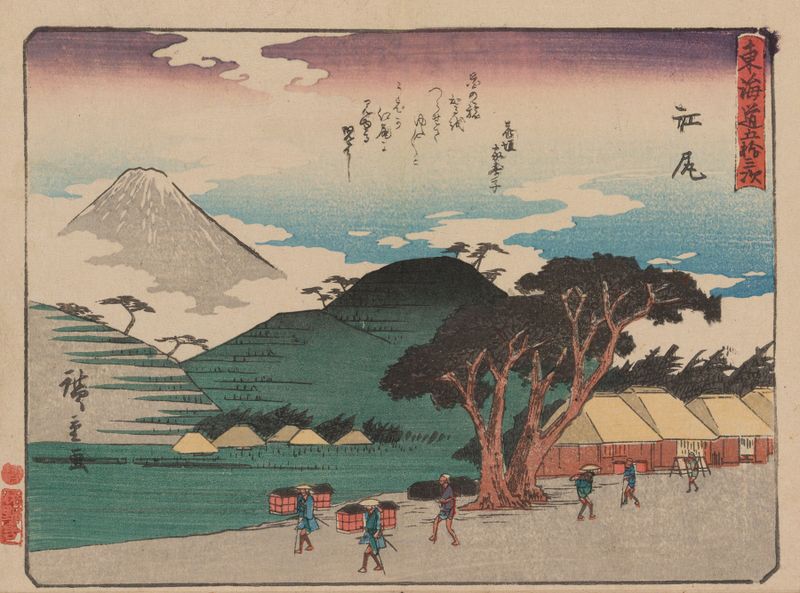
Tokaido gojusantsugi, Pl.19
Utagawa Hiroshige
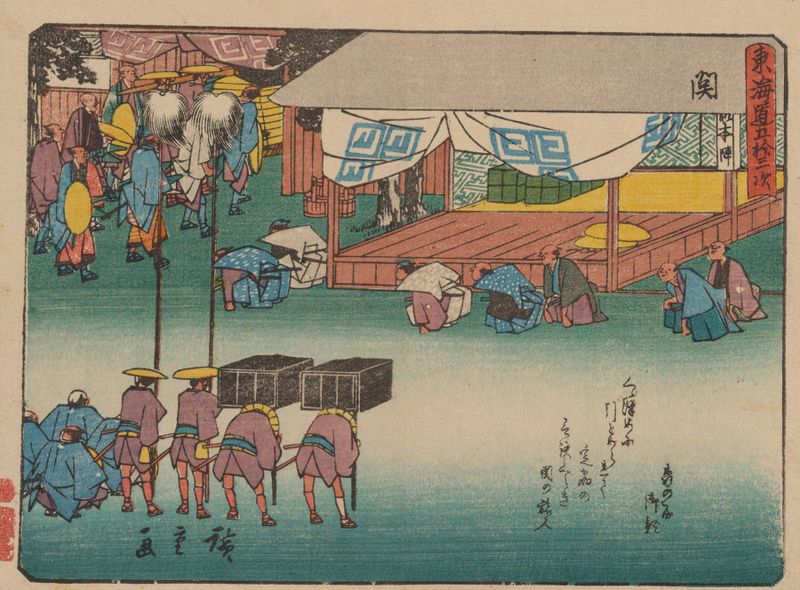
Tokaido gojusantsugi, Pl.48
Utagawa Hiroshige
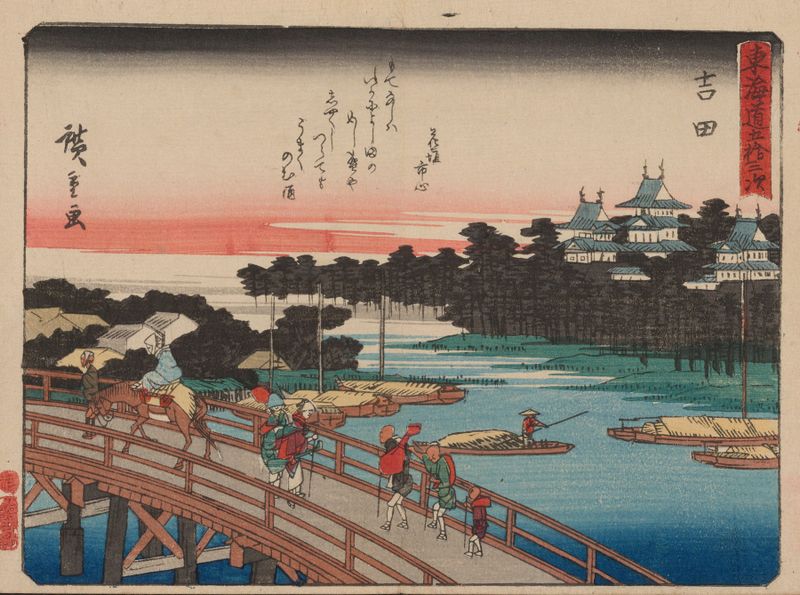
Tokaido gojusantsugi, Pl.35
Utagawa Hiroshige
Tokaido gojusantsugi, Pl.49
Utagawa Hiroshige





