
Tokaido gojusantsugi, Pl.16 — History & Facts
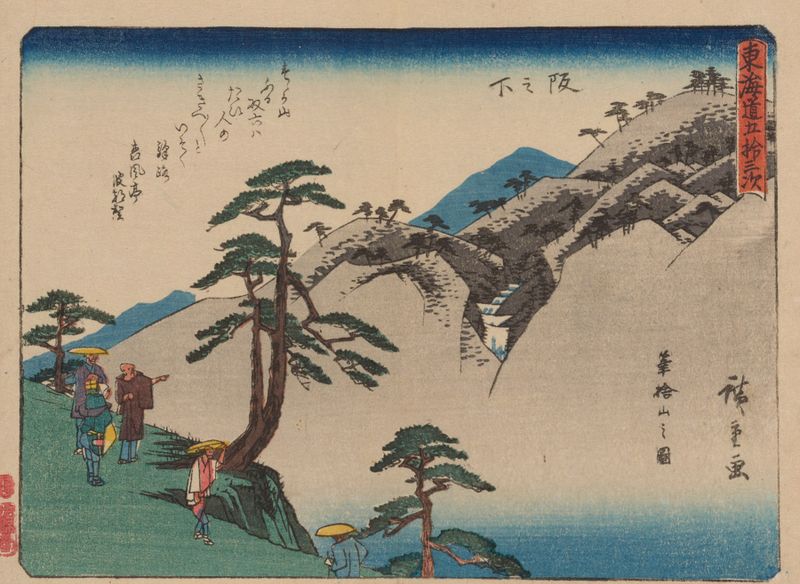
Could beauty survive in a century of chaos? In the midst of rapid change, art becomes a testament to eternity, capturing fleeting moments of harmony against the relentless tide of fate. Look to the center of the composition, where a serene river gently winds its way through a verdant landscape. Notice how the color palette transitions from vibrant greens to soft blues, evoking tranquility and inviting the viewer to linger. The delicate brushwork reveals a meticulous attention to detail, with each leaf and ripple meticulously rendered, while the atmospheric perspective draws your gaze into the horizon, hinting at the endless journey ahead. Yet, beneath this calm exterior lies an intricate interplay of elements.
The juxtaposition of the robust mountains against the fragile beauty of the flora suggests the inherent tension between nature’s resilience and the impermanence of life. Subtle hints of human presence—a distant figure and a small boat—remind us of our own precarious existence within this grand tableau. These small details illuminate the struggle of destiny, offering a glimpse into the coexistence of tranquility and turbulence. Between 1868 and 1912, Utagawa Hiroshige was at the forefront of the ukiyo-e movement in Japan, a time marked by transformative social and political shifts.
Living during the Meiji Restoration, his work reflected the country’s evolving identity while simultaneously honoring its natural beauty. Tokaido gojusantsugi, Pl.16 exemplifies this duality—an emblem of peace amidst the chaos, capturing the essence of a world on the brink of modernity.
More Artworks by Utagawa Hiroshige
Browse all →
Sudden Shower over Shin Ohashi Bridge and Atake (Ohashi Atake no yudachi), from the series "One Hundred Famous Views of Edo (Meisho Edo hyakkei)"
Utagawa Hiroshige
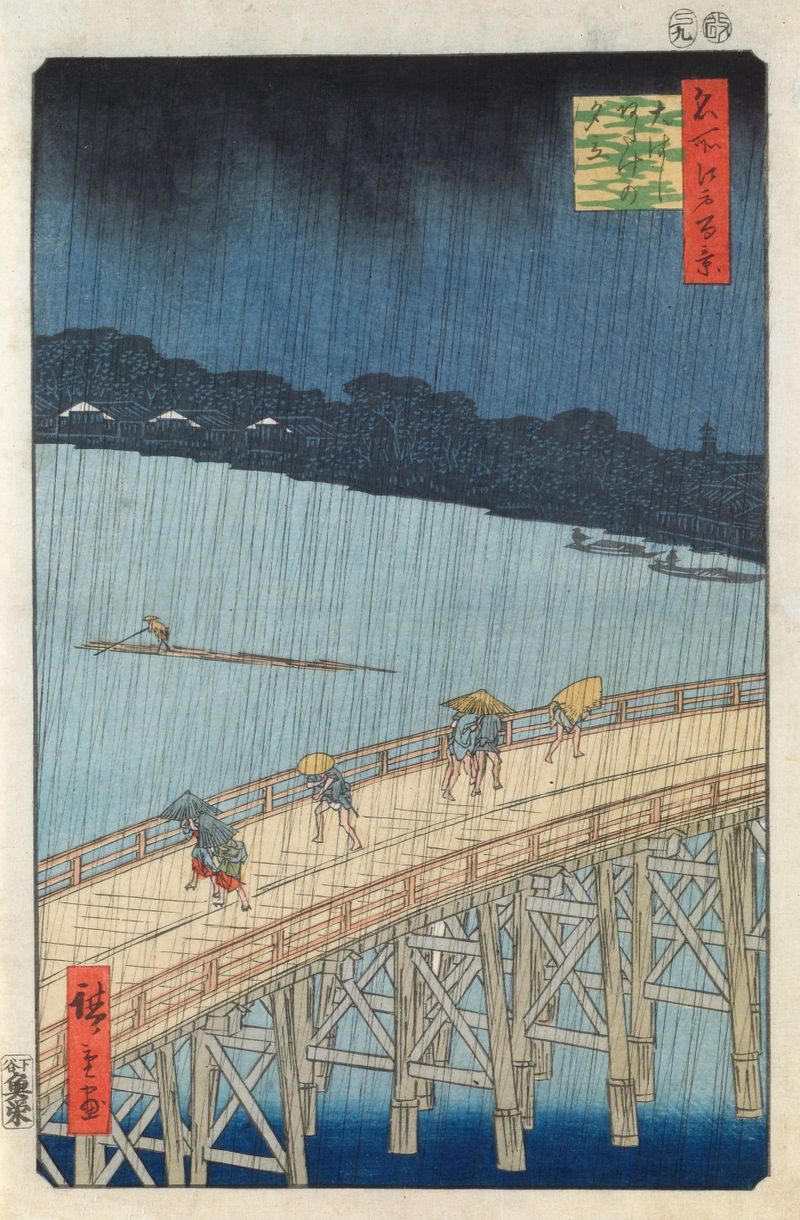
Sudden Shower Over Ohashi Bridge and Atake
Utagawa Hiroshige
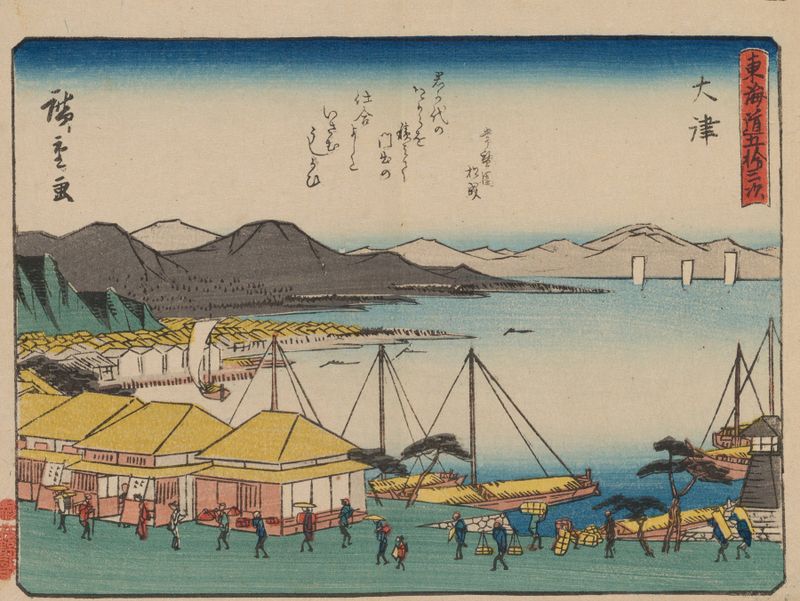
Tokaido gojusantsugi, Pl.54
Utagawa Hiroshige
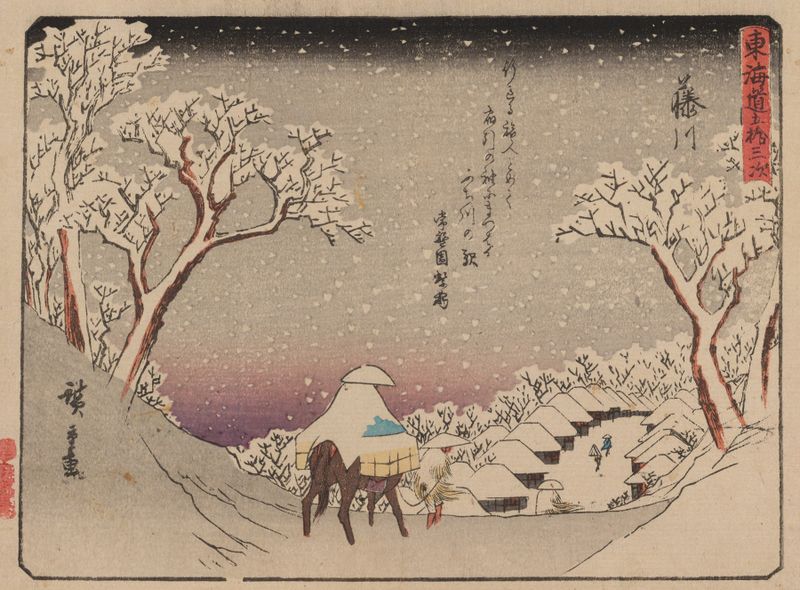
Tokaido gojusantsugi, Pl.38
Utagawa Hiroshige
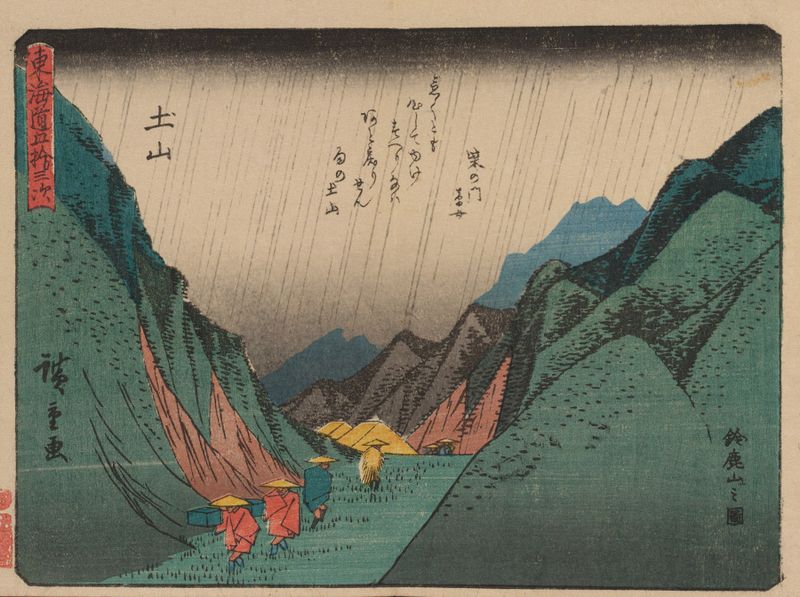
Tokaido gojusantsugi, Pl.50
Utagawa Hiroshige
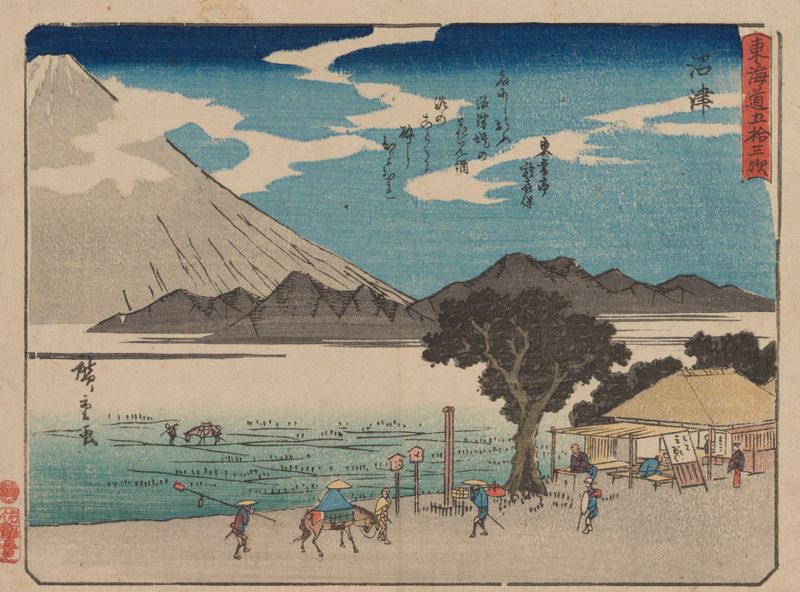
Tokaido gojusantsugi, Pl.13
Utagawa Hiroshige
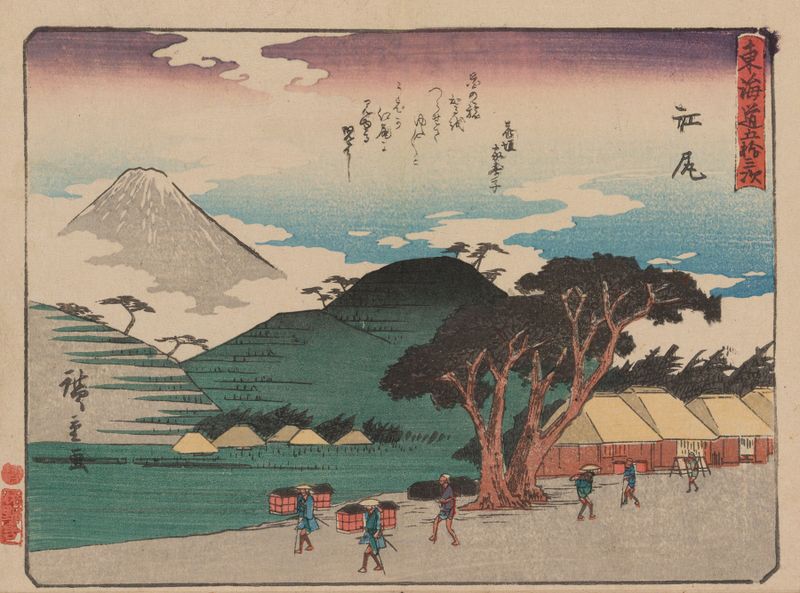
Tokaido gojusantsugi, Pl.19
Utagawa Hiroshige
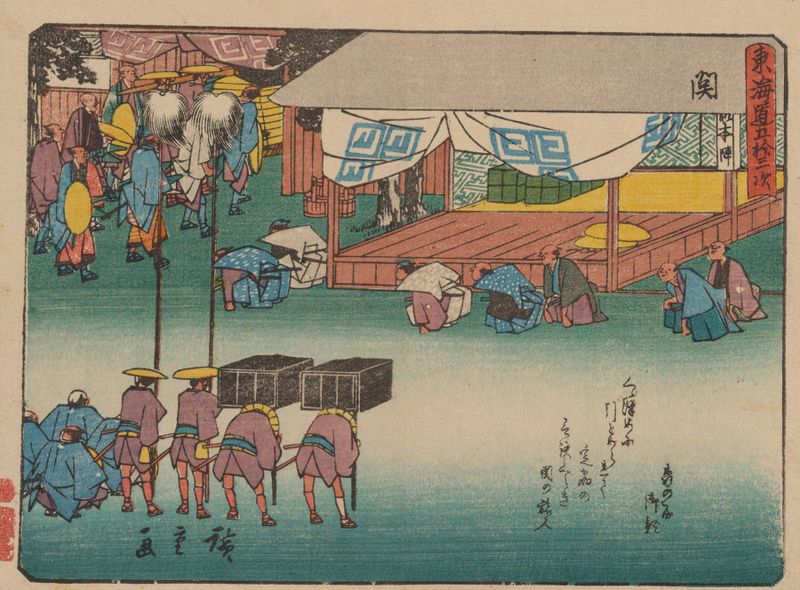
Tokaido gojusantsugi, Pl.48
Utagawa Hiroshige
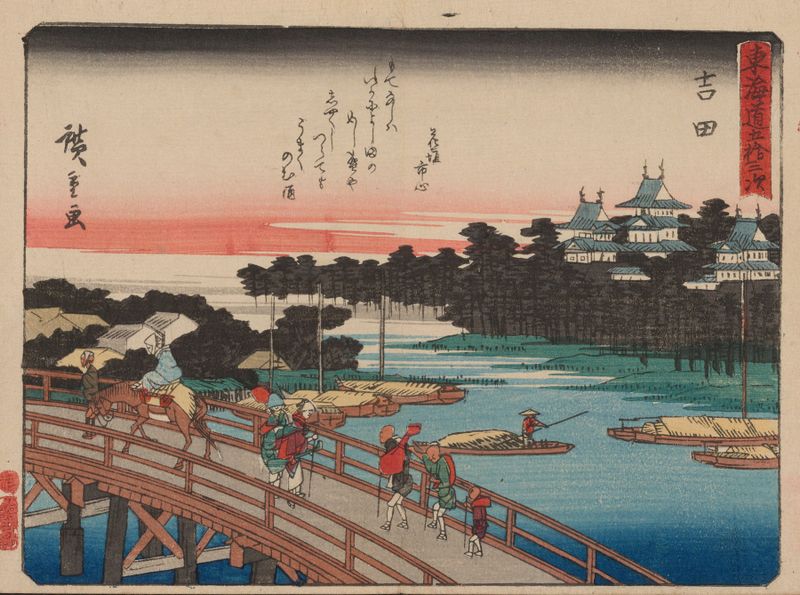
Tokaido gojusantsugi, Pl.35
Utagawa Hiroshige
Tokaido gojusantsugi, Pl.49
Utagawa Hiroshige





