
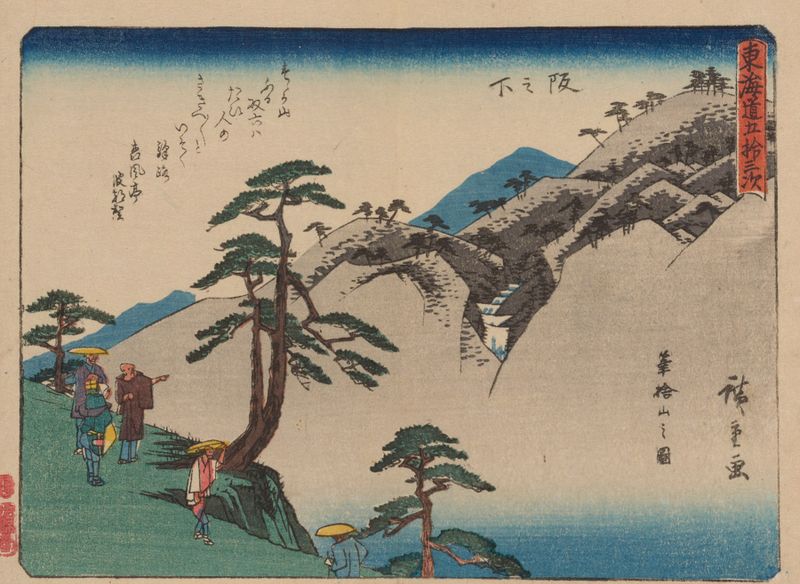
Tokaido gojusantsugi, Pl.29 — History & Facts
In the vibrant panorama of life captured by Hiroshige, ecstasy dances within every brushstroke, inviting the viewer into a world alive with movement and emotion. The artwork pulses with a silent promise, whispering tales of journeys and encounters that evoke an irresistible yearning for adventure. Look closely at the intricate details of the foreground, where the travelers make their way along the winding path. Notice how the figures are framed by lush greenery and distant mountains, a testament to both their journey and the beauty surrounding them.
The subtle gradation of colors, from deep blues to verdant greens, creates a harmonious balance that draws the eye from one element to another, revealing Hiroshige’s masterful use of ukiyo-e techniques. The layered textures and dynamic composition illustrate both the serenity and the frenetic energy of life on the road. In this scene, the contrasts are striking: the stillness of nature against the movement of the figures, the vibrant hues of the landscape juxtaposed with the muted tones of the travelers’ garments. Each detail, from the fluttering leaves to the distant peaks, holds significance, symbolizing the transient joy found in journeys both physical and spiritual.
The tension between the travelers’ quest for ecstasy and the enduring beauty of their surroundings enriches the narrative, inviting deeper contemplation. Hiroshige created this work during the late Edo period, a time of both cultural richness and societal transition in Japan. Working between 1868 and 1912, he witnessed the rapid changes brought by modernization, which influenced his artistic expressions. While the country opened to the world, his landscapes captured the essence of traditional Japanese beauty, preserving a fleeting moment in time against the backdrop of sweeping change.
More Artworks by Utagawa Hiroshige
Browse all →
Sudden Shower over Shin Ohashi Bridge and Atake (Ohashi Atake no yudachi), from the series "One Hundred Famous Views of Edo (Meisho Edo hyakkei)"
Utagawa Hiroshige
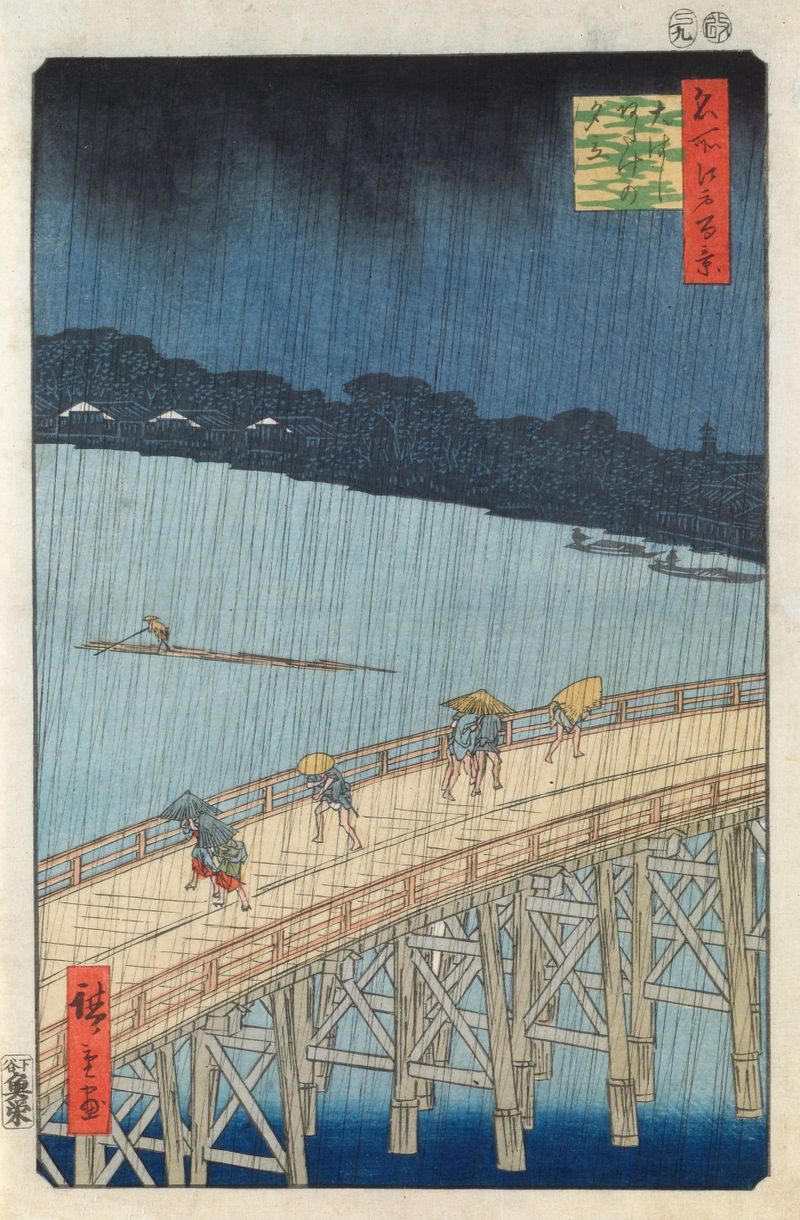
Sudden Shower Over Ohashi Bridge and Atake
Utagawa Hiroshige
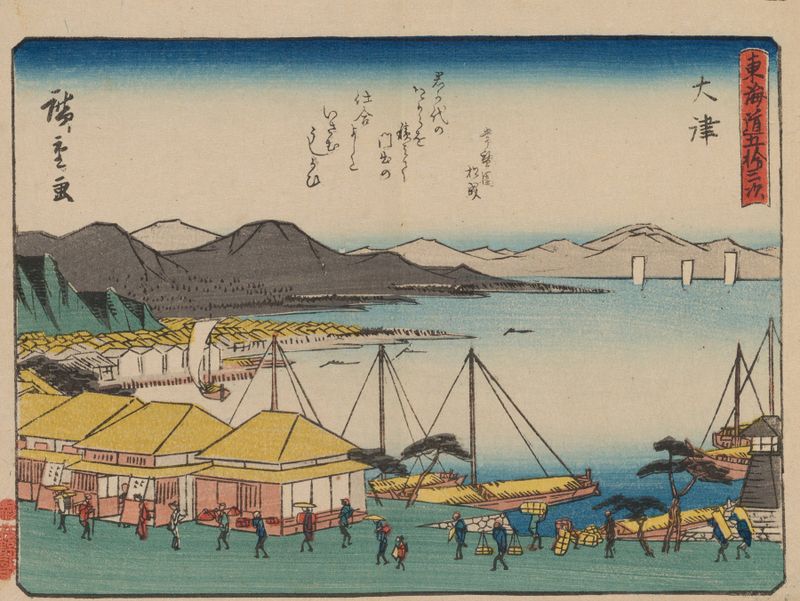
Tokaido gojusantsugi, Pl.54
Utagawa Hiroshige
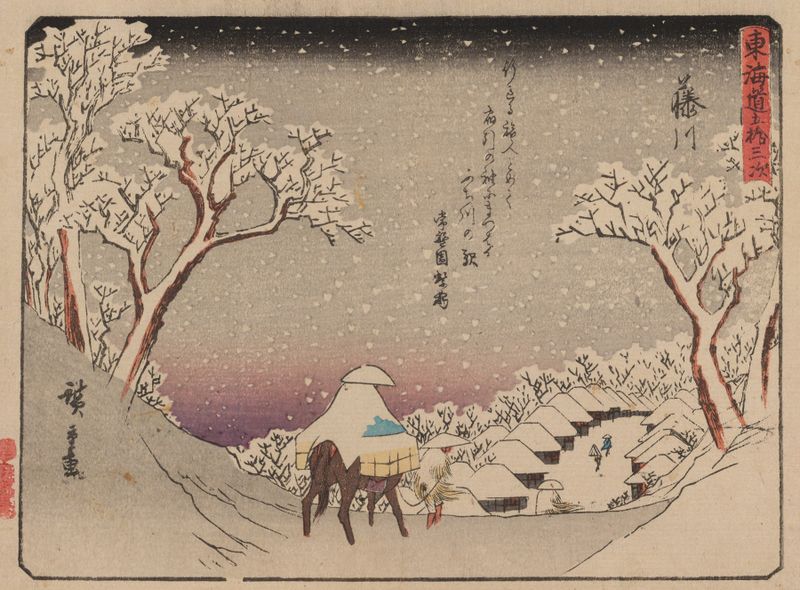
Tokaido gojusantsugi, Pl.38
Utagawa Hiroshige
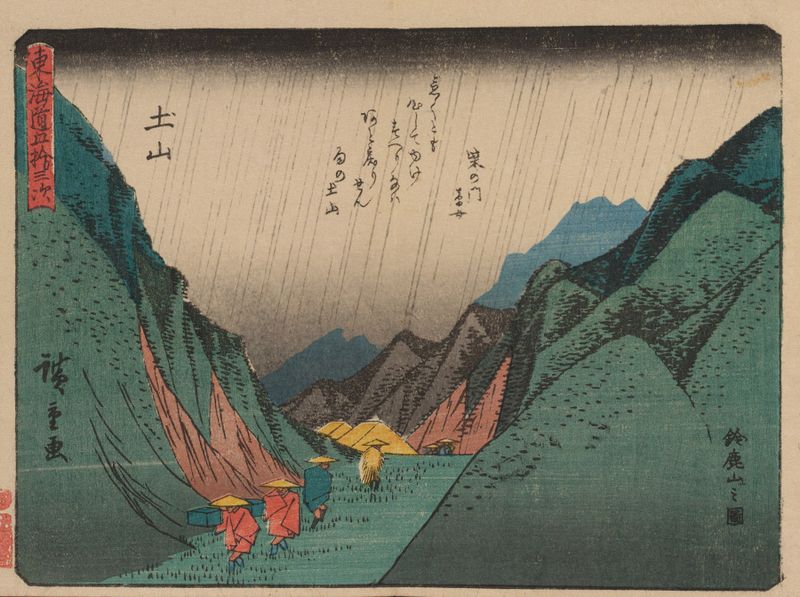
Tokaido gojusantsugi, Pl.50
Utagawa Hiroshige
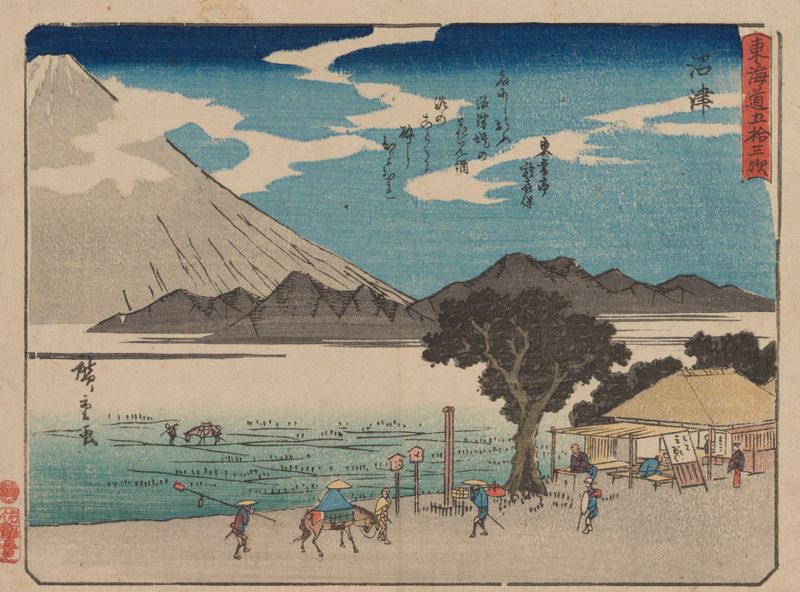
Tokaido gojusantsugi, Pl.13
Utagawa Hiroshige
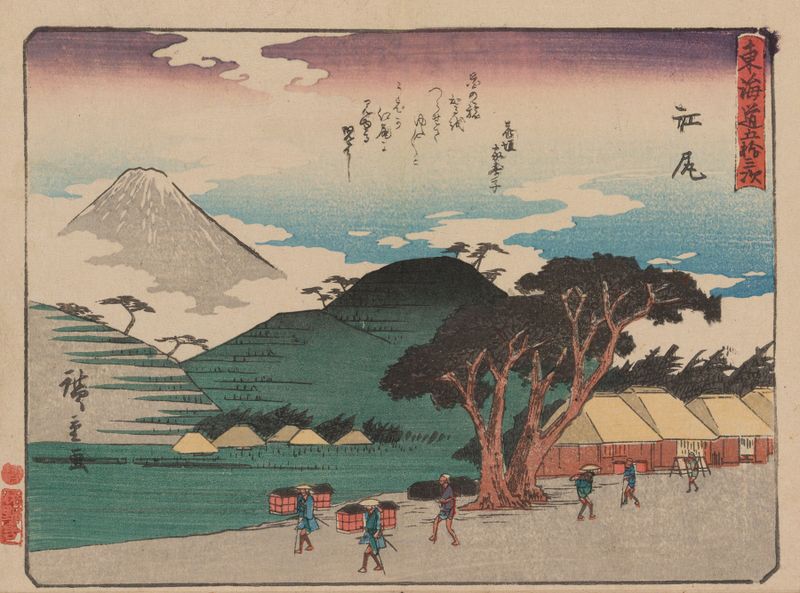
Tokaido gojusantsugi, Pl.19
Utagawa Hiroshige
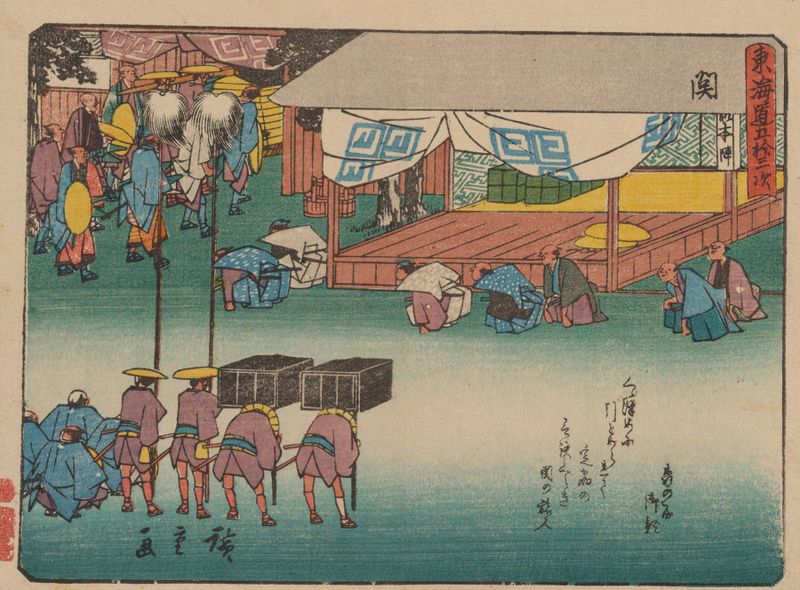
Tokaido gojusantsugi, Pl.48
Utagawa Hiroshige
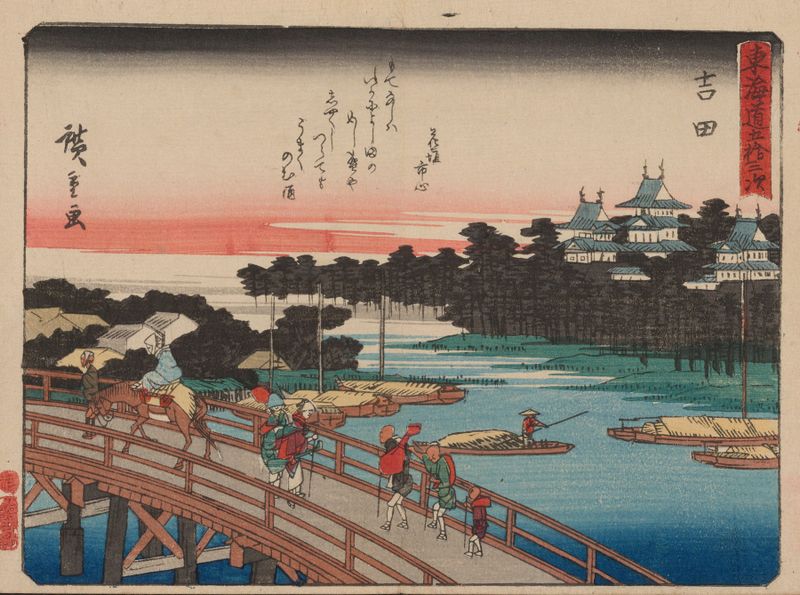
Tokaido gojusantsugi, Pl.35
Utagawa Hiroshige
Tokaido gojusantsugi, Pl.49
Utagawa Hiroshige





