
Tokaido gojusantsugi, Pl.43 — History & Facts
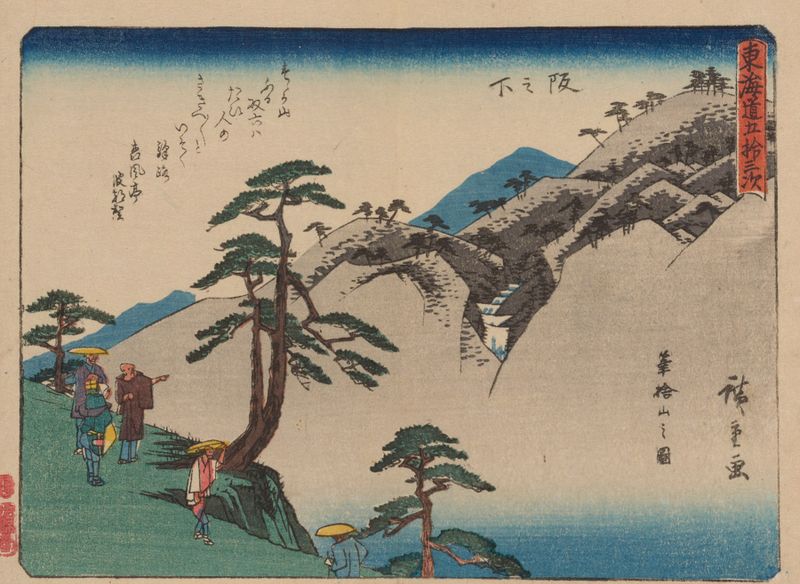
Could beauty survive in a century of chaos? In Tokaido gojusantsugi, Pl.43, tranquility emerges from the silence of a solitary journey, a testament to resilience amidst the passing tides of time. Look to the foreground, where delicate outlines of trees stretch towards the horizon, inviting the viewer’s gaze to wander along the winding path. The subtle gradients of blues and greens, punctuated by soft earth tones, create an ethereal atmosphere that envelops the scene. The carefully arranged elements emphasize depth, with layers of mountains receding into a dreamlike haze, evoking both peace and a sense of distance. As you delve deeper, notice the emptiness that envelops the road; it suggests a moment suspended in time, where the absence of figures amplifies the feeling of solitude.
The contrast between the vibrant colors of nature and the muted tones of the path evokes an emotional tension between movement and stillness, as if the journey itself is a meditative act. This visual dialogue hints at the complexities of existence, where beauty thrives even in the absence of human presence. Created between 1868 and 1912, this piece emerged during a pivotal period in Japan's history, marked by the Meiji Restoration and rapid modernization. Hiroshige, celebrated for his innovative compositions and landscape depictions, found ways to express the shifting cultural landscape while remaining rooted in traditional Ukiyo-e techniques.
His works served as a bridge between the past and an evolving future, encapsulating a longing for the simplicity and serenity that defined a previous era.
More Artworks by Utagawa Hiroshige
Browse all →
Sudden Shower over Shin Ohashi Bridge and Atake (Ohashi Atake no yudachi), from the series "One Hundred Famous Views of Edo (Meisho Edo hyakkei)"
Utagawa Hiroshige
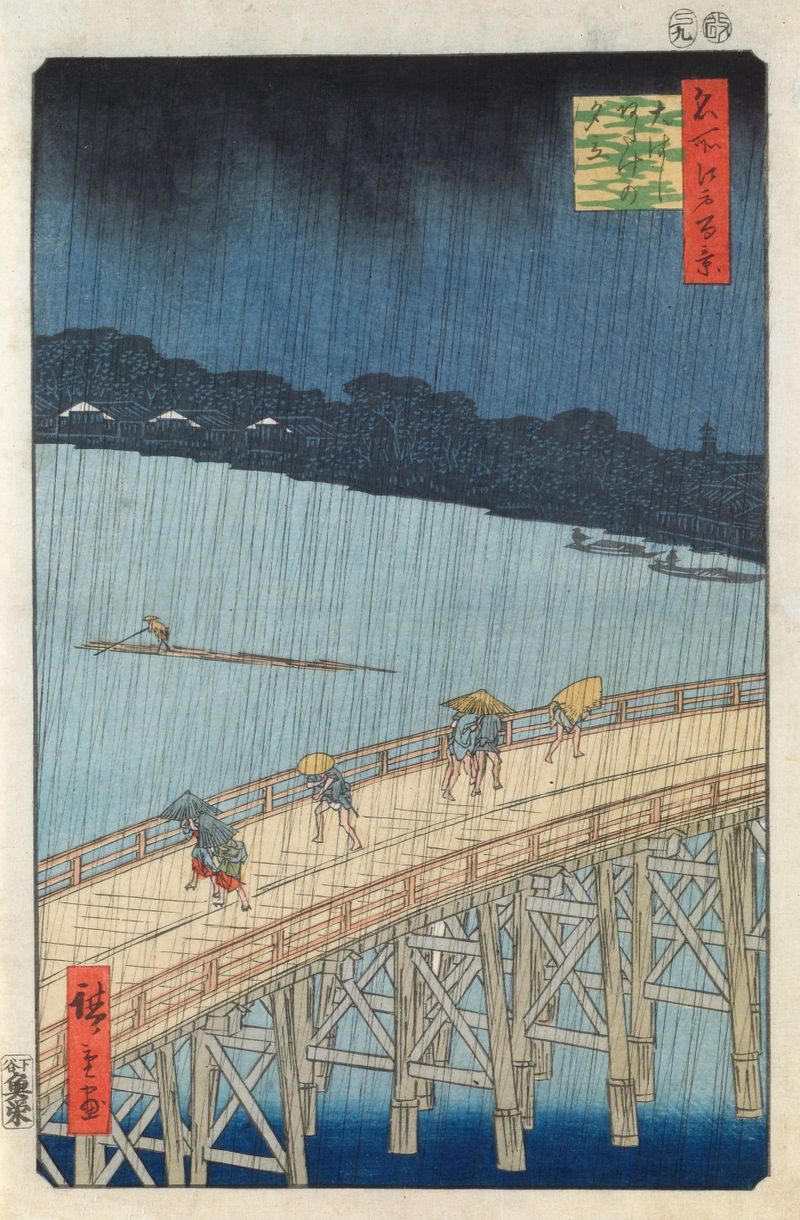
Sudden Shower Over Ohashi Bridge and Atake
Utagawa Hiroshige
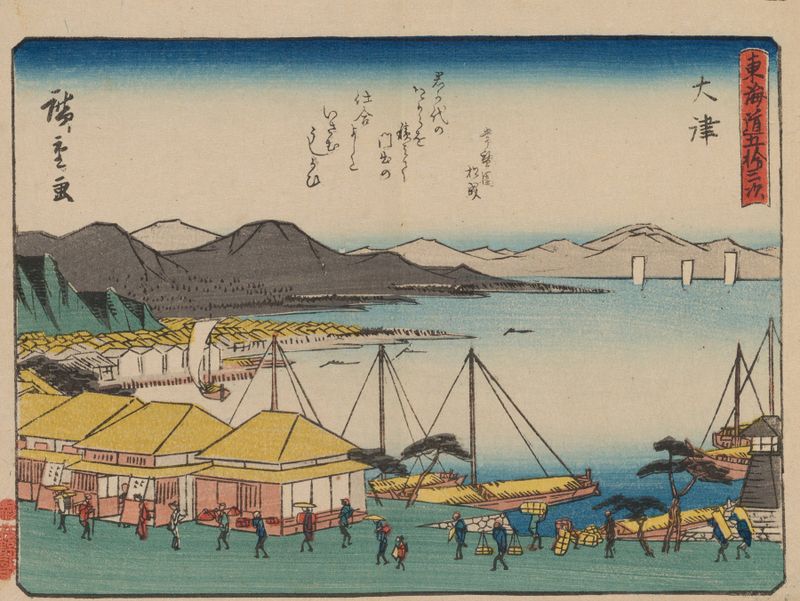
Tokaido gojusantsugi, Pl.54
Utagawa Hiroshige
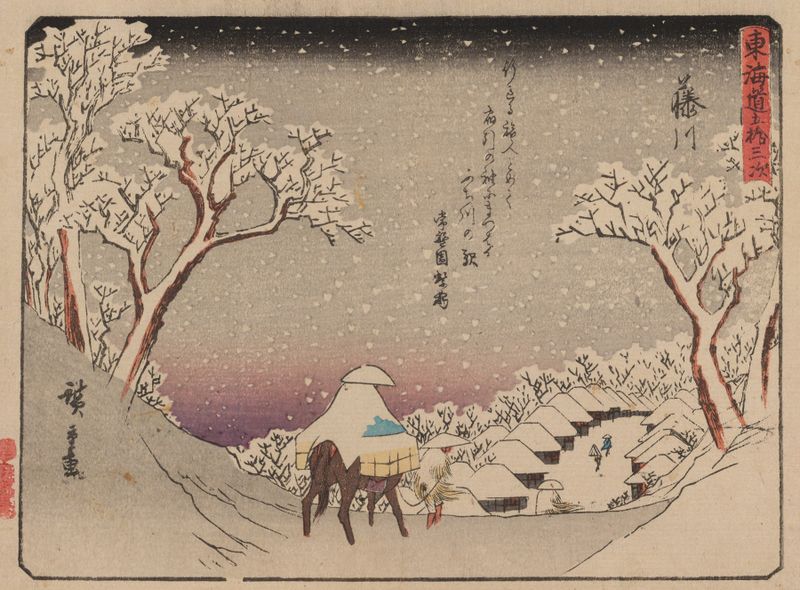
Tokaido gojusantsugi, Pl.38
Utagawa Hiroshige
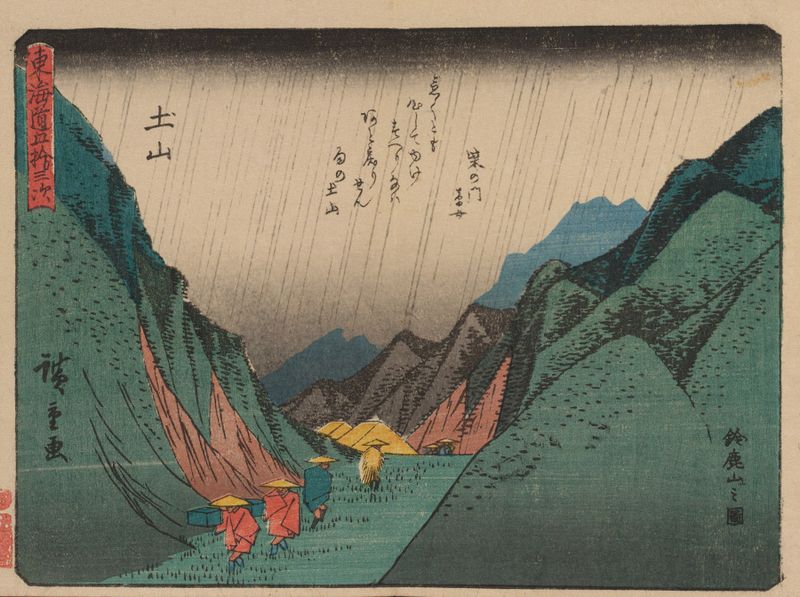
Tokaido gojusantsugi, Pl.50
Utagawa Hiroshige
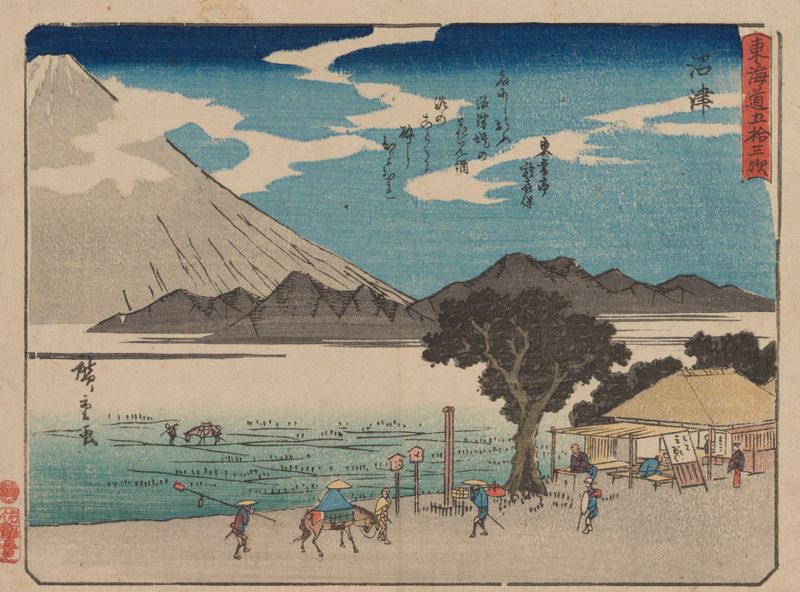
Tokaido gojusantsugi, Pl.13
Utagawa Hiroshige
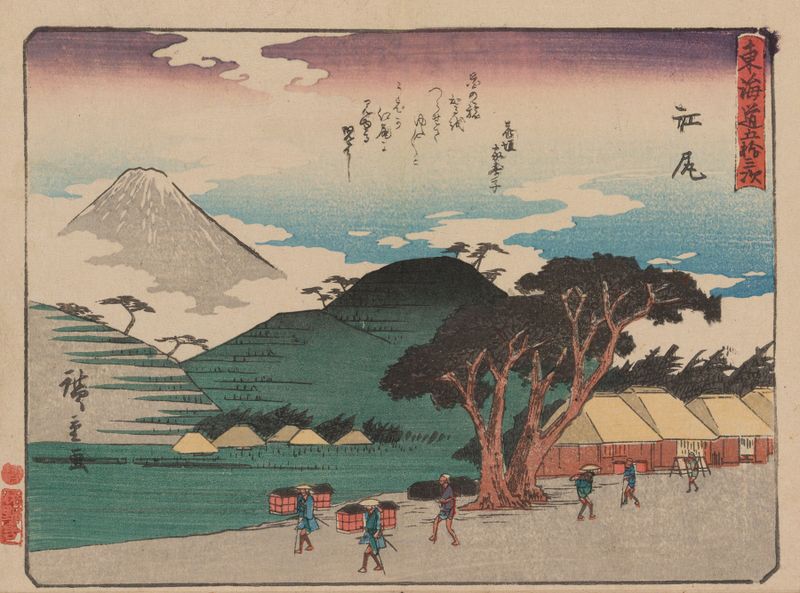
Tokaido gojusantsugi, Pl.19
Utagawa Hiroshige
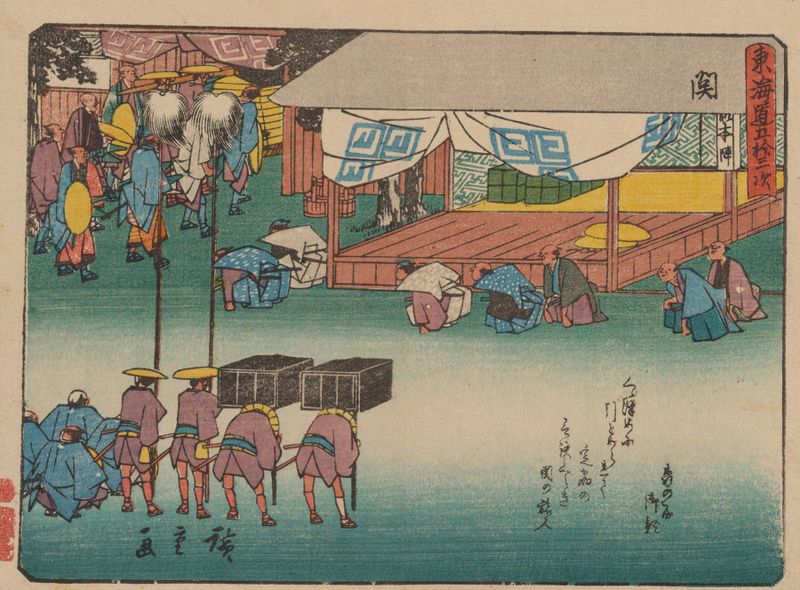
Tokaido gojusantsugi, Pl.48
Utagawa Hiroshige
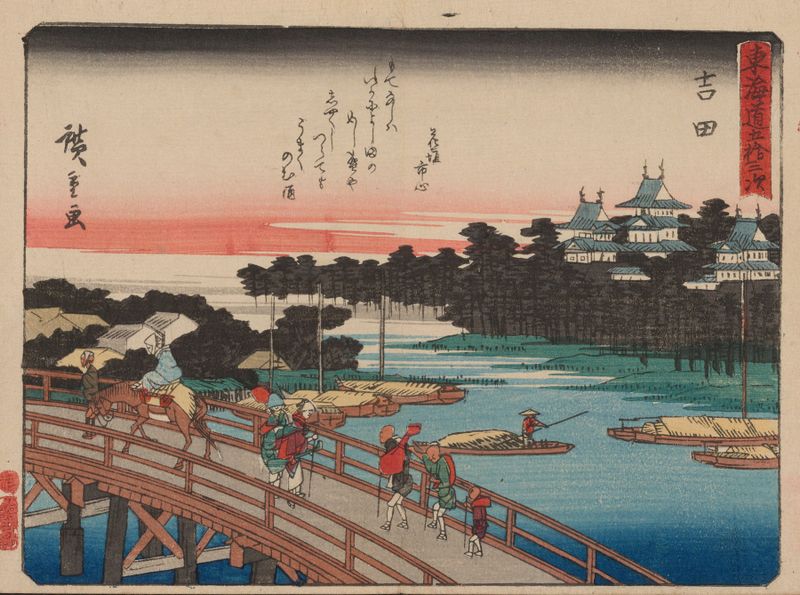
Tokaido gojusantsugi, Pl.35
Utagawa Hiroshige
Tokaido gojusantsugi, Pl.49
Utagawa Hiroshige





