Travellers on a riverside track at dusk — History & Facts
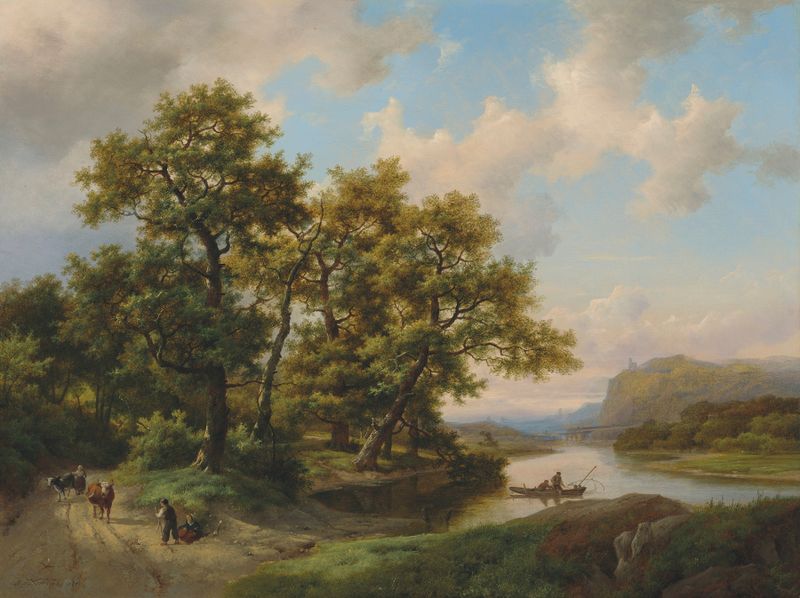
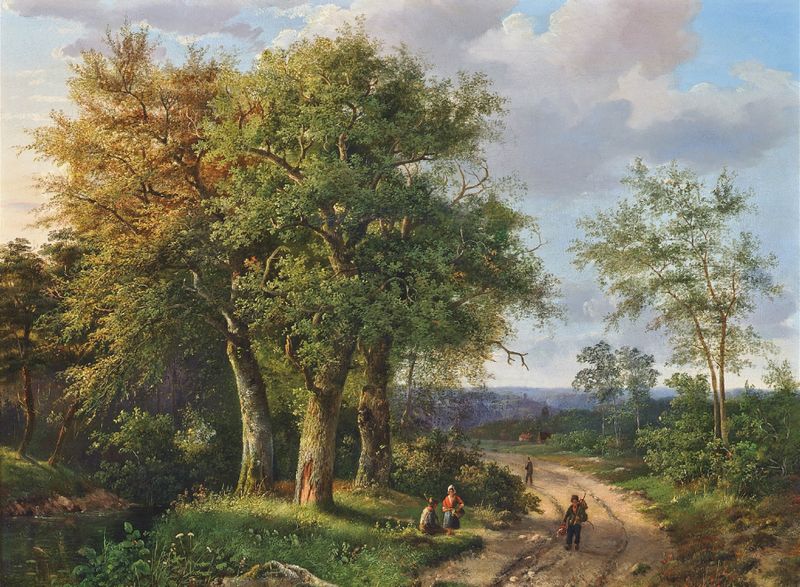
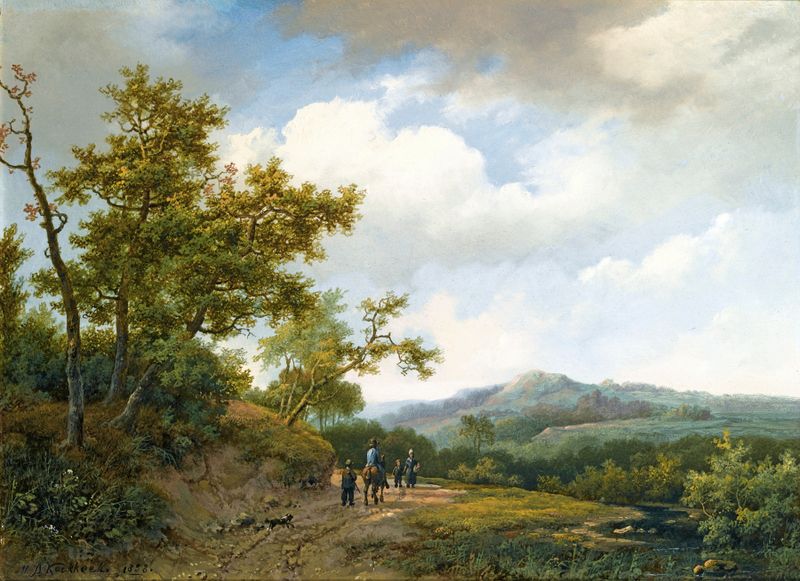
What if silence could speak through light? In the fading glow of dusk, a serene yet unsettling atmosphere envelops a riverside track, inviting contemplation of the juxtaposition between tranquility and violence. The quietude of this moment begs the viewer to listen closely to the whispers of unspoken histories and the weight of the unseen. Focus on the gentle blend of colors that define the sky above, where smoky purples meld with soft oranges, casting a delicate hue upon the figures traversing the winding path. Look to the left, where shadows stretch across the water's surface, distorting reflections that hint at deeper currents beneath the peaceful veneer.
Notice how the figures, though seemingly untroubled, carry a tension in their posture, accentuated by the way the light plays upon their faces, illuminating both curiosity and caution. The contrasting elements within this work reveal layers of meaning. The path, meandering and inviting, symbolizes both journey and uncertainty, while the encroaching twilight evokes feelings of impending change. The figures, with their subtle gestures, portray a moment suspended in time, tugging at the edges of safety and unease, hinting at an unspoken history of conflict or loss that colors their journey. Created in 1845, this piece emerged during a period of significant change in European art, as Romanticism began to give way to Realism.
Koekkoek, known for his masterful landscapes and detailed compositions, painted this work while navigating the shifting artistic currents of his time. As Europe grappled with social and political upheaval, the artist found solace and expression in capturing the interplay of light and shadow, revealing the complexities of human experience against the backdrop of nature.