Trees in a Garden — History & Facts
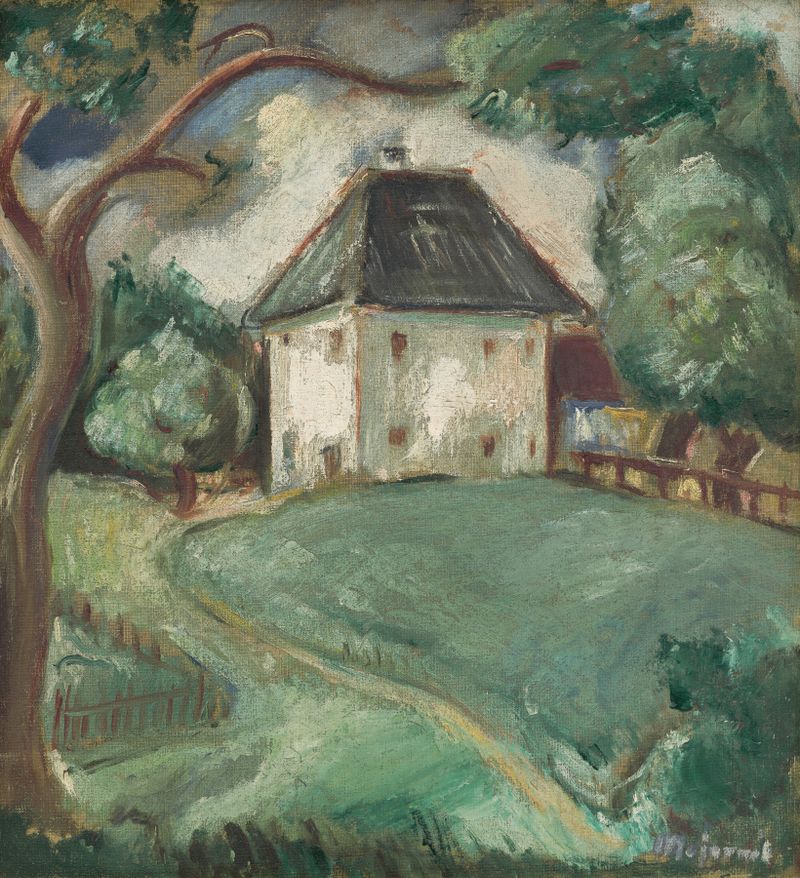
In the gentle hush of a sun-drenched afternoon, the garden breathes life. Tall trees stretch towards the sky, their leaves whispering secrets in the breeze. A couple strolls leisurely along the winding path, their fingers brushing against the velvety petals of plucked flowers, momentarily lost in their shared world. Look to the left at the exuberant greenery, where vibrant strokes frame the rich tapestry of foliage.
The painter’s brush dances across the canvas, and you can almost feel the sun filtering through the leaves, casting dappled shadows on the ground. The lushness of the trees, rendered in varying shades of green, contrasts with the earth-toned pathway, guiding your eye inward as if inviting you to wander deeper into this tranquil oasis. As you explore, notice the delicate interplay of light and shadow, which emphasizes the quiet solitude of the garden. The couple, though present, seems ephemeral against the magnificence of nature—a reminder of the transient nature of human connection amidst the eternal cycle of life.
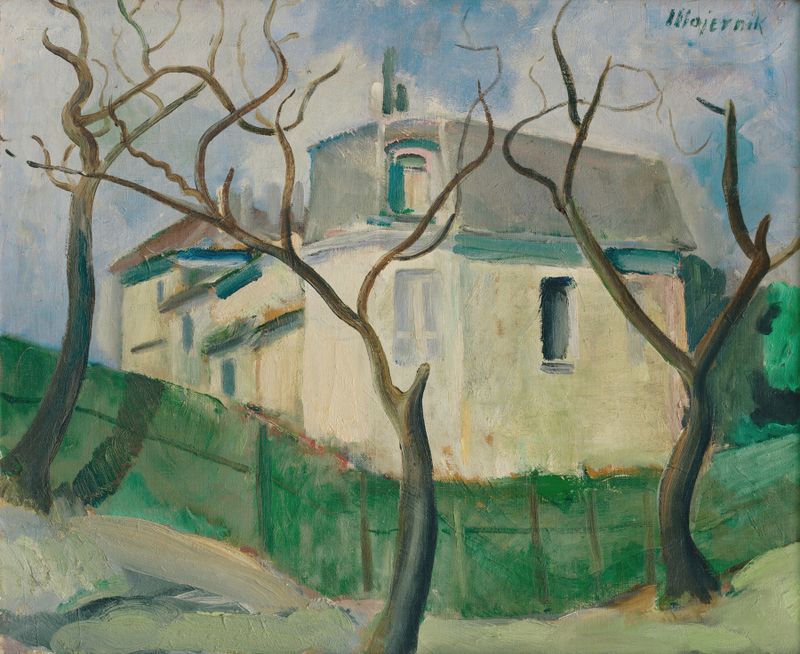
The stillness envelops them, yet their intimacy stirs a yearning for belonging and permanence in a world that feels fleeting. In 1933, Majerník painted Trees in a Garden during a period of tumultuous change in Europe. Living in Czechoslovakia, he was influenced by the rise of modernism, yet he sought solace in depicting the beauty of the natural world. This painting reflects his longing for peace amid the chaos, capturing an intimate moment that transcends time, inviting viewers to find their own serenity within its frame.