Villa in the Garden — History & Facts
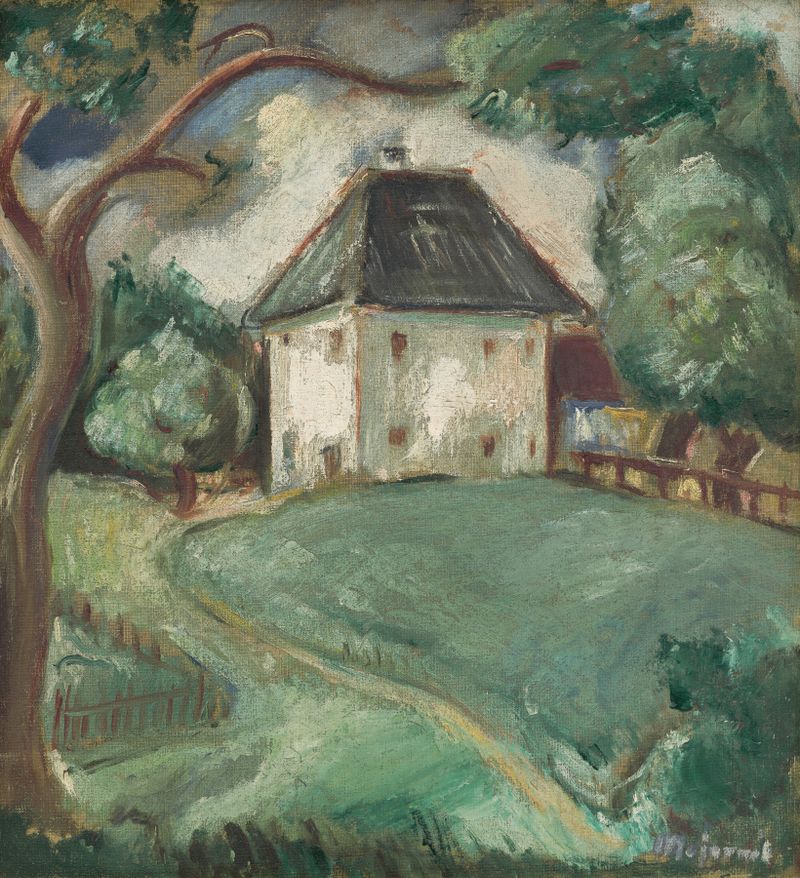
A warm breeze stirs as sunlight dapples the vibrant garden, casting playful shadows on the ancient villa's facade. In the foreground, a figure leans pensively against a sturdy tree, their gaze lost in the blossoms. The air is thick with the scent of blooming flowers, weaving a tapestry of tranquility and nostalgia that hangs heavy yet inviting. Look to the left at the sunny yellow walls of the villa, a cheerful contrast to the lush greens surrounding it.
Notice how the artist employs soft brush strokes to capture the delicate petals of the flowers, each stroke alive with gentle movement. The composition leads the eye effortlessly from the villa to the garden, where vivid colors create an atmosphere of serene harmony, inviting viewers to step into this idyllic moment. Beneath the surface, Villa in the Garden whispers tales of time and memory. The solitary figure embodies introspection, suggesting a deeper emotional landscape—perhaps a retreat from the chaos of life.
The juxtaposition of the sturdy architecture with the ephemeral beauty of nature hints at the tension between permanence and transience, capturing a fleeting moment in a timeless setting. In 1930, Majerník crafted this work during a period of personal exploration, finding inspiration in the lush landscapes of his homeland, now part of modern Slovakia. He sought to express the beauty of everyday moments, crafting a narrative that resonates with the viewer's own experiences. The art world was shifting, leaning towards the modern, yet Majerník remained anchored in the beauty of tradition, weaving the past into the present.