Triomf van de liefde — History & Facts
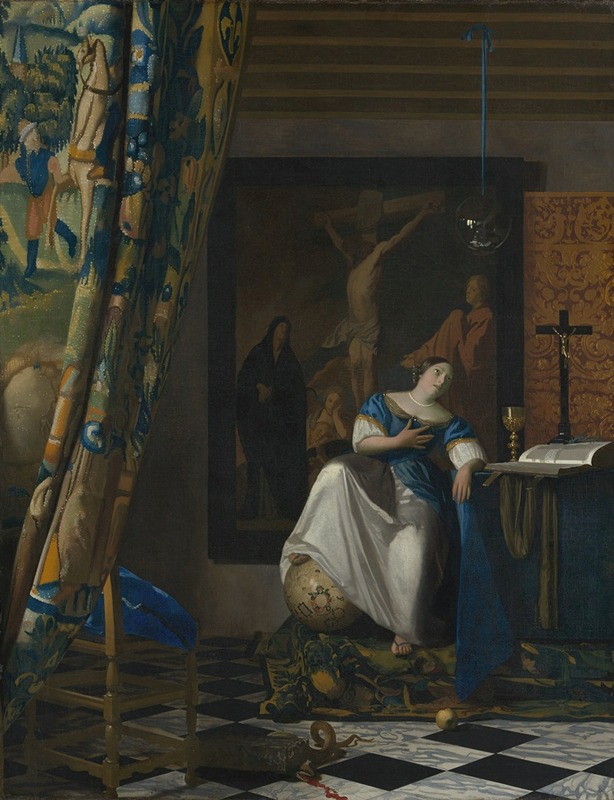
Can paint confess what words never could? In Triomf van de liefde, the divine and the human intertwine, capturing the fervent essence of love in a visual embrace that transcends mere language. Look to the center, where a radiant figure personifying Love emerges, encircled by cherubs in a sublime display of affection. The soft hues of the sky blend seamlessly with the rich reds and golds of the surrounding figures, imbuing the composition with a warmth that invites the viewer into its intimate sphere. Notice how the delicate brushwork in the cherubs’ wings contrasts against the bold, sweeping lines of Love’s flowing garment, creating a dynamic tension that pulls your gaze deeper into the scene. As you explore further, consider the symbolism woven throughout the piece.
The hearts and garlands suggest not just romantic love, but a universal affection that speaks to divine connection. The juxtaposition of ethereal figures and earthly elements evokes the tension between the mortal experience of love and its celestial counterpart. Here, love becomes a force of nature, both fragile and infinitely powerful, suggesting that our highest aspirations may be rooted in the most profound human connections. Created around 1565, this work emerged during a time of significant upheaval in Europe, marked by religious conflicts and shifting artistic paradigms.
Philips Galle, a prominent engraver and painter in the Northern Renaissance, was immersed in a world where art served as a vessel for both secular and sacred themes. This painting reflects his navigation through personal and societal changes, encapsulating the timeless struggle to express the ineffable nature of love amidst the chaos of life.