
Truman and his Military Advisors — History & Facts
The air in this room is thick with history—five men, each bearing the weight of command, are caught in a moment of silent deliberation. At the center, the figure in civilian dress sits with a gravity that draws the viewer’s attention, his gaze fixed, his posture composed but alert. The uniforms that flank him, bristling with ribbons and insignia, signal the presence of military authority, while the flags and the portrait of Washington behind them anchor the gathering in the American tradition of civilian leadership over the armed forces.
Light pours in from the tall windows, illuminating the faces and casting the background into gentle shadow, as if the outside world waits for the outcome of the conversation within. The artist’s brushwork, unfinished at the time of his death, leaves parts of the canvas with a raw immediacy that adds to the sense of a moment suspended. Painted in 1949, Truman and his Military Advisors by Augustus Vincent Tack belongs to a tradition of official portraiture that sought to capture not just likeness, but the machinery of power itself. Such works were often commissioned to commemorate pivotal moments or to honor the institutions of government, and they found their homes in public collections and halls of state.
The late 1940s were a time of seismic change, as the world adjusted to the aftermath of war and the dawn of the atomic age, and the faces here reflect both the burdens and responsibilities of that era. Though little is recorded about the specific history of this painting beyond its unfinished state and its place in the National Portrait Gallery, Washington, it stands as a testament to the enduring fascination with leadership and the visible rituals of authority. The longer you look, the more you sense the tension between decision and uncertainty that defined its time.
More Artworks by Augustus Vincent Tack

More Portrait Art
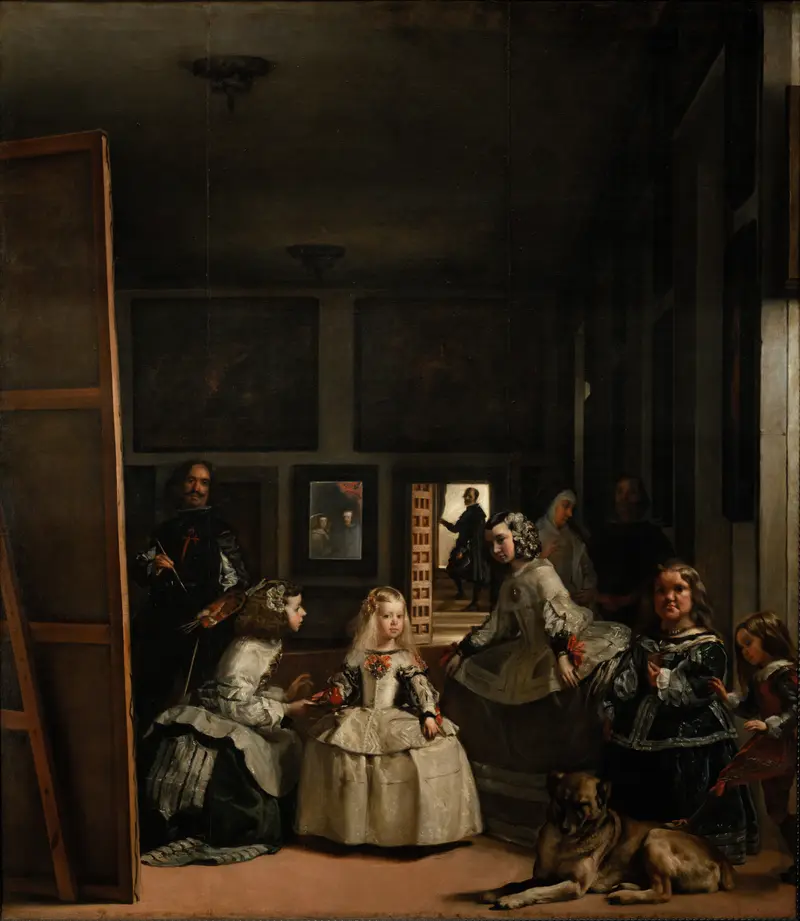
Las Meninas (The Maids of Honour)
Diego Velázquez

Girl with a Pearl Earring
Johannes Vermeer

Self-portrait with a Bandaged Ear and Pipe
Unidentified artist

Portrait de Marie de Médicis
Peter Paul Rubens

Anne of Austria, Queen of France
Peter Paul Rubens

Equestrian portrait of Charles Colonna, Duke of Marsi
Peter Paul Rubens