
Tsuchiyama – Spring Rain (Tsuchiyama haru no ame) — History & Facts
In this ephemeral moment captured by Utagawa Hiroshige, we are drawn into a world where nature's beauty intertwines with the unspoken weight of vulnerability. The gentle embrace of spring rain hints at both renewal and hidden turmoil, suggesting that tranquility can mask deeper conflicts beneath the surface. Look to the center of the composition, where the soft strokes of blue and gray converge to form the delicate cascade of rain. Notice how the colors blend harmoniously, yet the dappled patterns suggest movement, as if the droplets are dancing upon the landscape.
The figures—small and solitary—navigate the wet terrain, their umbrellas vivid against the muted backdrop. The careful use of space invites us to explore the relationship between the serene surroundings and the isolated figures, amplifying the tension inherent in this quiet scene. Contrasting the beauty of spring’s renewal, the painting evokes a sense of underlying violence, where the rain becomes an almost oppressive force. Each droplet carries the weight of unspoken feelings, reflecting a struggle between the natural cycle and human emotion.
The trees, lush yet weighed down by the rain, symbolize the burden of past traumas, while the figures seem lost in contemplation, caught between desire and despair. During the years 1831 to 1834, Hiroshige created this piece amid the Edo period's cultural blossoming in Japan. As the ukiyo-e genre flourished, artists like him sought to capture the fleeting beauty of nature and human life. This era was marked by both artistic exploration and political tension, as Japan faced internal strife, making Hiroshige's work a poignant reflection of the complex human experience during a time of change.
More Artworks by Utagawa Hiroshige
Browse all →
Sudden Shower over Shin Ohashi Bridge and Atake (Ohashi Atake no yudachi), from the series "One Hundred Famous Views of Edo (Meisho Edo hyakkei)"
Utagawa Hiroshige
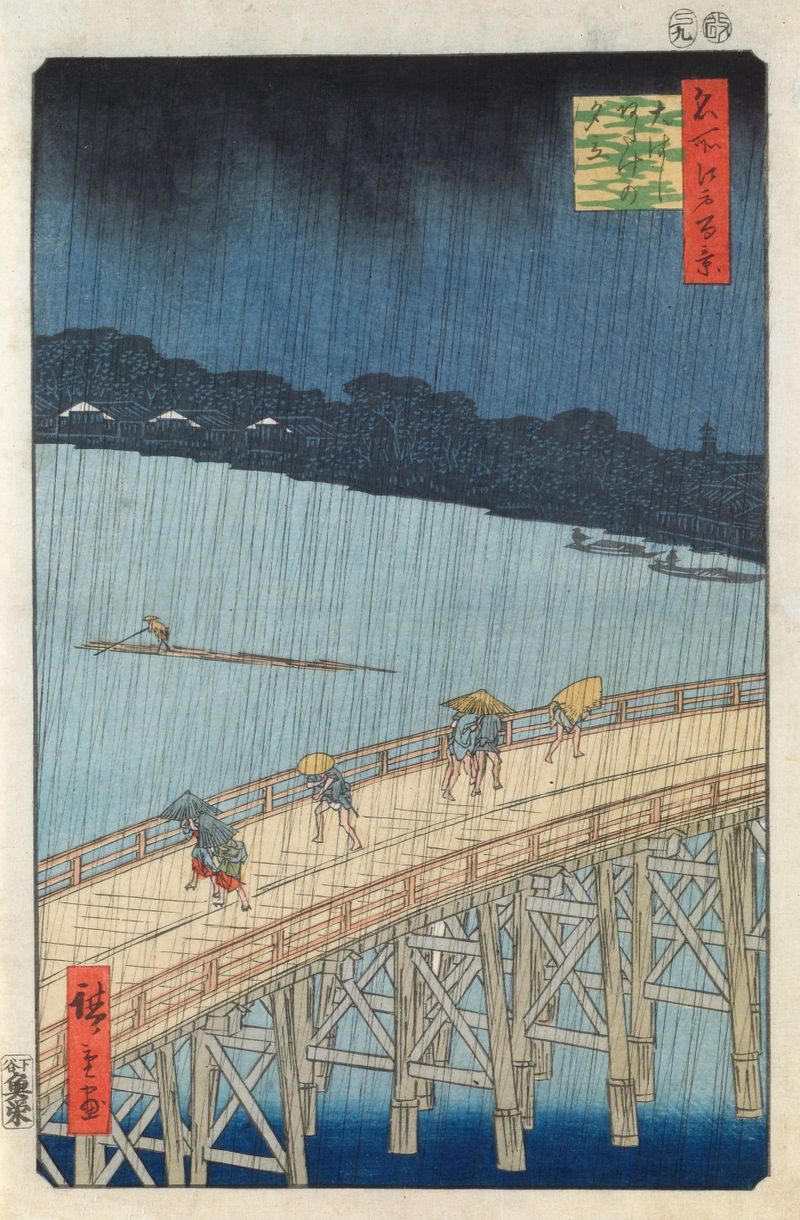
Sudden Shower Over Ohashi Bridge and Atake
Utagawa Hiroshige
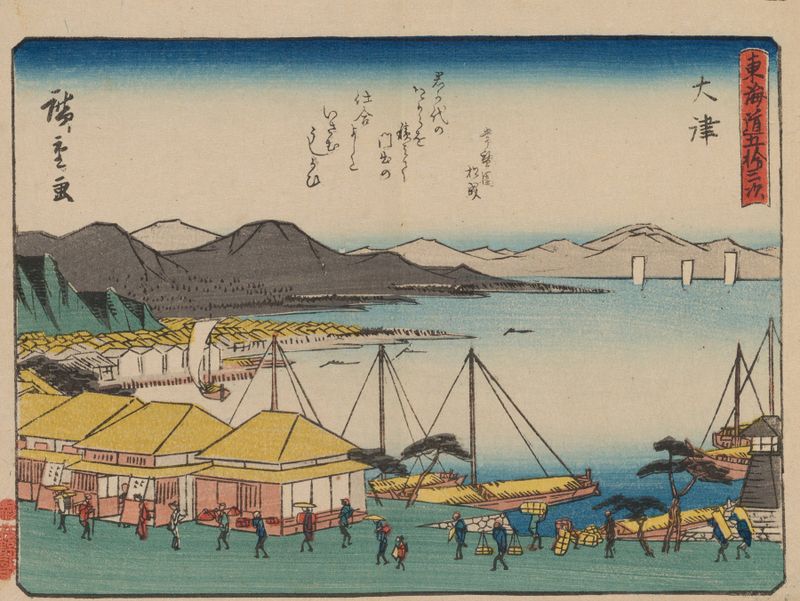
Tokaido gojusantsugi, Pl.54
Utagawa Hiroshige
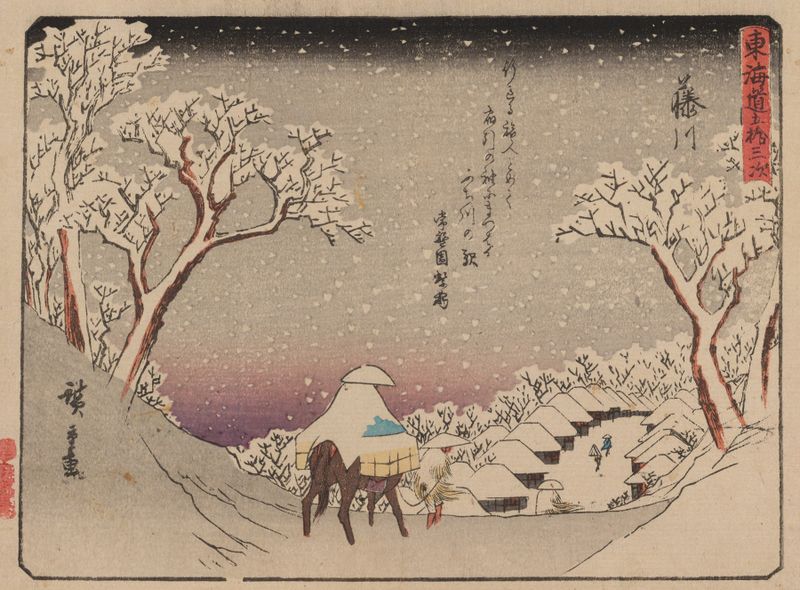
Tokaido gojusantsugi, Pl.38
Utagawa Hiroshige
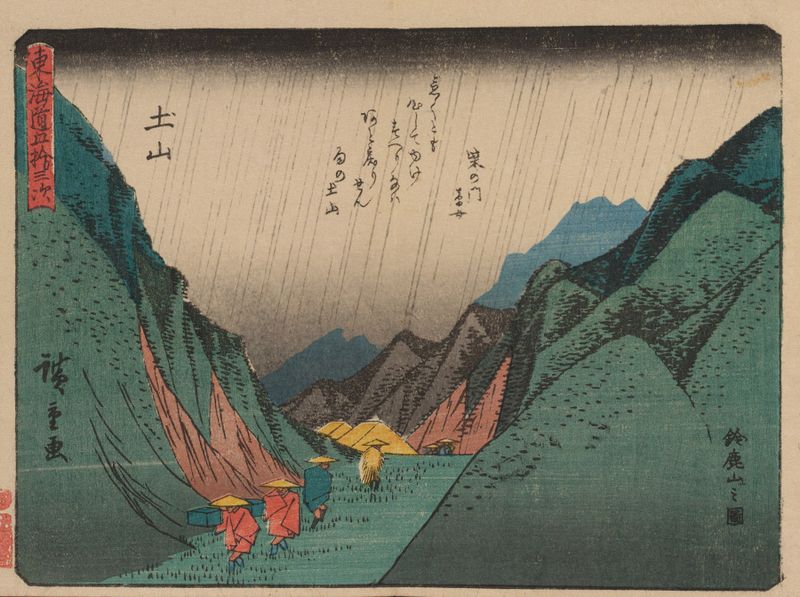
Tokaido gojusantsugi, Pl.50
Utagawa Hiroshige
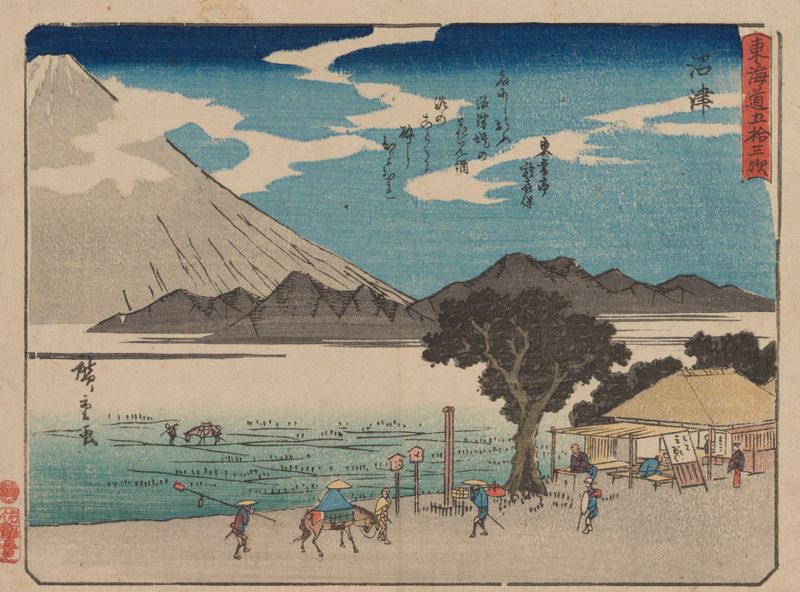
Tokaido gojusantsugi, Pl.13
Utagawa Hiroshige
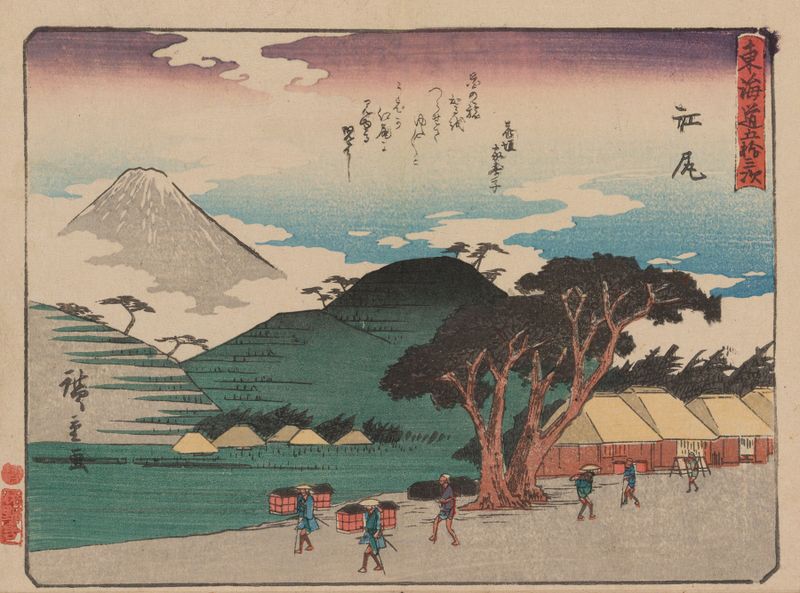
Tokaido gojusantsugi, Pl.19
Utagawa Hiroshige
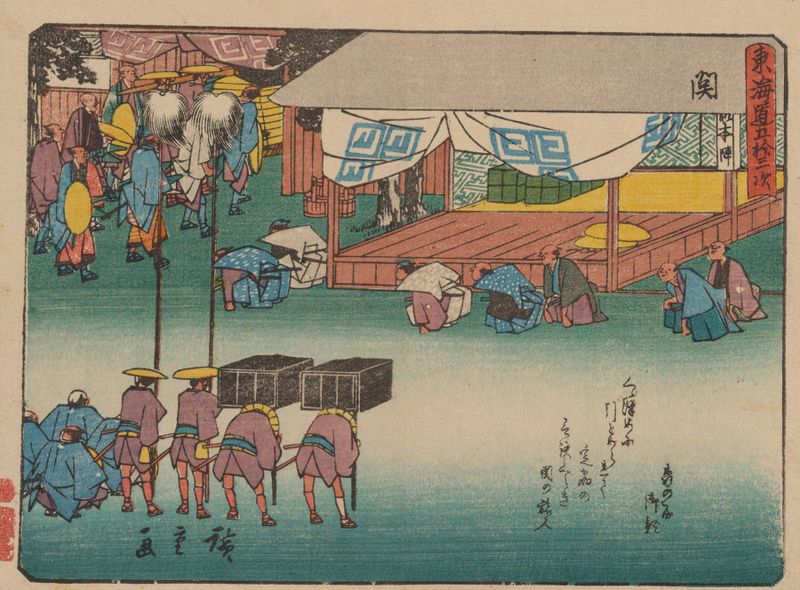
Tokaido gojusantsugi, Pl.48
Utagawa Hiroshige
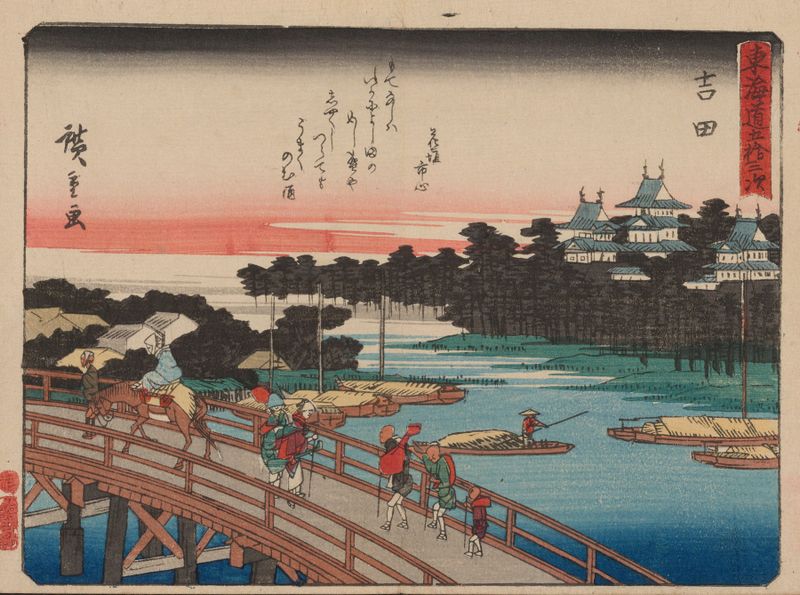
Tokaido gojusantsugi, Pl.35
Utagawa Hiroshige
Tokaido gojusantsugi, Pl.49
Utagawa Hiroshige





