
Twilight of Steam – Lindale Roundhouse — History & Facts
When did color learn to lie? Beneath the veil of vivid hues lies a narrative of betrayal, where the promise of progress is tinged with loss. Look to the left, where the rusted remnants of steam engines stand sentinel, their looming presence a stark contrast against the vibrant twilight sky. The artist employs a palette that dances between fiery oranges and deep purples, capturing the essence of a day’s end while evoking a sense of nostalgia. Notice how the warm light washes over the corroded metal, creating an illusion of beauty that hides the decay of an era.
The meticulous brushwork brings texture to the engines, making them almost alive, as if they are relics whispering stories of a forgotten time. As you move deeper into the scene, subtle tensions emerge. The interplay of light and shadow reflects the duality of innovation and obsolescence, showcasing a world where advancement often leads to mourning the past. The encroaching darkness, represented by the ominous clouds gathering overhead, suggests an impending end—not just of steam power, but of an entire way of life.
The gleaming colors betray the engines, offering a false promise of permanence in their twilight hours. In 1952, during a period of rapid technological change in America, the artist created this work against a backdrop of shifting societal values. The post-war era was marked by a burgeoning reliance on diesel and electricity, leaving steam engines as mere ghosts of industry. Kulhanek’s piece captures this transitional moment in time, reflecting both his personal investment in the fading glory of steam and the broader cultural landscape that was moving forward, often neglecting its history.
More Artworks by James C. Kulhanek
Browse all →
Under Full Sail
James C. Kulhanek
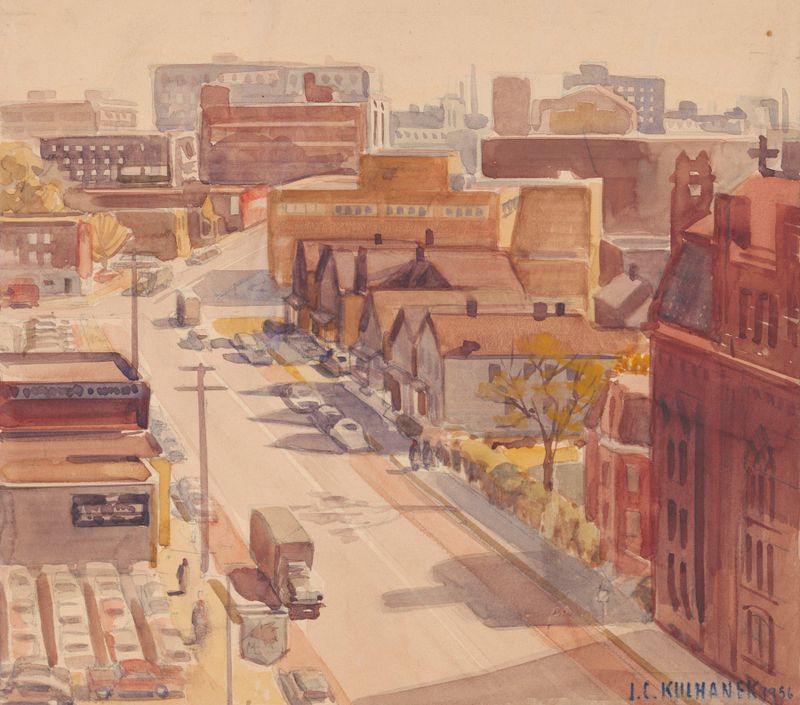
E18th street Looking South from Plain Dealer Building Cleveland Ohio
James C. Kulhanek
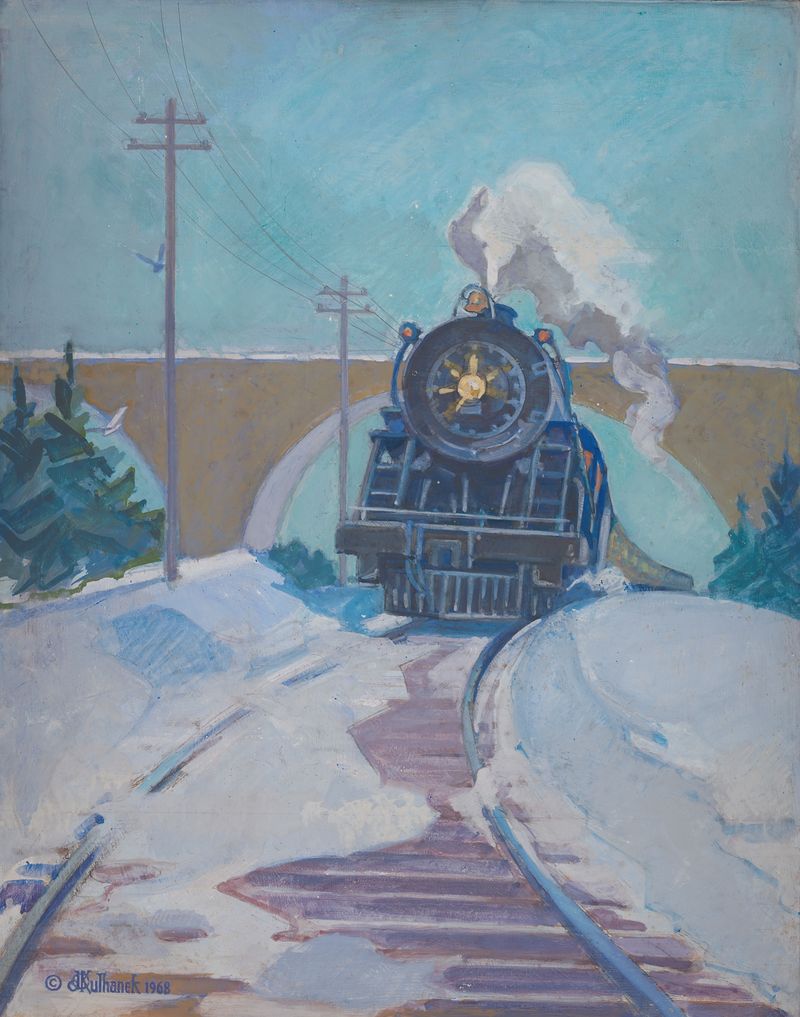
Winter Express
James C. Kulhanek
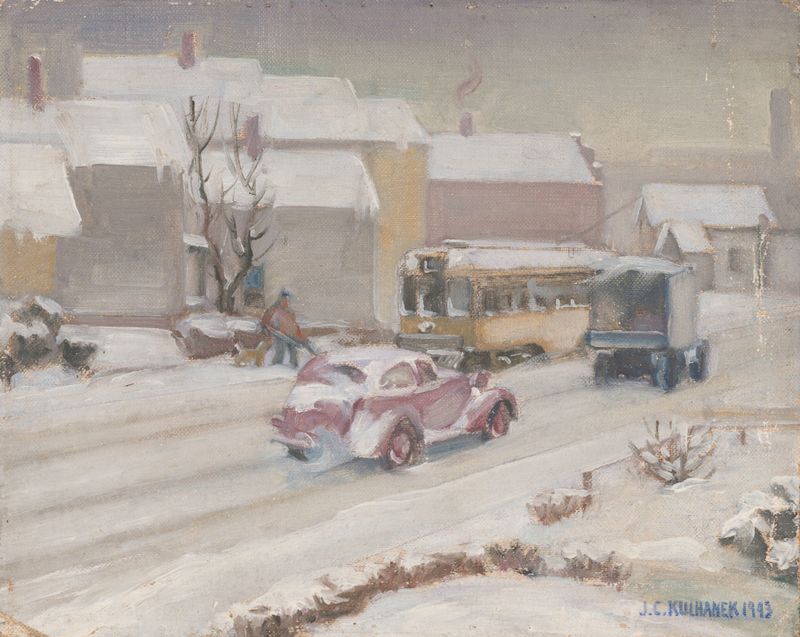
Fulton Road, Cleveland, Ohio
James C. Kulhanek
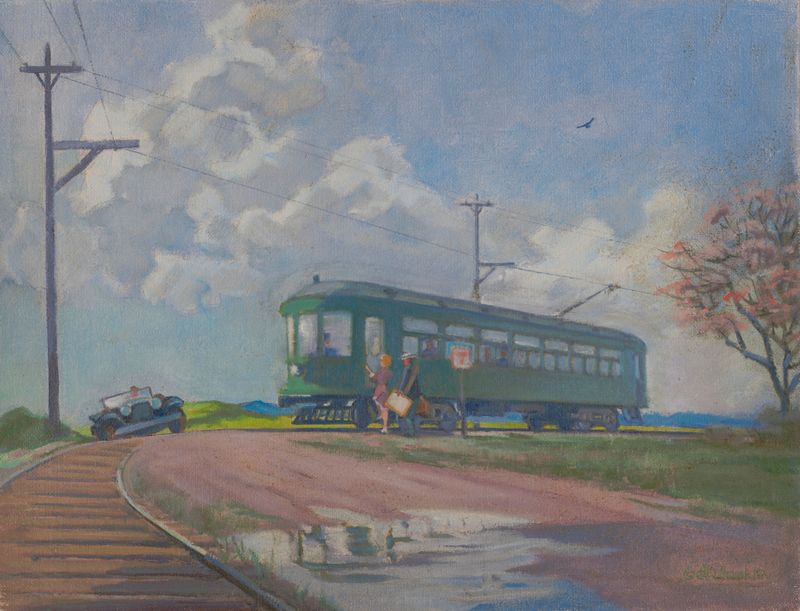
Interurban Stop
James C. Kulhanek
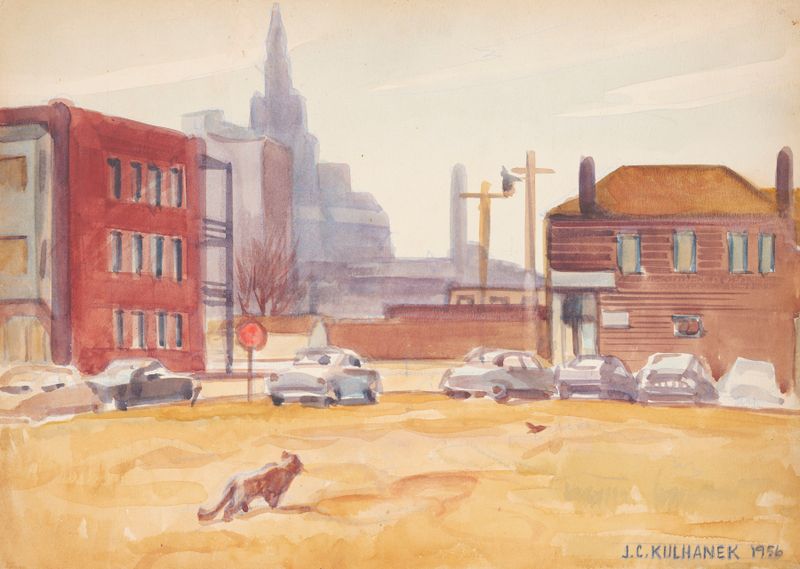
Cleveland Skyline
James C. Kulhanek
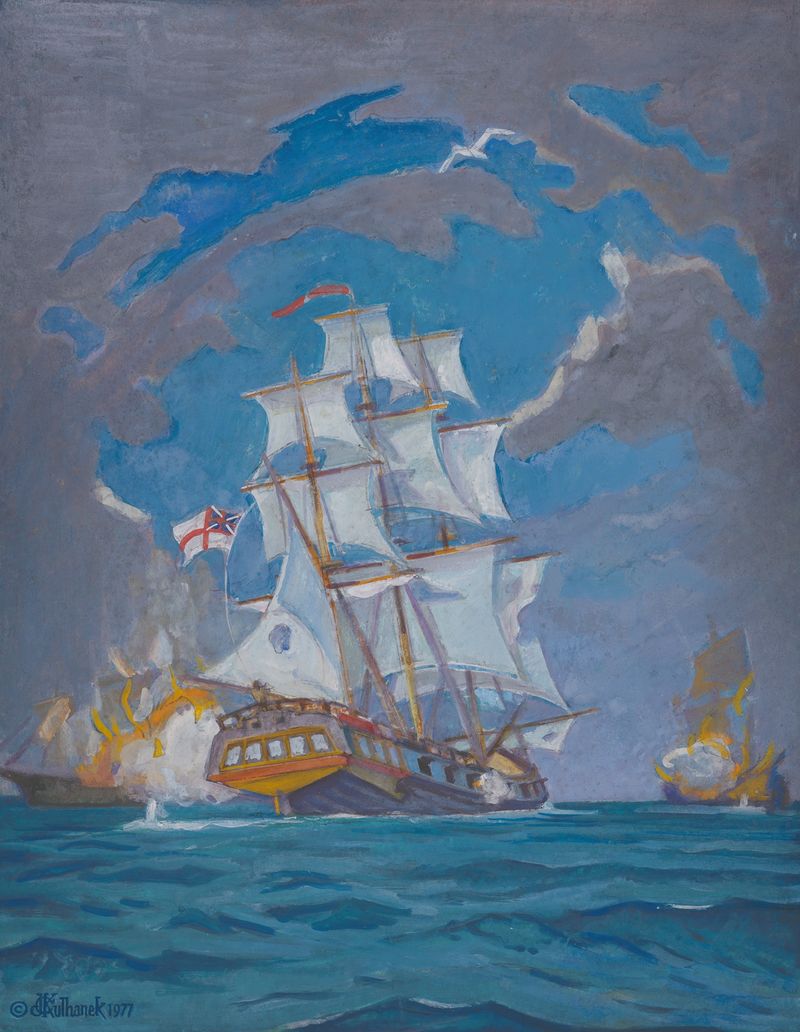
Rule Britannia
James C. Kulhanek

Provincal Jewel
James C. Kulhanek

Northern Ohio Food Terminal
James C. Kulhanek

Whistle Stop
James C. Kulhanek





