Two birds in a mountain landscape — History & Facts
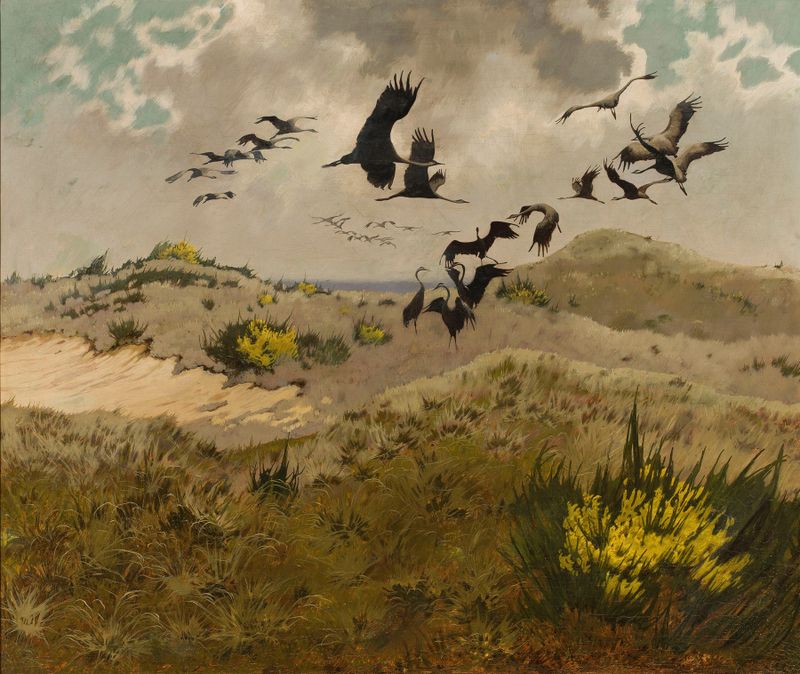
In Two Birds in a Mountain Landscape, light and shadow dance upon a tranquil scene, capturing fleeting moments of nature's serenity. The interplay of illumination evokes a sense of peace, inviting reflection on the transience of life. Focus on the vibrant hues of the mountain backdrop, where emerald greens cascade into deep blues, hinting at the depth of the landscape. Look closely at the birds, positioned delicately among the foliage, their plumage subtly catching the sunlight.
Notice how the brushwork varies from soft, sweeping strokes to precise, almost deliberate details that breathe life into each feather, showcasing the artist's meticulous approach to both light and texture. The juxtaposition of the soaring birds against the static mountains speaks to the tension between freedom and permanence. While the birds represent the spontaneity of life, the mountains stand as timeless witnesses to nature's ebb and flow. The gentle light falling across the scene not only highlights these contrasts but also serves as a reminder of the beauty found in stillness as well as in movement. Friedrich Lissmann painted Two Birds in a Mountain Landscape in 1912, a time when Europe was on the brink of significant turmoil.
As an artist immersed in the burgeoning modernist movement, Lissmann sought to capture the essence of nature through his work, reflecting the changing perspectives of a world transitioning into the chaos of war. Amidst this backdrop, his focus on light and the delicate composition in this piece stands as a poignant reminder of nature's enduring tranquility.