
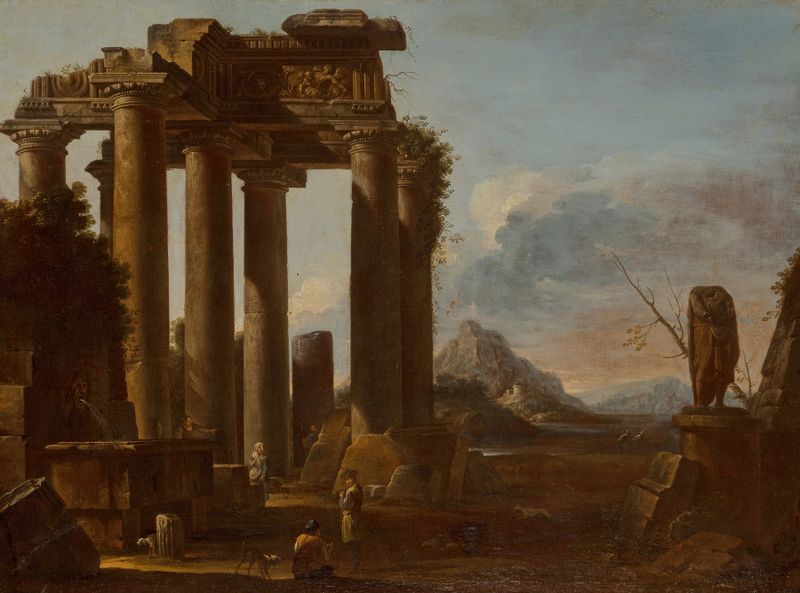
Two classical temples in ruins with statue, bas-relief and figures — History & Facts
In the stillness of decay, the remnants of grandeur whisper truths long forgotten. Here, in the interplay of stone and shadow, echoes of the past linger, inviting contemplation on the impermanence of beauty and the relentless passage of time. Look to the center of the canvas where the crumbling temple towers over the scene, its once-majestic columns now leaning, yet proud in their abandonment. Notice how the light bathes the ruins, illuminating the bas-reliefs that cling to the walls, revealing intricate depictions of deities and mortal life entwined.
The palette, rich in earthy tones, creates a dialogue between the vibrant hues of nature and the muted colors of stone, emphasizing the tension between life and decay. Within these ruins, layers of meaning unfold—each crack in the stone representing the frailty of civilization, each figure carved into the bas-relief a reminder of the stories that have faded with time. The juxtaposition of the lush landscape surrounding the temples highlights the contrast between nature’s resilience and humanity’s transience. Here lies an invitation to ponder: what truths remain in the ruins of our own lives? Giovanni Ghisolfi painted this work between 1650 and 1660, during a time of great artistic exploration in Italy.
As a prominent figure of the Baroque movement, Ghisolfi was immersed in a world rich with classical influences and the revival of ancient themes. His depiction of ruins reflects both a personal fascination with history and the broader cultural currents that sought to reconcile the past with a turbulent present, encapsulating the eternal cycle of creation and destruction.
More Artworks by Giovanni Ghisolfi
Browse all →
More Architecture Art
Browse all →
The statue of Liberty
Frédéric Auguste Bartholdi

View of Houses in Delft, Known as ‘The Little Street’
Johannes Vermeer

View of Houses in Delft, Known as ‘The Little Street’
Johannes Vermeer

The Cathedral in Rouen. The portal, Grey Weather
Claude Monet

The yellow house
Vincent van Gogh

The Church in Auvers-sur-Oise, View from the Chevet
Vincent van Gogh