A coastal landscape with figures by a classical ruin — History & Facts
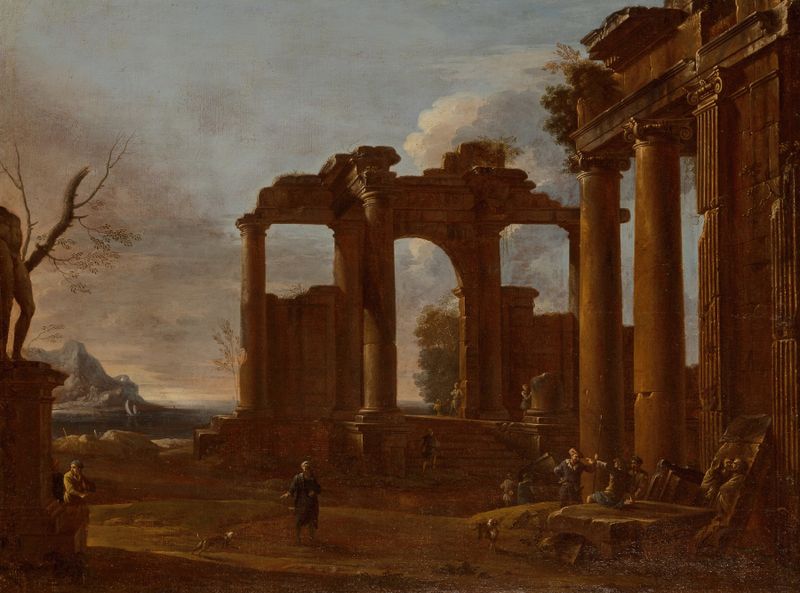
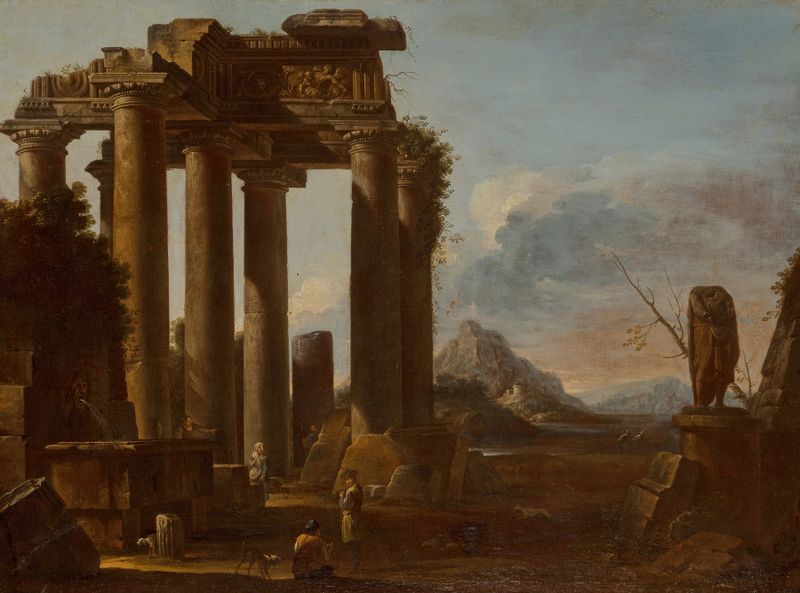
Who listens when art speaks of silence? The subtle whispers of nostalgia echo through every brushstroke, inviting contemplation on the passage of time. Look to the center of the canvas, where the classical ruin stands majestically, its crumbling columns reaching towards a serene sky. The warm golden hues of the setting sun bathe the landscape in a soft glow, contrasting with the cool blues of the water that cradles the shore. Figures, small yet significant, linger nearby, their gestures hinting at a shared reverie, suggesting stories woven into the fabric of the scene.
The interplay of light and shadow leads the eye around the composition, creating a sense of depth and inviting the viewer to ponder the relationship between humanity and nature’s eternal beauty. Among the figures, one can discern a silent dialogue of nostalgia—perhaps a longing for a past filled with grandeur, as embodied by the ruin itself. The juxtaposition of the eroded architecture against the vibrant coastal life signifies the inevitable passage of time, reminding us that beauty is often fleeting. The distant horizon, where land meets sea, elicits feelings of both hope and melancholy, encouraging a reflection on lost moments and dreams deferred. Giovanni Ghisolfi crafted this landscape during a period when classical ideals were celebrated in art, and the allure of the ruins symbolized a romantic reverence for history.
Though the exact date of this work remains unknown, it is believed to have emerged in the 17th century when Italy was a hub of artistic innovation. Here, Ghisolfi fused the natural with the architectural, capturing a moment of stillness within the ever-changing tides of life.