Two Rocks in Brittany — History & Facts
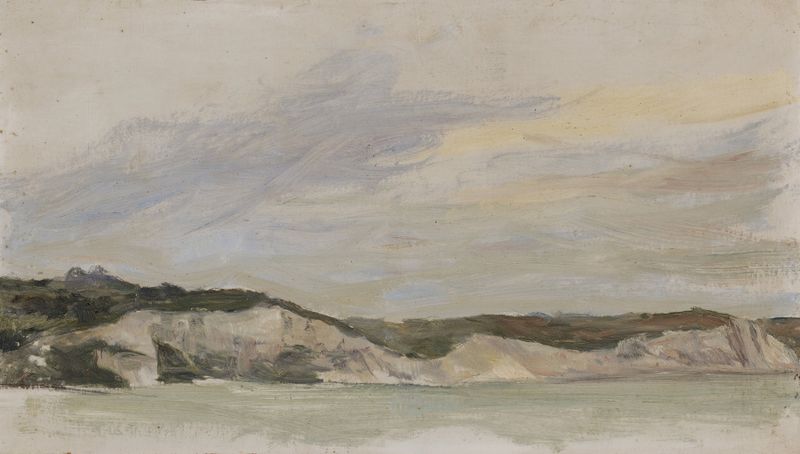
Where does light end, and longing begin? In the delicate interplay of shadow and form, we find the essence of balance captured on canvas. Look to the left at the striking sunlit rock, its surface a tapestry of ochre and gold that seems to pulse with warmth. The subtle gradation of colors invites the eye to wander, while the contrasting cool blues and greens of the surrounding water cradle it gently. Notice how the artist employs soft brushstrokes to evoke a sense of texture, allowing the viewer to almost feel the ruggedness of the stone.
The composition is anchored by the placement of the two rocks, creating a dialogue between stability and transience. The emotional tension springs forth from the juxtaposition of the solid rock formations against the ethereal play of light reflecting off the water's surface. This contrast serves as a metaphor for life's fleeting moments, where the steadfastness of the rocks signifies permanence, while the shimmering reflections hint at the ephemeral nature of existence. There is a serene yet poignant quality in the way the elements coexist, suggesting an underlying harmony amidst the chaos of longing and desire. William de Goumois created this work during a time when Impressionism was gaining momentum, likely in the late 19th century.
Living in Brittany, a region known for its dramatic coastal landscapes, he was influenced by both the natural beauty around him and the evolving artistic movements of his time. The balance he sought in Two Rocks in Brittany not only reflects his personal exploration of light and form but also resonates with the broader artistic shifts that defined an era.