English Coast in Grey — History & Facts
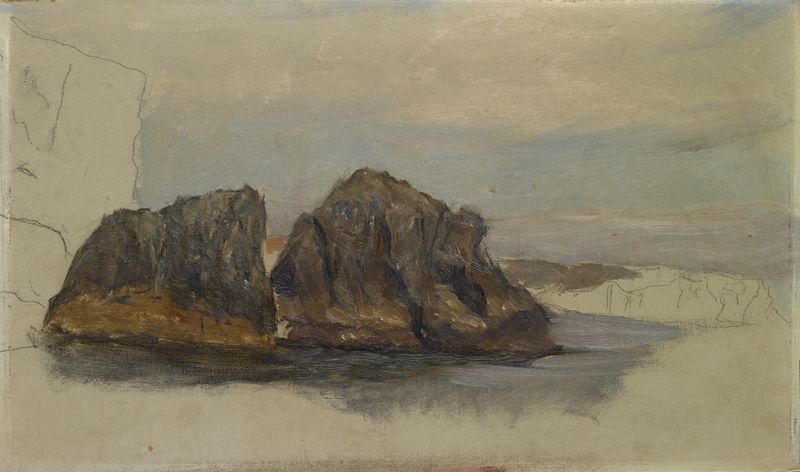
Loneliness clings to the edges of our existence, just as the mist envelops the lonely coast captured in this artwork. It speaks of solitude, whispering to those who dare to listen. Look to the horizon, where muted shades of grey blend seamlessly, creating a sense of depth and distance. The sky and sea mirror each other, their surfaces almost indistinguishable, inviting you to ponder the vastness of the world.
Notice how the faint outlines of cliffs emerge from the fog, suggesting a presence yet remaining elusive, much like the feelings of isolation that we often encounter in our lives. The gentle strokes convey movement yet evoke a stillness that resonates deeply. Within this muted palette lies a tension between the presence and absence, a dance of light that seldom breaks through the clouds. The smooth texture of the water contrasts with the ruggedness of the land, embodying the struggle between nature's calm and chaotic beauty.
These subtle details encapsulate the essence of loneliness as a powerful force, an emotion that can be both overwhelming and quietly comforting. William de Goumois created this piece during a time when the arts were evolving, capturing the fleeting moments of nature in an impressionistic style. The exact date of this work remains unknown, yet it reflects the artist’s exploration of landscapes that evoke contemplation. Amidst a shifting artistic landscape, he embraced the allure of the English coast, rendering it as a poignant representation of human emotion.