Ulička v Levoči — History & Facts
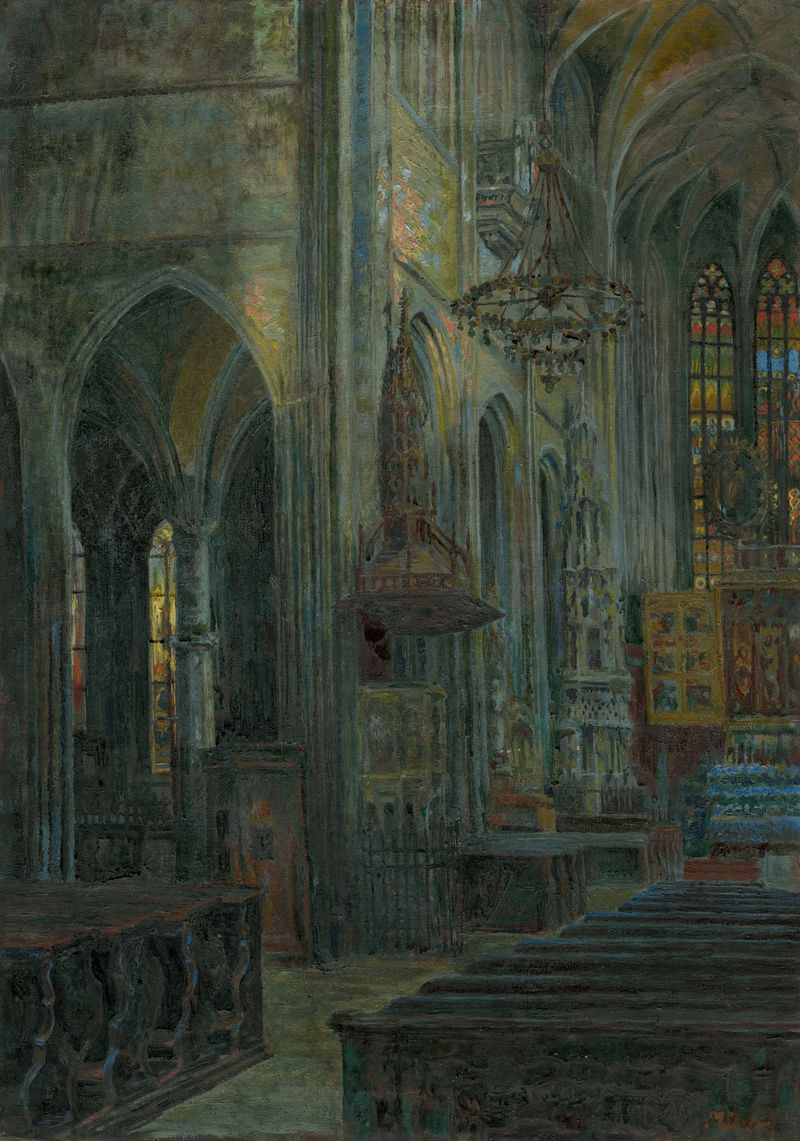
What secret hides in the quiet of the canvas? In the stillness captured here, transformation beckons with whispers of change and renewal. Look to the center of the composition, where a cobbled street stretches into the distance, flanked by modest homes that rise like silent sentinels. Notice how the warm, golden light bathes the scene, creating a delicate interplay of shadow and illumination that breathes life into the bricks and mortar. The artist’s brushwork is smooth yet deliberate, inviting the eye to wander through the intimate details—window sills adorned with flower boxes, the clothesline sagging beneath the weight of freshly washed linens, each element harmonizing to evoke a sense of place. As you explore further, consider the contrasts at play: the sturdy architecture juxtaposed with the ephemeral nature of the hanging garments, symbols of daily life and fleeting moments.
This tension hints at the transient beauty of existence, where the mundane becomes extraordinary. The quiet alleyway, a microcosm of the world, suggests both isolation and community, capturing the duality of human experience as life unfolds in unexpected ways. During the years between 1910 and 1922, Florián Milan painted Ulička v Levoči in the context of a rapidly changing Europe, shaped by social upheaval and artistic experimentation. Living in Slovakia, he was influenced by the burgeoning modernist movements that sought to redefine traditional perspectives.
This work reflects his unique ability to merge realism with a deeper emotional resonance, capturing the essence of life in a small town while hinting at the transformations brewing beyond its borders.