
Ulvegjelsbakken, Mandal — History & Facts
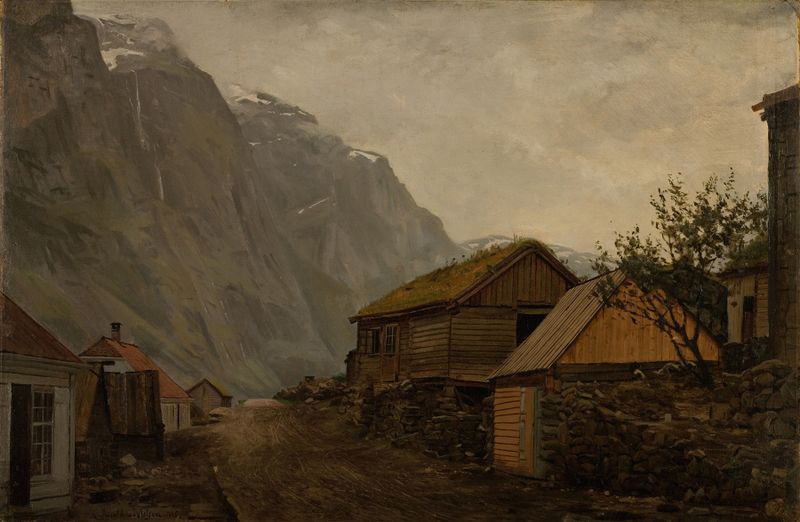
Is this a mirror — or a memory? In Ulvegjelsbakken, Mandal, the viewer is drawn into a landscape that feels both familiar and hauntingly distant, as though it poses an eternal question about time and reflection. First, look to the left where the gentle curve of the land draws the eye toward a solitary tree, its branches reaching out like open arms toward a faded sky. Notice how the soft hues of twilight—blues mingling with warm oranges—evoke a sense of calm, while subtle strokes of paint suggest the fragile nature of light itself. The composition invites you to wander through the tranquil scene, leading to a shimmering waterway that mirrors the emotional depth of the landscape. Yet beneath its serene exterior lies a profound melancholy.
The landscape feels deserted, as if it holds memories of laughter long gone, leaving only echoes in the stillness. The juxtaposition of the vibrant colors and the isolated setting speaks to the tension between beauty and solitude—a reminder of what was, contrasted with the quietness of the present. This delicate balance invites the viewer to reflect on their own experiences of loss and remembrance. Painted in 1863, this work emerged during a significant transitional period for Amaldus Nielsen, who was navigating the complexities of his artistic identity.
Living in Norway, he was influenced by the Romantic movement, which sought to capture emotional depth and a connection to nature. As Nielsen explored this landscape, he was part of a broader conversation in the art world that sought to reconcile personal emotions with the grandeur of the natural world, a theme that resonates deeply in this evocative canvas.
More Artworks by Amaldus Nielsen
Browse all →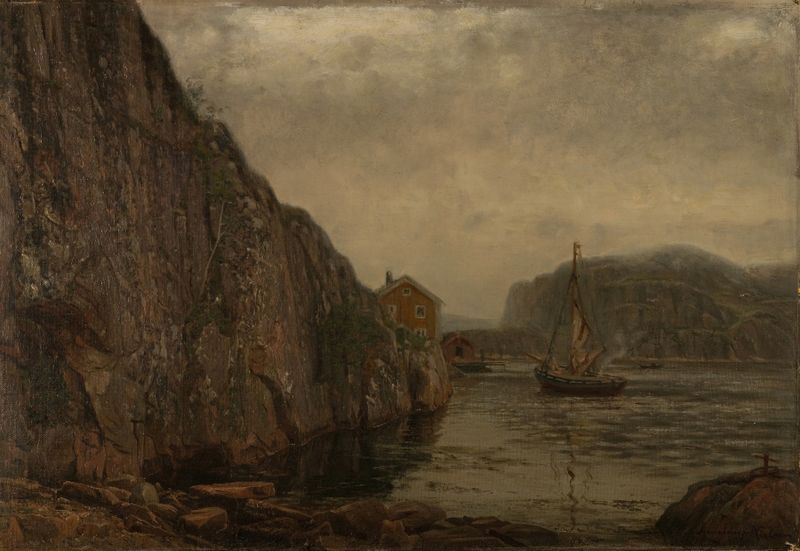
Skjærgård, Ny-Hellesund
Amaldus Nielsen
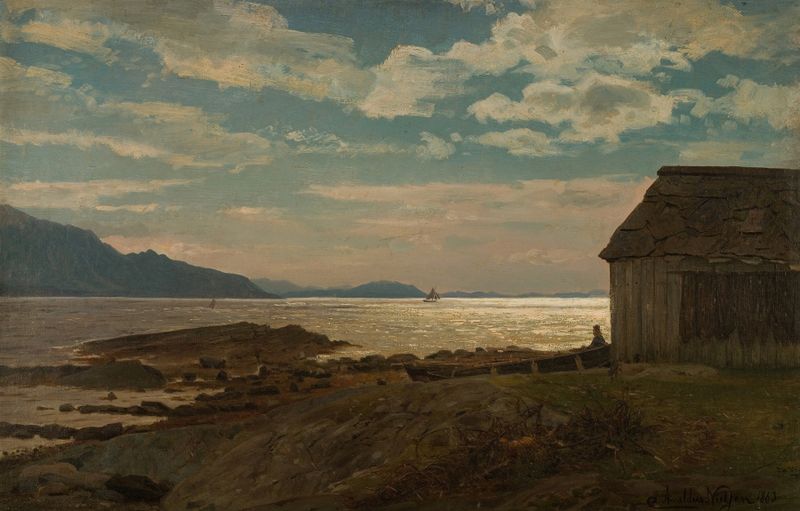
Fra Ølvestranden, Hardanger
Amaldus Nielsen
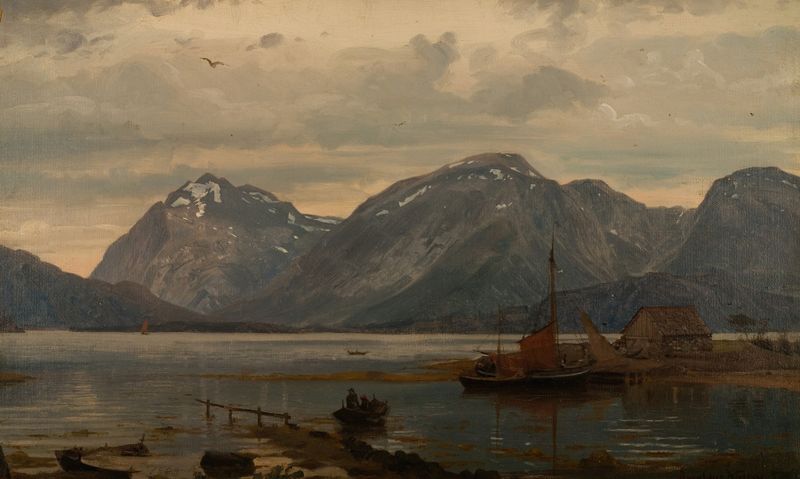
Fra Englafjellene, Hardanger
Amaldus Nielsen
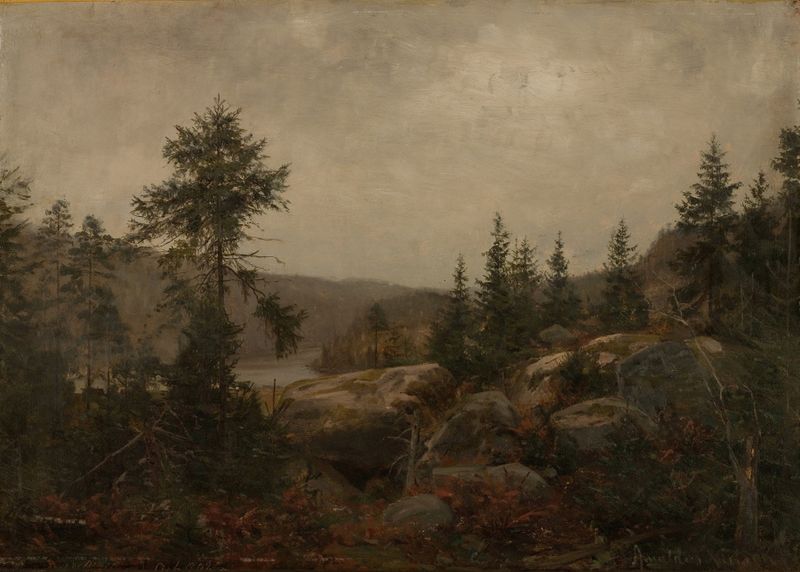
Duskregn . Gården Foss, Mandalselven
Amaldus Nielsen
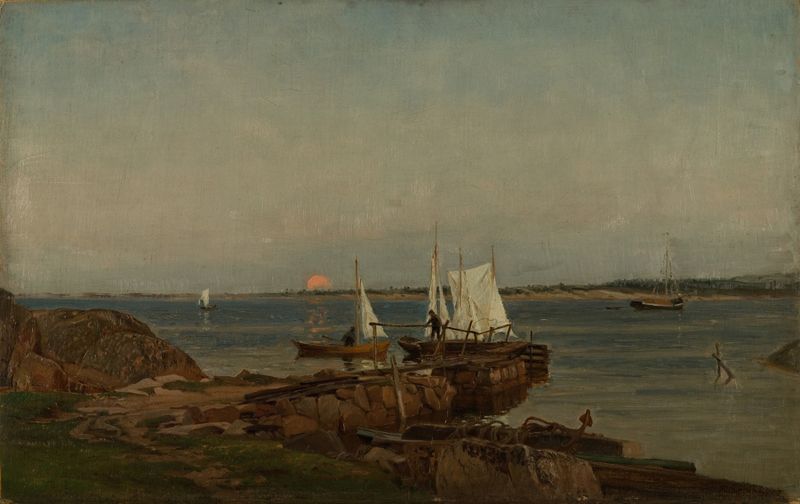
Sommernatt, Hvaler
Amaldus Nielsen
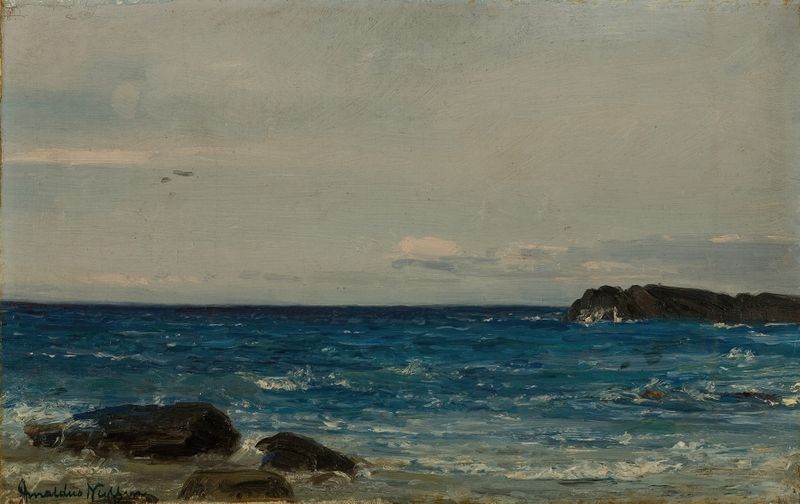
Fra Jæren
Amaldus Nielsen
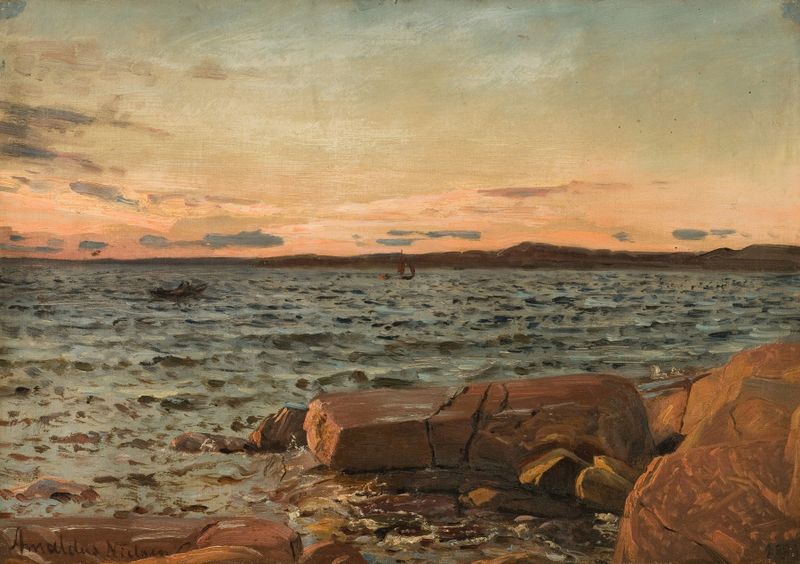
Solgangsvind, Hvaløene
Amaldus Nielsen
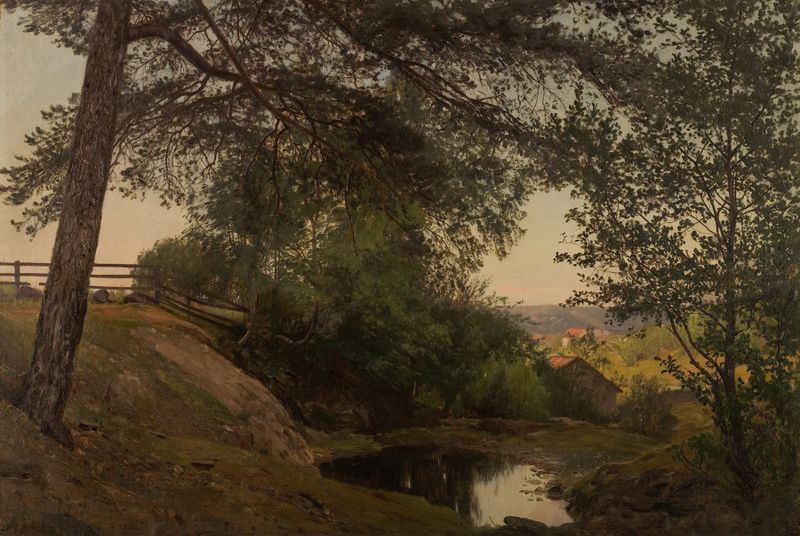
Mellom trærne. Lervik, Stord
Amaldus Nielsen

Båtbyggeri, Lillesand
Amaldus Nielsen
Regnstemning, Gudvangen
Amaldus Nielsen





