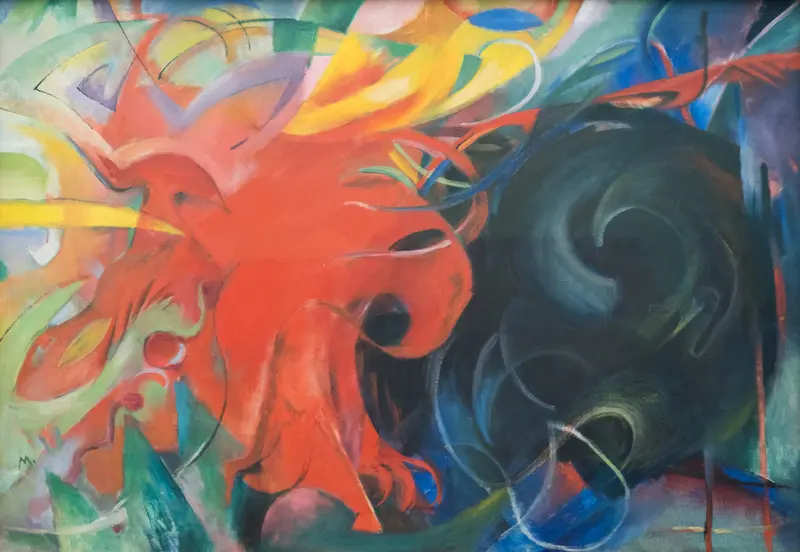
Variation, Zärtlichkeit Museum Wiesbaden — History & Facts
What first catches the eye in Variation, Zärtlichkeit Museum Wiesbaden is the way color itself seems to pulse and breathe across the canvas, as if the paint were still wet and shifting. The forms are neither strictly geometric nor wholly organic, but float in a delicate balance between intention and spontaneity. A lavender arc, punctuated by three pale ovals, rises like a gentle guardian among the daubs of crimson, turquoise, and yellow.
The brushwork is loose, almost playful, and the white ground peeks through in places, lending the composition a sense of openness and air. There is no clear narrative, but the arrangement of shapes suggests a quiet conversation, a meeting of presences rather than objects. Created in 1918, this work belongs to a world in flux, when artists across Europe—especially those associated with Expressionism—were searching for new ways to convey emotion and inner life. Alexej von Jawlensky was a key figure in this movement, known for distilling faces and landscapes into bold, rhythmic patterns of color.
By this date, he was moving toward abstraction, using repeated motifs and variations to explore spiritual and emotional states. History has kept few traces of the exact journey of this painting, now found in the digital collection of Google Arts & Culture, but its energy and tenderness invite the viewer to linger, searching for meaning in the dance of hue and form.
More Artworks by Alexej von Jawlensky

Murnau
Alexej von Jawlensky
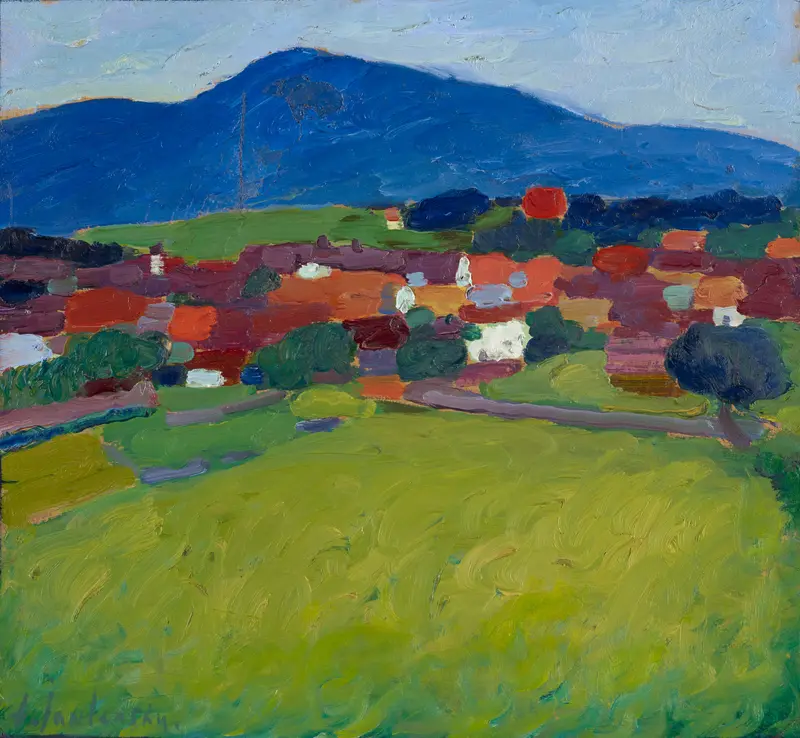
The Village Of Murnau
Alexej von Jawlensky
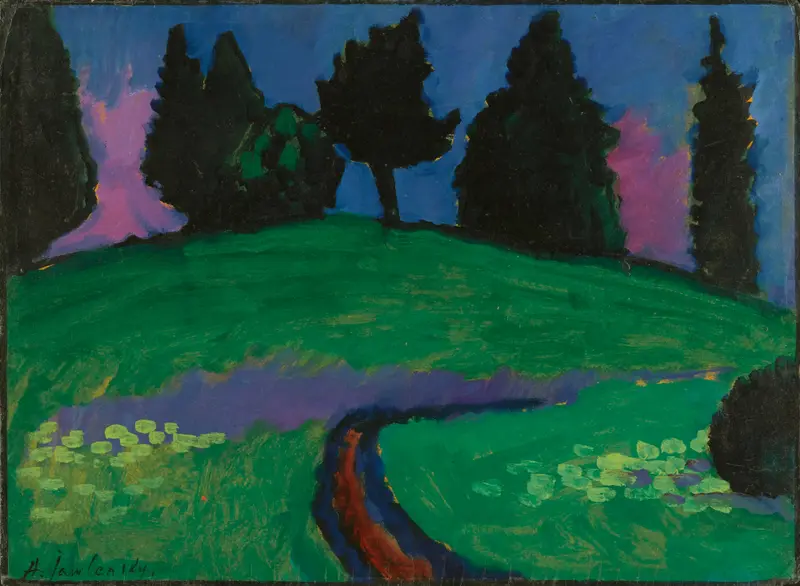
Dunkle Bäume über Grünem Hang (Dark Trees Over Green Slope)
Alexej von Jawlensky
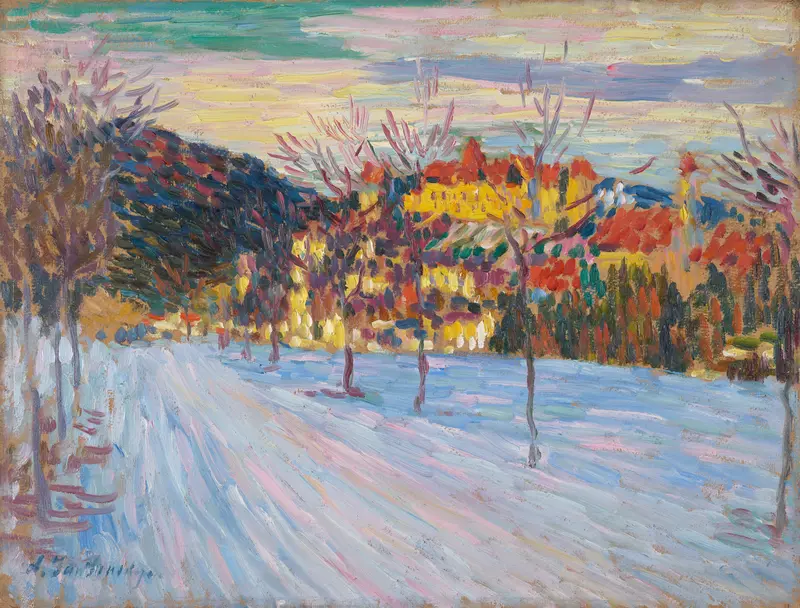
Füssen
Alexej von Jawlensky
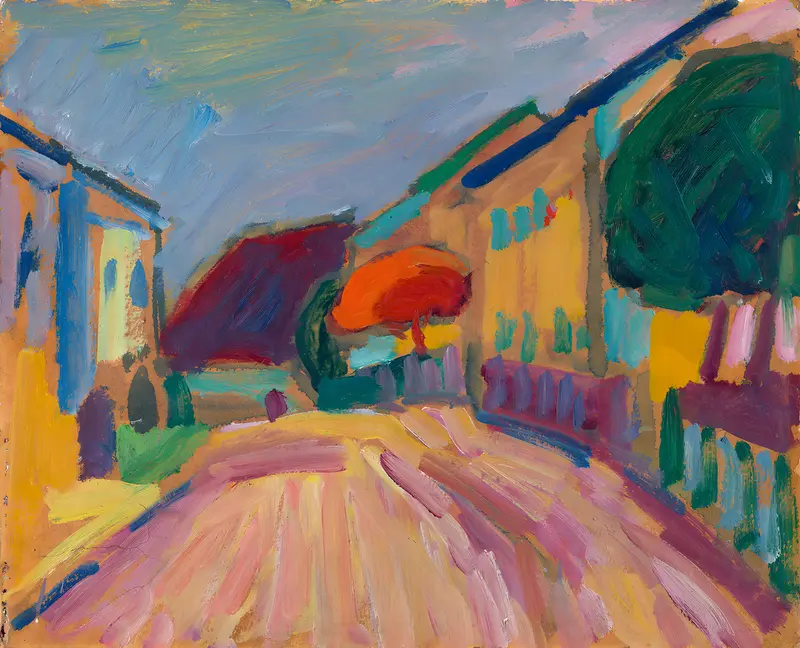
Sketch from Murnau
Alexej von Jawlensky
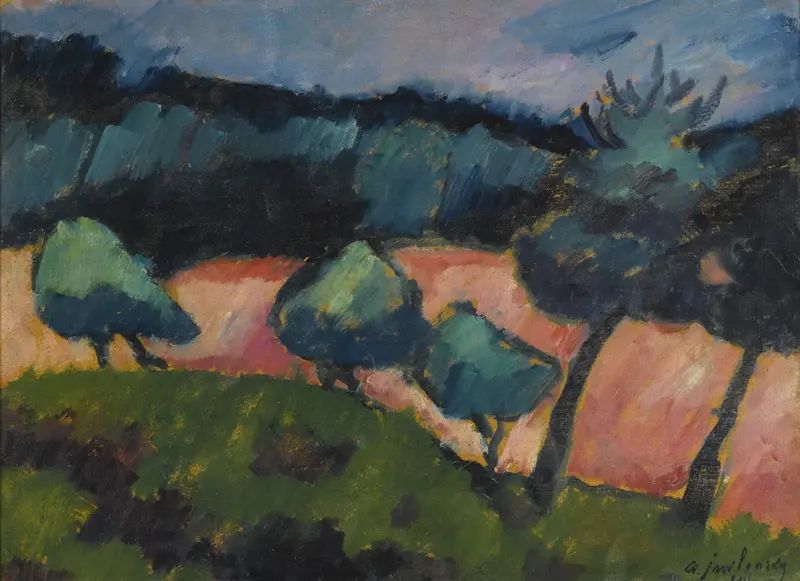
Bäume und Dünen in Prerow (Trees and dunes in Prerow)
Alexej von Jawlensky
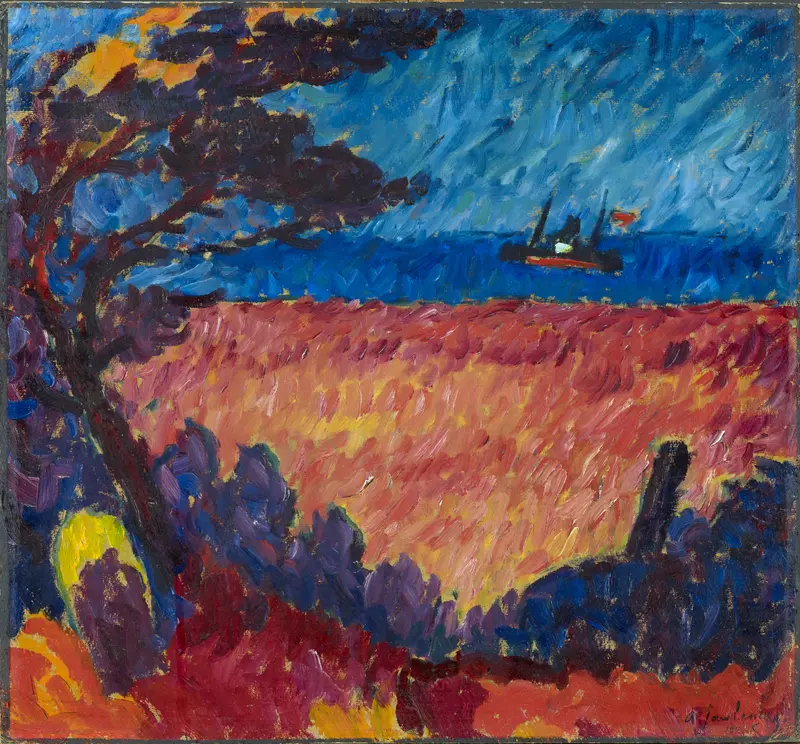
At The Baltic Sea
Alexej von Jawlensky
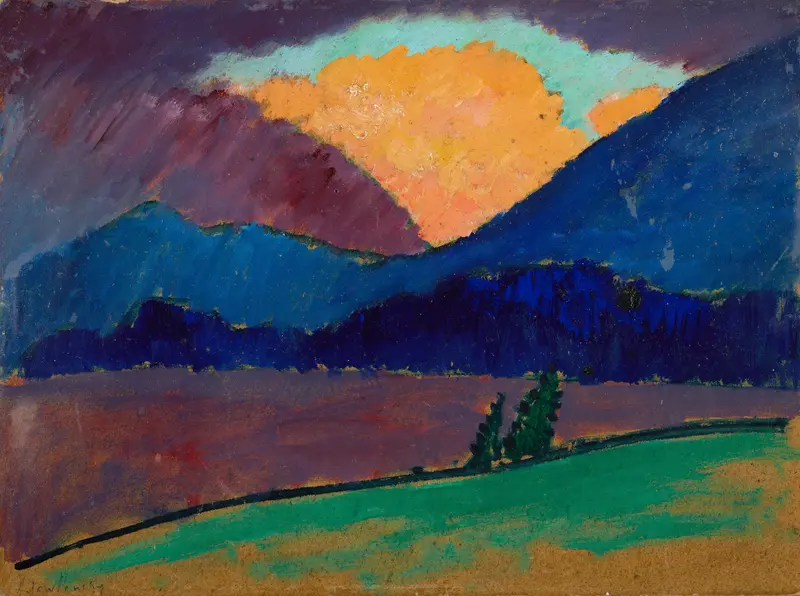
Summer evening in Murnau
Alexej von Jawlensky
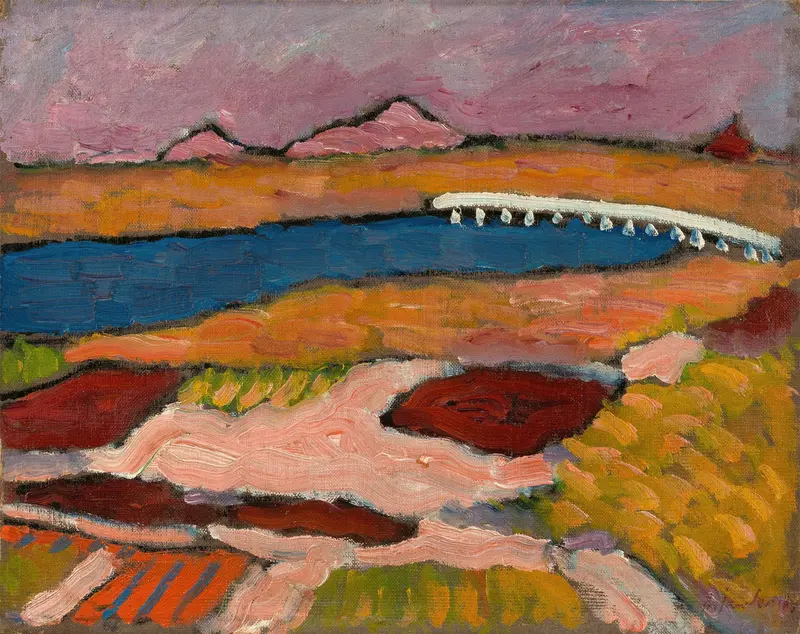
Prerow (Darß), Pommern
Alexej von Jawlensky
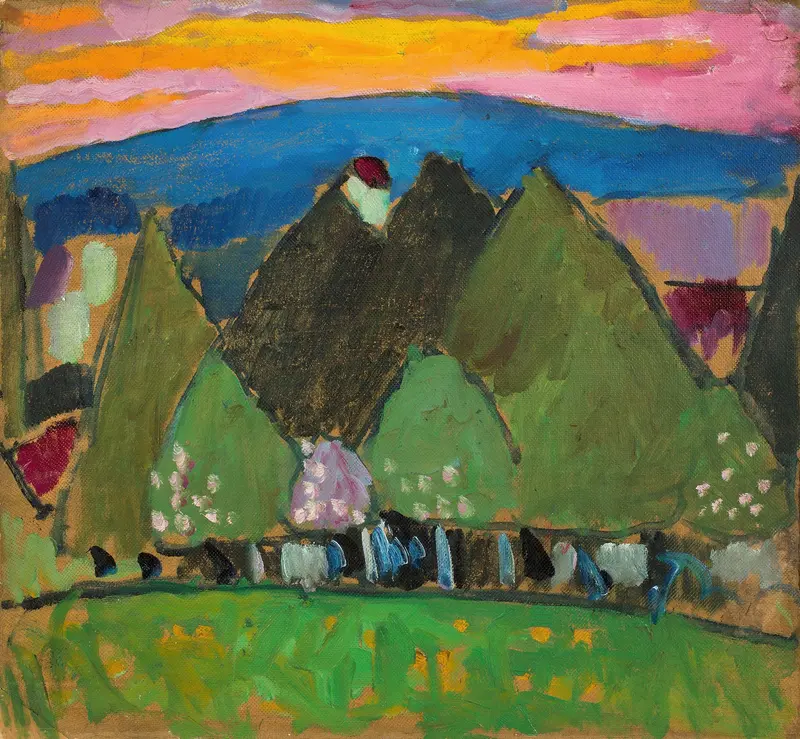
Landschaft mit Bäumen
Alexej von Jawlensky