
Vendange nivernaise – effet de matin — History & Facts
This poignant observation resonates deeply with Vendange nivernaise – effet de matin, as it captures the fleeting moments of life and the inevitability of decay amid the harvest’s splendor. Look closely at the gentle interplay of light and shadow that envelops the vineyard in early morning. The sun spills over the horizon, illuminating the dewy leaves and the delicate clusters of grapes, each glistening with promise. The composition leads your eye from the foreground, where laborers toil with quiet determination, to the distant hills, softly blurred, evoking a sense of time passing.
The earthy palette punctuated with warm golden hues reflects a transitory beauty, hinting at the harvest's bittersweet nature. The emotional tension in this work lies in its duality; the vibrant hues symbolize life and abundance, while the close-up of the laborers’ weary faces reminds us of the toil and impermanence underlying every season's bounty. Delpy deftly contrasts the vibrancy of the vineyard with the laborers' expressions, creating a haunting reminder of mortality intertwined with nature’s cycles. The delicate mist clinging to the vines further evokes the ethereal quality of early mornings, suggesting both hope and the impermanence of life. Painted in 1876, this work emerged during a period of transformation in French art, as realism and impressionism began to blur traditional boundaries.
Delpy, known for his sensitivity to light and atmosphere, created this piece in the lush countryside of Nivernais, reflecting his ongoing exploration of rural life. At the time, artists were increasingly interested in capturing the ephemeral beauty of nature, making this painting a poignant example of that pursuit.
More Artworks by Hippolyte Camille Delpy
Browse all →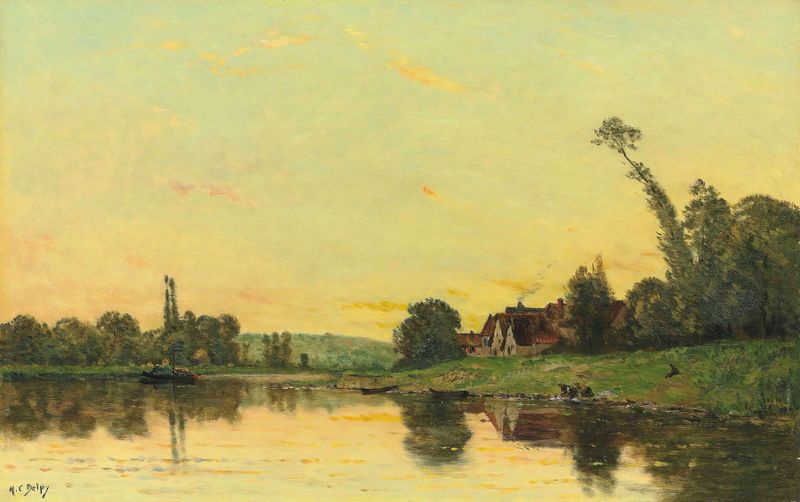
Soleil Couchant à Portejoie
Hippolyte Camille Delpy
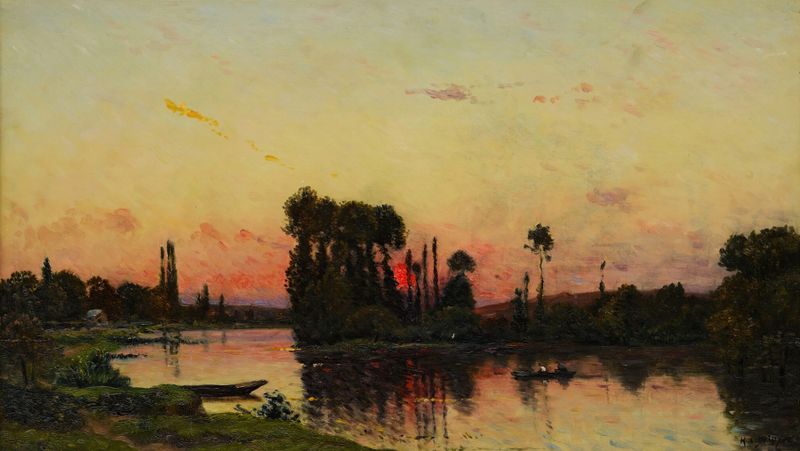
Coucher du soleil sur le rivage
Hippolyte Camille Delpy

Bord de la Seine à Rangiport, le matin
Hippolyte Camille Delpy

The Pond At Dusk
Hippolyte Camille Delpy

A river landscape at dusk
Hippolyte Camille Delpy
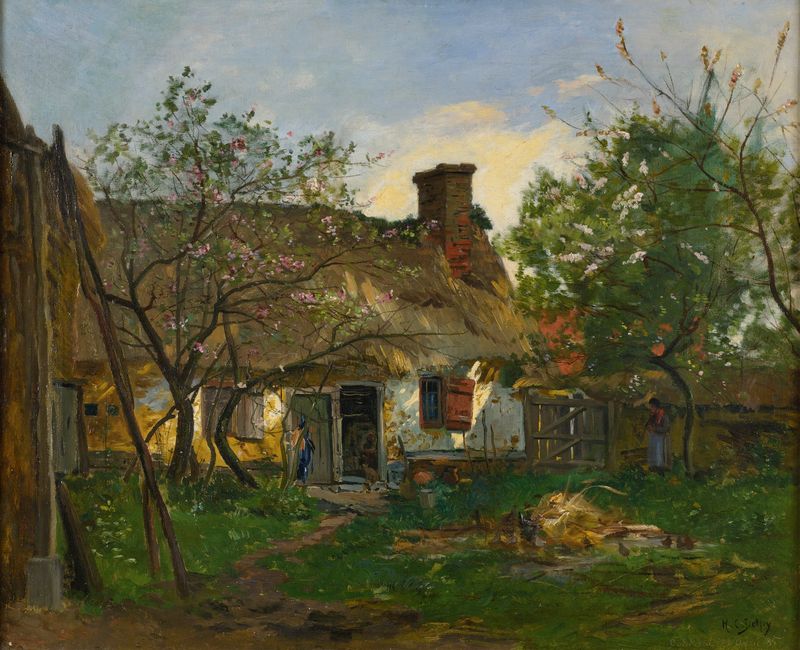
La Chaumiere à Berneval
Hippolyte Camille Delpy

Sunset
Hippolyte Camille Delpy
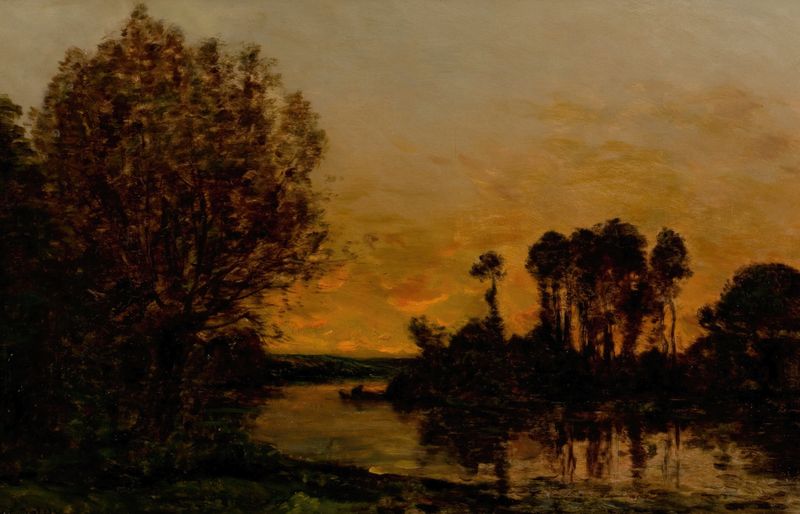
Un Soleil Couchant au Rive
Hippolyte Camille Delpy
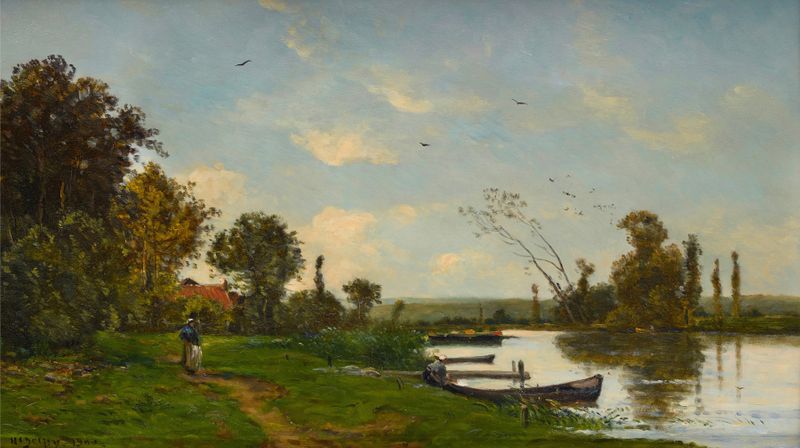
A path along the river
Hippolyte Camille Delpy

Bateau Sur L’oise
Hippolyte Camille Delpy





