
Venedig, Eine Mondnacht im Bacino — History & Facts
In the soft glow of twilight, the fragile beauty of Venice emerges, suspended between past and present, where memories mingle with the lapping waters of the Bacino. A delicate balance exists here—an ephemeral moment captured, whispering the transient nature of life itself. Look closely at the deep azure of the sky, transitioning to soft silvers and muted purples as the moonlight bathes the scene. Notice how the light reflects on the water, creating a shimmering pathway that draws your eye toward the distant horizon, where ghostly silhouettes of gondolas seem to glide effortlessly.
The brushwork is fluid and gentle, with wispy strokes that evoke a sense of movement, while the colors serve to enhance the serenity and introspection inherent in this nocturnal tableau. Yet, beneath this calm surface lies a deeper fragility. The contrast between the ethereal light and the looming shadows speaks to the duality of existence—the beauty that is ever-fleeting and the darkness that threatens to encroach. The lone figure, almost lost in the landscape, embodies this tension, a poignant reminder of solitude amidst beauty.
Each stroke carries an emotional weight, weaving a narrative of longing and the inevitability of change. In 1900, Karl Heilmayer painted this evocative scene amidst a revival of interest in Impressionism, where artists sought to convey emotion through light and color. Living in Vienna at that time, Heilmayer was influenced by the surrounding cultural movements, reflecting the tensions of a world on the brink of modernity. This work, steeped in nostalgia and beauty, serves as both a memory and a meditation on the fleetingness of life.
More Artworks by Karl Heilmayer
Browse all →
Venice, Full Moon over Santa Maria Salute
Karl Heilmayer
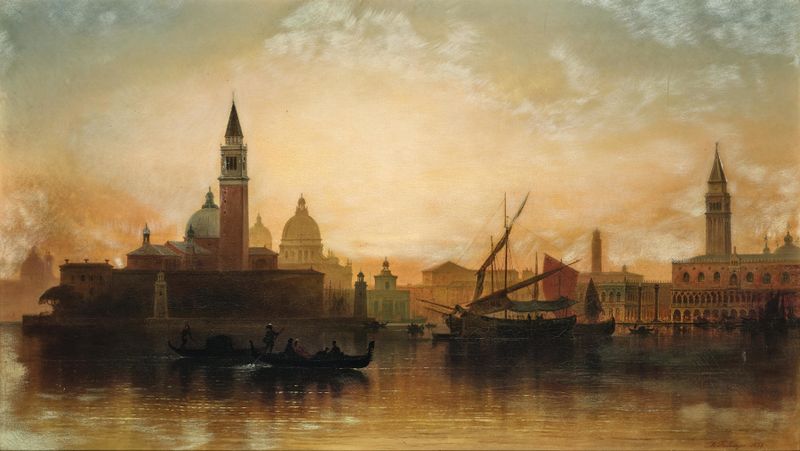
Venice in moonlight
Karl Heilmayer
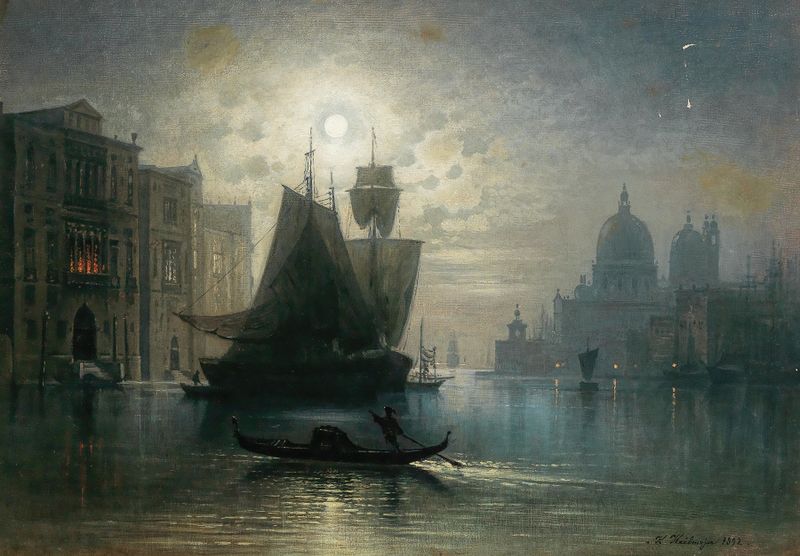
Venice, the Grand Canal in the Moonlight
Karl Heilmayer

Venice, Gondolier in the Evening Light
Karl Heilmayer

Venice, the Grand Canal in the Moonlight
Karl Heilmayer
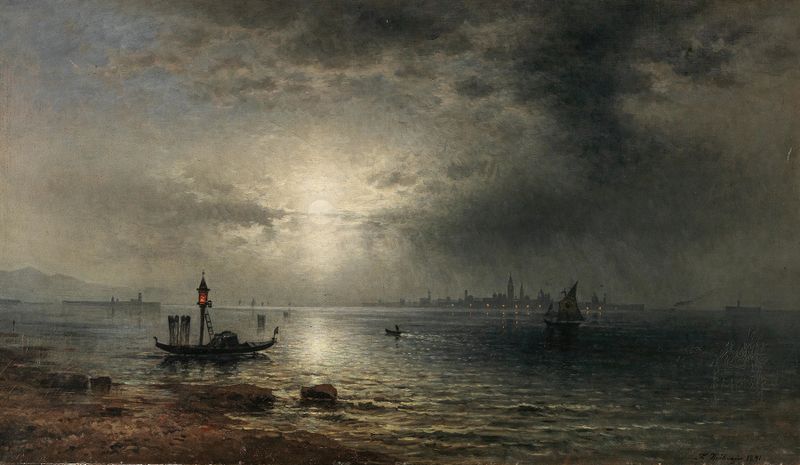
Vollmond über der Lagune von Venedig
Karl Heilmayer
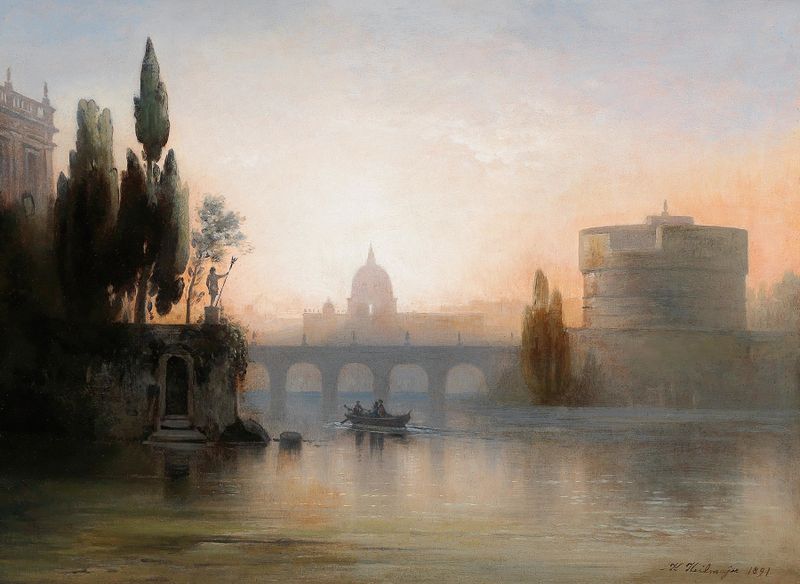
Roman Scene
Karl Heilmayer

Gathering Mussels in the Venetian Lagoon
Karl Heilmayer

Ein Morgen in Florenz
Karl Heilmayer





