
Venice, the Grand Canal in the Moonlight — History & Facts
Who listens when art speaks of silence? In the stillness of a moonlit night, loss echoes through the reflections of water, whispering secrets of longing and solitude. Look closely at the left side of the canvas, where the soft glow of the moon casts a silver sheen upon the Grand Canal. The luminous light reveals intricate details in the architecture of the buildings, their elegant facades standing in quiet reverie. As you move your gaze toward the water, notice how the ripples capture the moonlight, creating a tapestry of shimmering blues and silvers that invite contemplation and introspection.
The gentle brushstrokes evoke a sense of calm, yet the stillness hints at the poignant absence that lingers within this serene landscape. The contrast between the vibrant life of the canal during the day and the haunting quietude of night plays a crucial role in this work. The vessels, ghostly and motionless, remind us of stories untold, of journeys paused. The shadows lurking beneath the moonlight bring forth a feeling of mourning, as if the city itself grieves for what has been lost to time.
This quiet tension between beauty and melancholy creates an emotional depth, as viewers are urged to confront the silence that envelops this mesmerizing scene. Karl Heilmayer painted this evocative piece in 1892, during a time when the Impressionist movement was gaining momentum across Europe. Living in Vienna, Heilmayer was influenced by the interplay of light and atmosphere characteristic of this era. The late 19th century was marked by a growing interest in capturing fleeting moments and emotions — a shift that undoubtedly shaped his vision as he sought to convey the intricate beauty and underlying sadness of Venice's iconic landscape.
More Artworks by Karl Heilmayer
Browse all →
Venice, Full Moon over Santa Maria Salute
Karl Heilmayer
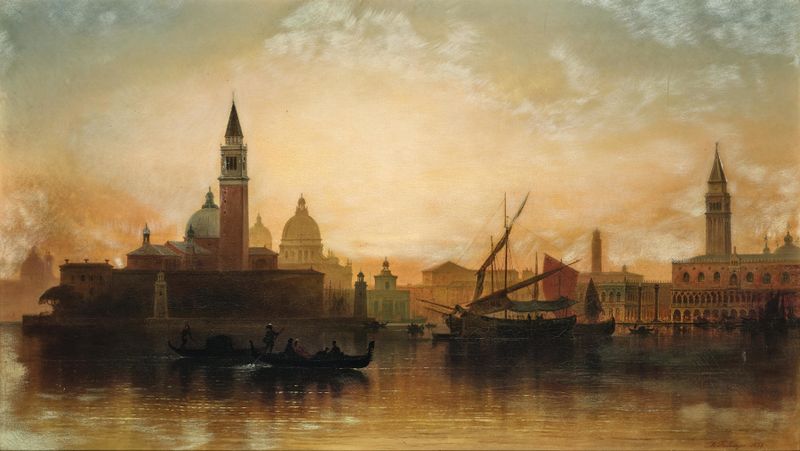
Venice in moonlight
Karl Heilmayer

Venedig, Eine Mondnacht im Bacino
Karl Heilmayer
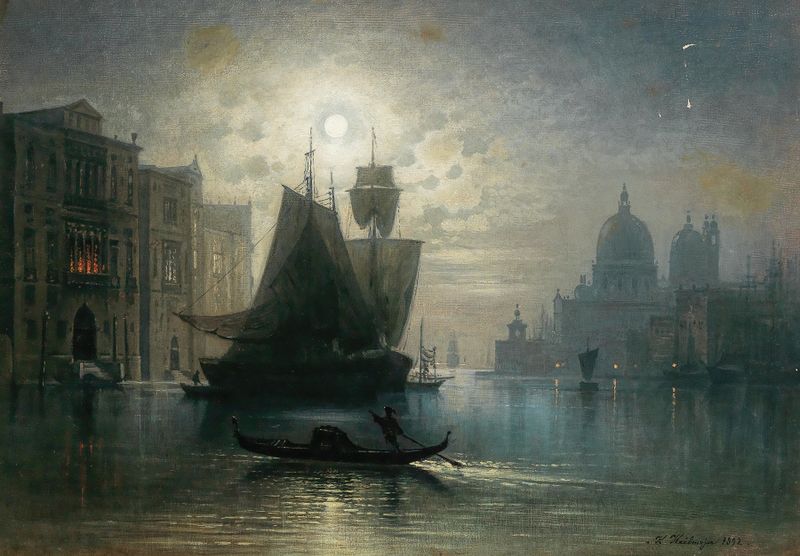
Venice, the Grand Canal in the Moonlight
Karl Heilmayer

Venice, Gondolier in the Evening Light
Karl Heilmayer
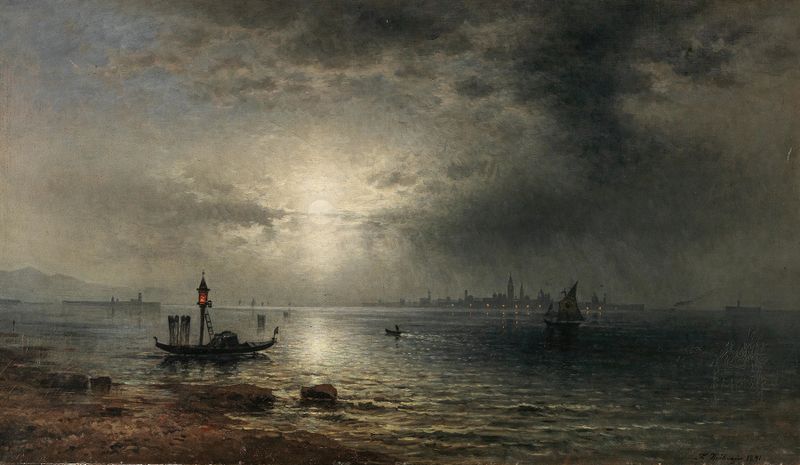
Vollmond über der Lagune von Venedig
Karl Heilmayer
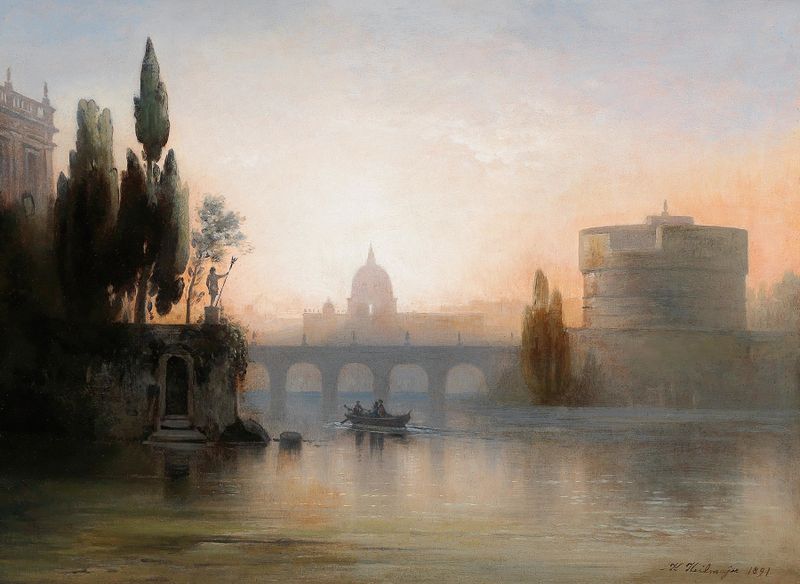
Roman Scene
Karl Heilmayer

Gathering Mussels in the Venetian Lagoon
Karl Heilmayer

Ein Morgen in Florenz
Karl Heilmayer





