
Roman Scene — History & Facts
In the stillness of a moment captured in time, desire swells beneath the surface, whispering of longing and unspoken words. To grasp the heart of the piece, focus on the expansive background where the architectural grandeur of ancient Rome hints at splendor and decay. Notice how the warm golden tones blend seamlessly with cooler shadows, creating a contrast that draws the eye inward. The figures, almost diminutive against the monumental structures, invite scrutiny—look closely at the gestures and the expressions that convey a quiet, shared yearning amidst the bustling world around them. Delve deeper, and you’ll uncover layers of emotional tension woven through the composition.
The juxtaposition of the stone edifices and the fragile human forms illustrates a struggle between permanence and transience, evoking a sense of fleeting moments in a timeless setting. Each figure appears to be caught between aspiration and resignation, their desire palpable, yet restrained by circumstance. It's this delicate balance that lingers in the viewer’s mind long after they step away from the visual feast. The work emerged from the mind of an artist during a period when Neoclassicism was waning, and Romanticism was beginning to take hold, a delicate yet powerful transition.
It was created amidst a vibrant artistic community in Germany, where influences from classicism were invigorated by emotion and individuality. In this environment, Heilmayer sought to explore the nuances of human desire, grounding it within the historical context of Rome, a city rich with the echoes of passion and ambition.
More Artworks by Karl Heilmayer
Browse all →
Venice, Full Moon over Santa Maria Salute
Karl Heilmayer
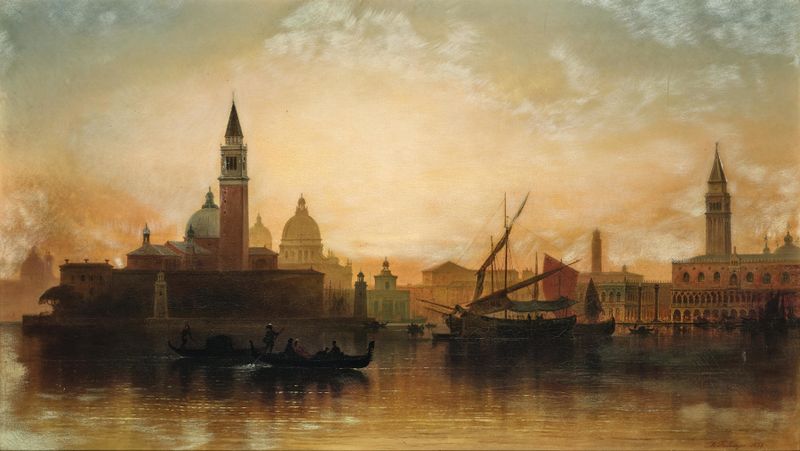
Venice in moonlight
Karl Heilmayer

Venedig, Eine Mondnacht im Bacino
Karl Heilmayer
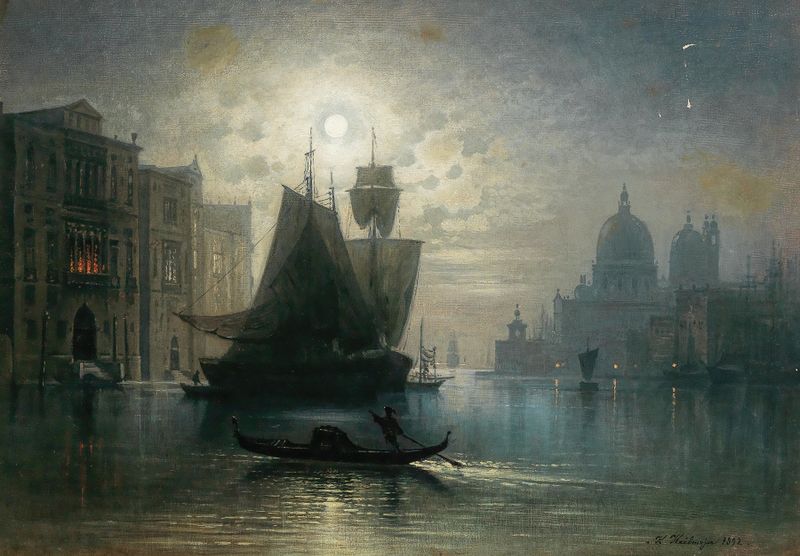
Venice, the Grand Canal in the Moonlight
Karl Heilmayer

Venice, Gondolier in the Evening Light
Karl Heilmayer

Venice, the Grand Canal in the Moonlight
Karl Heilmayer
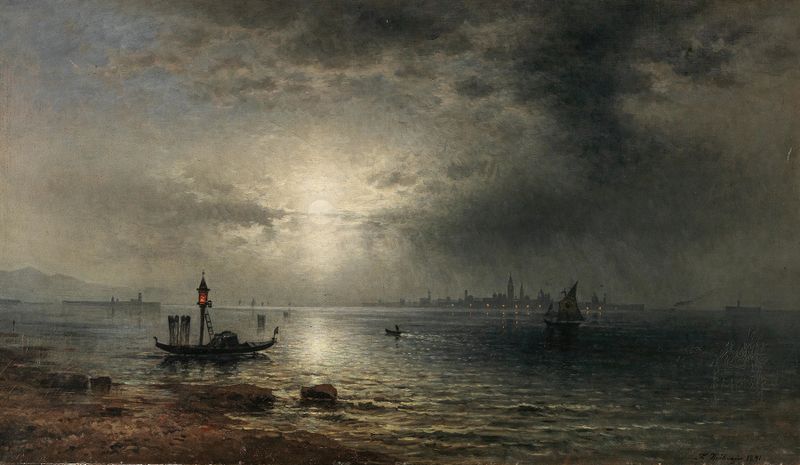
Vollmond über der Lagune von Venedig
Karl Heilmayer

Gathering Mussels in the Venetian Lagoon
Karl Heilmayer

Ein Morgen in Florenz
Karl Heilmayer





