Venezianisches Capriccio — History & Facts
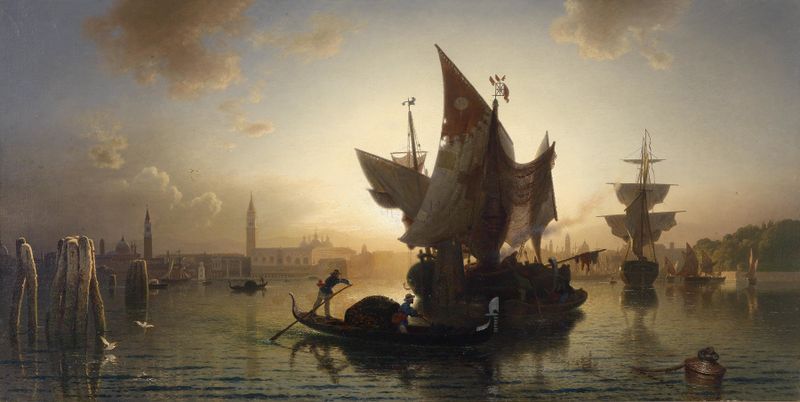
When did color learn to lie? In Venezianisches Capriccio, longing permeates the air, intertwining fantasy and reality in a delicate waltz. Focus on the vibrant hues of blue and gold that dance across the surface. Look at the swirling clouds that seem to breathe life into the Venetian skyline, their soft edges blurring the line between dream and memory. The architecture, though familiar, takes on an ethereal quality, inviting the viewer to explore the depths of its intricate details, from the delicate arches to the shimmering reflections on the water.
Each brushstroke seems deliberate, capturing an elusive moment in time. Hidden within the interplay of light and shadow are echoes of nostalgia and desire. The juxtaposition of the serene water and the restless sky mirrors the emotional tension between stability and yearning. Figures poised on the water's edge hint at stories untold, their faces turned toward the horizon, as if they are searching for something lost.
This subtle contrast invites viewers to reflect on their own aspirations and the ephemeral nature of beauty. Ludwig Meixner created Venezianisches Capriccio during a period rich with artistic exploration. Little is documented about the exact date, yet the work reflects the prevalent Romantic ideals of the late 19th and early 20th centuries. As European artists sought to capture emotions and visions beyond reality, Meixner embraced the enchanting allure of Venice, forging a personal connection to a city steeped in history and myth.